
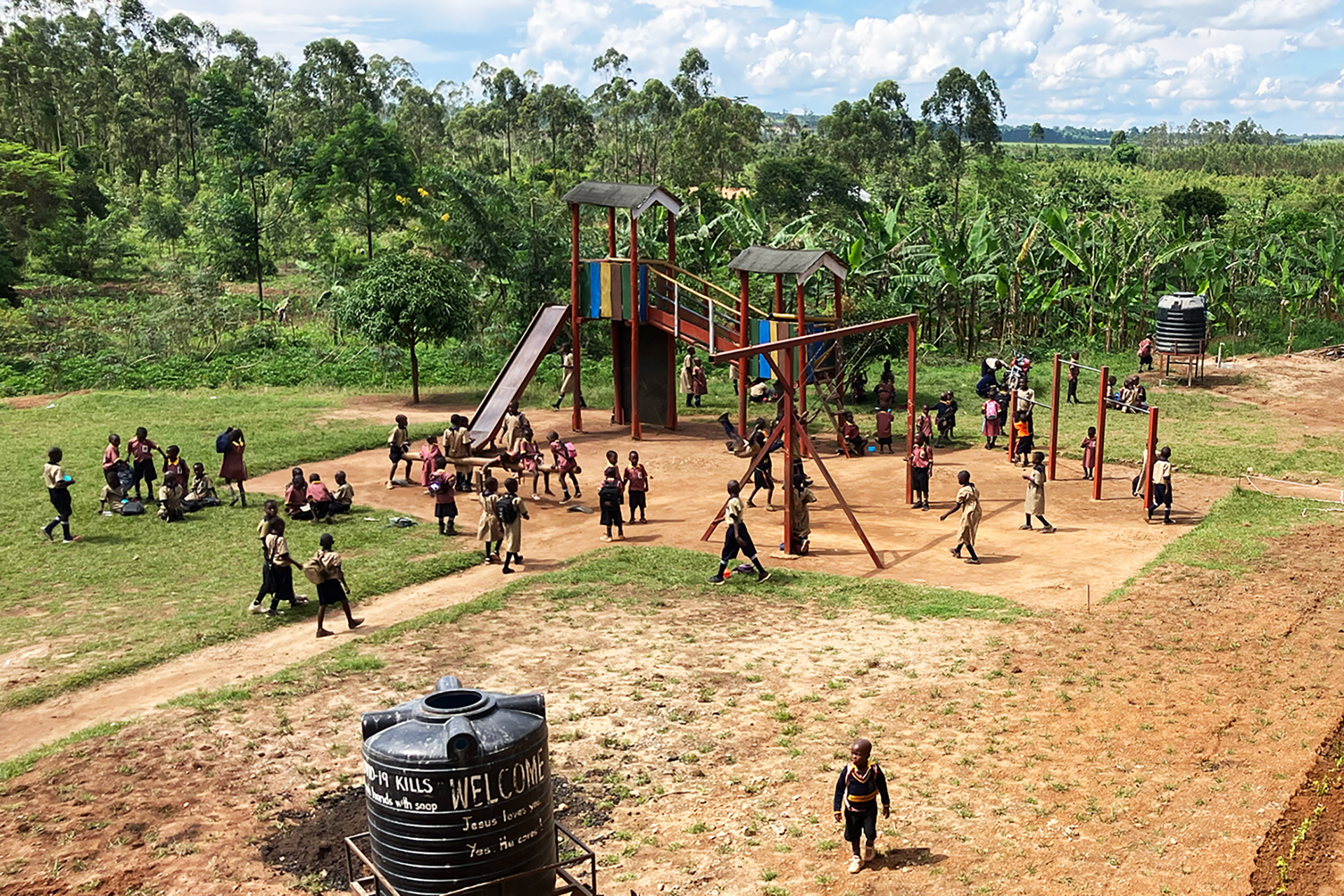
Uganda: School expansion & growing community
Groups and individuals have repeatedly traveled to Uganda, sacrificing their holidays and investing considerable time and effort in this project. Currently, the building is being plastered; the electrical installation is complete, and the final painting work is underway.
The school's upper floor was originally built as a large open space and has since been divided into several classrooms using lightweight partition walls. In addition, the school kitchen was expanded and renovated, allowing for the preparation of meals for more students. The school currently serves approximately 400 children, who are taught by a total of ten teachers.
Many people from the surrounding area regularly attend the church services, which are currently held in a larger room at the school. People are frequently converted and experience rebirth. Communion is also regularly celebrated for church members.
Many children regularly attend church services, as a special program is offered for them. They are involved in the services through presentations and experience a special blessing. The young people often travel to the surrounding villages, proclaiming the Gospel and offering help to the poor. Due to the steady growth of the congregation, an additional church building is planned. Construction will begin as soon as the official permits are granted.
We are especially grateful for the support of the Canadian mission "Samaritan Aid Ministries", which wants to help us both financially and through practical assistance.
To support our work on the ground, God has provided us with faithful colleagues who have dedicated their lives entirely to His service. These include Samuel Kelinger with his family of five, as well as David Tumwine from Uganda.
Israel: Expansion of rehabilitation centers
Our mission work in Ashkelon began in 2010 with the establishment of a rehabilitation center for drug and alcohol addicts. Ashkelon is the southernmost port city on Israel's Mediterranean coast – only 13 kilometers from the Gaza Strip. By God's grace, the work in this challenging mission field has expanded significantly over the years: In addition to the main location in Ashkelon, two more rehabilitation centers have been opened in Karmiel and Jerusalem.
The central house in Ashkelon is run by a family from Jerusalem. The house in Karmiel is managed by a former rehabilitation patient. The center in Jerusalem is run by a missionary couple who previously worked in Ashkelon.
During the war, the central building in Ashkelon was damaged by rocket fragments – thankfully no one was hurt.
An essential part of the mission work is the regular service at the Aviv Center in Tel Aviv: Our brothers and sisters from Ashkelon visit this facility several times a week to offer hot meals in a soup kitchen, provide medical assistance, and offer pastoral care to the local people.
In addition, evangelistic services are held every evening in Ashkelon, where people are called to repentance, comforted, and strengthened in their faith.
An important part of the work is also the personal sharing of hope from person to person – especially with those suffering from drug or alcohol addiction. Twice a year – in spring and autumn – conferences are held on site to strengthen the staff in their ministry, foster fellowship in prayer, and address accounting matters.
A major prayer request at present is the establishment of a women's rehabilitation center. For this, we are seeking God-fearing, motivated women who are willing to dedicate themselves to this important service with devotion and love.
Donation opportunity: https://cdh-stephanus.org/geldspende/
Intended use: Chasera L'Chaim *
*Meaning: Return to life
Recipient: CDH-Stephanus eV | IBAN: DE80 5455 0010 0380 0820 08
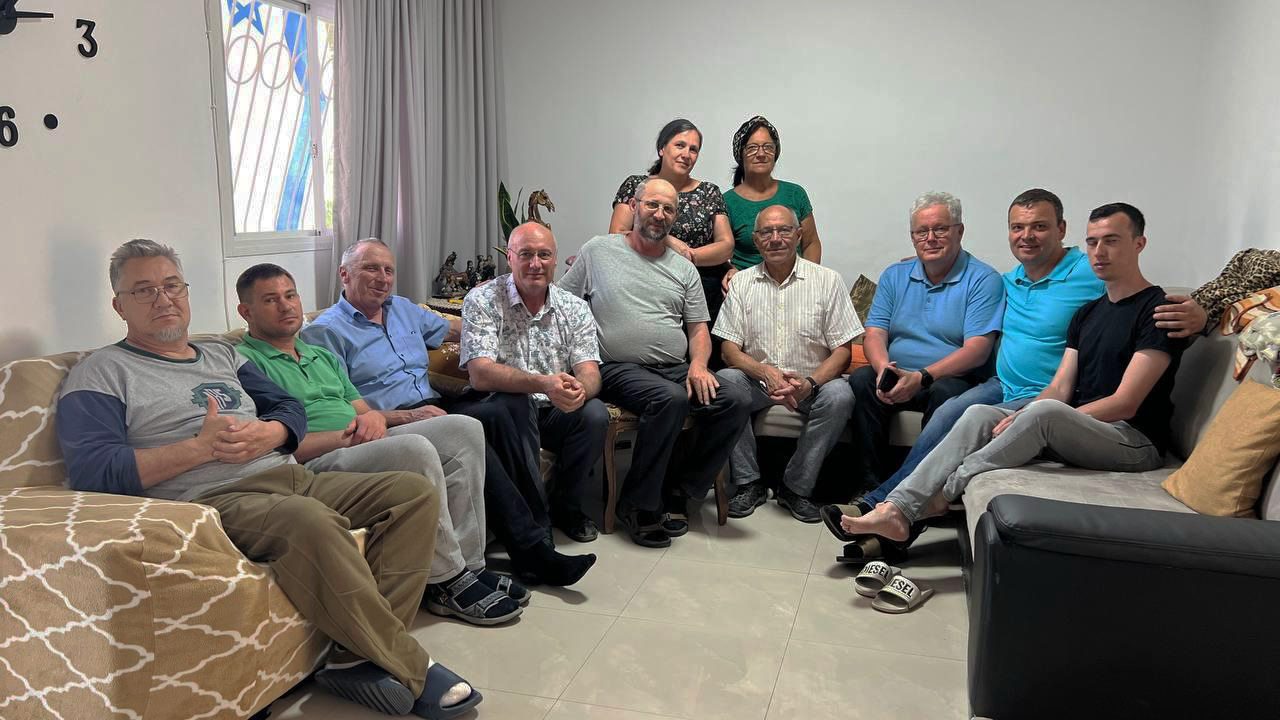
Jerusalem: Brothers from Russia and Germany visit the area with support in the ministry
Relief collection in Germany
Since 1988, we have been collecting aid supplies for people in need in various Eastern European countries. The range of donated items is vast: from children's toys, clothing, shoes, and bicycles to refrigerators, washing machines, upholstered furniture, hospital beds, and wheelchairs.
These donations often come from household clearances, medical practices or former office furnishings and bring with them an impressive range of aid supplies.
Many congregations in our brotherhood conduct their own fundraising drives. They organize regional collections, sort and pack the donations locally, and then, on their own initiative, transport them to our mission warehouse in Speyer, where the goods are loaded directly onto trucks for onward transport.
We now also cooperate with Protestant and Catholic clothing banks in the region, which donate their surplus clothing to us. These items – originally intended for charity shops – are packed by the organizations and made available for pickup. Numerous companies, businesspeople, nursing homes, and social service agencies also support us with clothing, incontinence products, and other humanitarian aid.
Aid recipients abroad
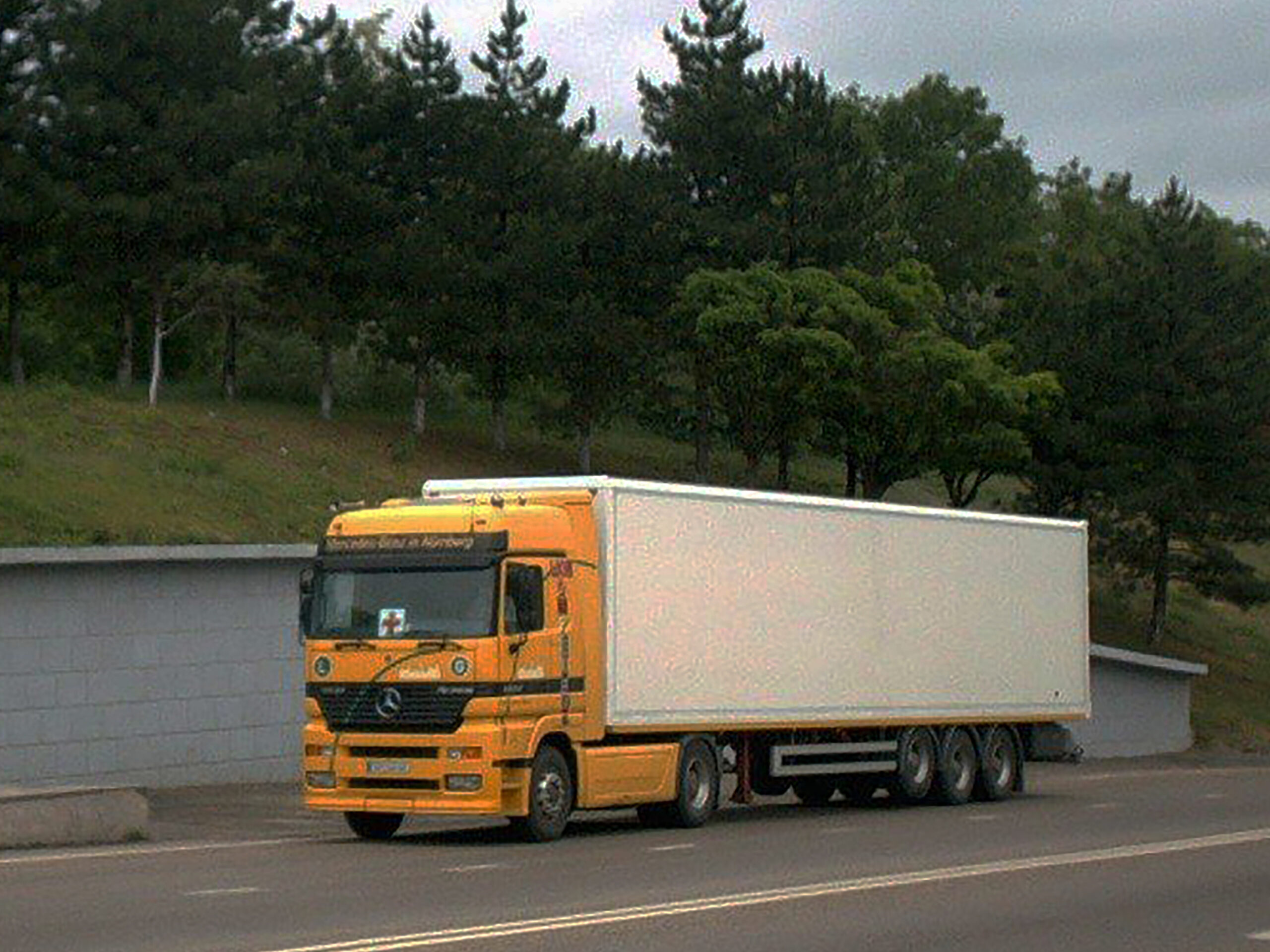
In 2024, a total of 151 truckloads were shipped to eight different countries – 25 of these shipments took place in December alone. Besides Ukraine, Moldova, Belarus, Bulgaria, Poland, Romania, Lithuania, and Kyrgyzstan also received urgently needed humanitarian aid.
The aid supplies are usually received by local non-profit organizations, cleared through customs, and then distributed to specific target groups. In many regions, clothing banks are now being established where people in need can choose clothing free of charge.
In other regions – especially within Christian communities – distribution is done individually and personally. There, the communities also take on the task of delivering to elderly or sick people who are unable to come themselves.
During the personal handover of donated goods, prayers are often offered together, people are encouraged, and their life circumstances are discussed. This approach, made on equal terms, is a practical expression of neighborly love and often touches people more deeply than any material gift.
Thoughts on the Mission – How the Missionary Work Changed Me
For over 25 years, my heart has burned for missionary work and for the work on mission fields around the world. For me, it's not about short-term enthusiasm, but about long-term change—both in the lives of the people on the ground and in my own faith. Serving in missions has shaped and changed me. It has taught me to put aside my own ideas and interests and instead be there for others.
It all began in 1997. I was invited to join a mission trip to Moldova as an interpreter. I had no friends or acquaintances there; I simply went along to translate. We visited families in need and a boarding school for children with intellectual disabilities. The image of poverty and misery I witnessed there completely changed my perspective, especially given my awareness of how we lived in contrast to these people.
After my return, we organized aid projects for Moldova at the church level. That was a turning point for me, when I understood that the Lord wanted me to be in this ministry. So I began with a small ministry, and God led me into the larger work of Mission Stephanus. There in Moldova, 27 years ago, was my personal beginning in mission work.
It is very important to me to encourage people to take their own steps of faith. Not only in the form of humanitarian aid, but in an attitude that sustains them in the long term. For me, true missionary work means taking responsibility, persevering, and walking through highs and lows together with God.
It's not about knee-jerk reactions, but about pursuing long-term goals. People should come to know Jesus, grow in their faith, become servants themselves, and thus strengthen and shape others. I'm passionate about missionary work and amazed at how God works even through small things. Often, it's just simple encounters or practical help that open doors so people can experience God's love.
Of course, there are also fears and worries. Will we have sufficient financial resources for all projects and plans? Will enough new staff members join the mission?
Dear readers, pray that God calls people to support, collaborate, and pray with us. My wish for the future is that this work continues to grow and produce firmly rooted Christians who take responsibility and are a light in their communities, so that those receiving help become bearers of hope who spread the light and love of Christ.
Nikolaus Wall
First Chairman of the CDH Stephanus