
Podcast: Download (Duration: 8:30 — 5.8MB)
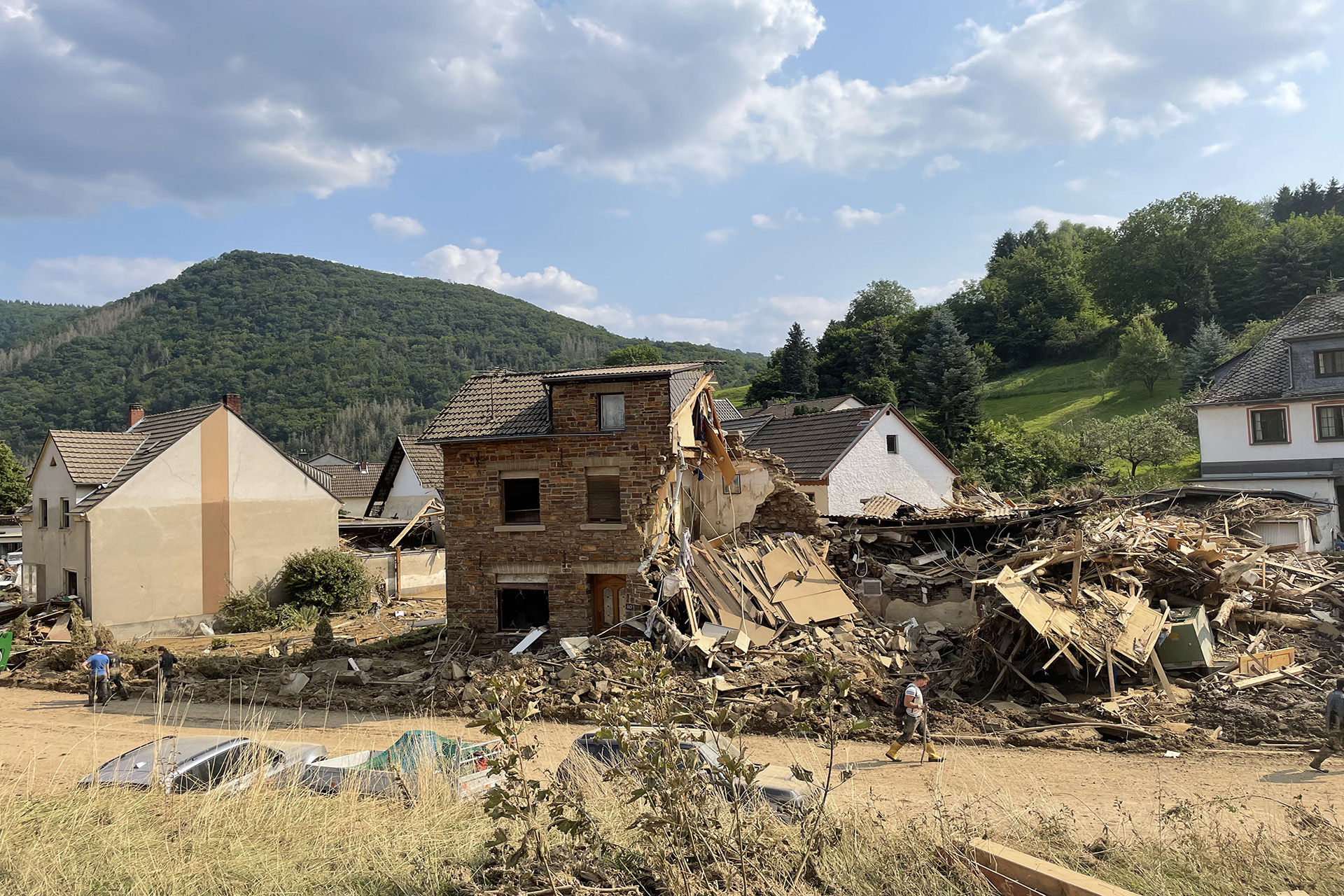
When you are suddenly surprised by such a catastrophe and then confronted with the terrible devastation, the question inevitably arises: Why does God allow this? Perhaps this question is not asked aloud, but in the minds of many people, and especially those in the affected areas, the question remains: Why did it have to happen to us? And is God's hand perhaps even at work in such a disaster?
During the three days I was fortunate enough to spend in Ahrweiler, the passage from Luke 13 kept coming to mind: “Now at that time some people were there telling Jesus about the Galileans whose blood Pilate had mixed with their sacrifices. And he answered and said to them, ‘Do you think that these Galileans, because they suffered these things, sinned more than all the other Galileans? I tell you, no; but unless you repent, you will all likewise perish. Or do you think that the eighteen on whom the tower of Siloam fell and killed were more guilty than all the other inhabitants of Jerusalem? I tell you, no; but unless you repent, you will all likewise perish’” (Luke 13:1-5/ NIV).
Even when Jesus was on this earth, tragic things happened, and people asked Him why these things happened to certain people. They asked Him if the people killed by Pilate were more sinful than everyone else. Was this a deserved judgment from God, or why did it happen to them in particular?
Jesus gives the questioners an answer. He tells them clearly and unequivocally that these people were NOT more sinful than anyone else. But in this context, he also makes it very clear that all people are in need of repentance, without which they are all lost and will experience a terrible judgment from God.
The judgment of God and the people of today
It is becoming increasingly clear to me that we live in a time when most people around us no longer believe in God's judgment. The major churches and many free churches preach only God's love and grace, but the idea that there will also be a judgment from God on sin is hardly mentioned anymore and is no longer perceived by people.
A few weeks ago, I had a conversation with a married couple. We talked about children and school. During this conversation, the wife told me, among other things, that she was convinced there was no hell and never would be. God is a God of love, and He would not allow people to suffer and endure God's judgment eternally in a hell. This was something her grandmother, who was devoutly Orthodox, had taught her, and she felt she knew what she was talking about.
Why does God allow misfortune?
I see it as a warning signal from God when God repeatedly allows misfortune so that people wake up and remember that we will all one day appear before God's throne and have to give an account of our actions.
“Can the trumpet be blown in the city without the people being afraid? Can disaster occur in the city that the Lord has not caused?” (Amos 3:6).
God sometimes allows misfortune to happen so that we humans may realize that we are mortal, transient, and helpless when God brings His judgments upon humanity.
A trumpet blast from God's trumpet, but unfortunately this signal is largely misinterpreted today, and people do not recognize it as the warning voice of God.
God's judgments in biblical times
Throughout history, God has repeatedly tried to lead His people from their false path through judgment and to guide them back to Him as the God of heaven and earth. However, often people's hearts had become so hardened that they could no longer be saved from God's judgment by any warnings.
Noah preached to the people that they should turn to God and abandon their evil works, but no one cared about Noah's preaching and no one changed their life to escape God's wrath and judgment.
Lot, the righteous one, lived in Sodom and Gomorrah, but he could no longer exert any influence over the city's inhabitants to save them from God's judgment. Israel had so often turned away from God and allowed the worst forms of idol worship. The Israelites had stopped heeding the warnings of any of God's prophets. They had even killed them, until God brought judgment upon them to bring them back to reason and to Him.
Turning away from God and its consequences
We are experiencing a similar time today in our Christian West. In a country where the Bible is accessible to everyone in printed form, people are increasingly turning away from the truth, and godlessness is reaching ever greater proportions. I have already encountered Hindu temples twice here in Germany. Massive numbers of people leaving state-run churches demonstrate the extent of the decline in faith in God. Nearly 450,000 people left state-run churches in 2020 alone.
Right now, we are experiencing floods, major fires, earthquakes, and other terrible events all over the world. But people have found another explanation – climate change – which is a convenient substitute for the real reason, allowing them to avoid talking about sin and God's judgment. Climate change is to blame, and it needs to be controlled, then everything will be alright again.
This is the sermon we hear so often these days, until everyone is convinced of it. No, God has nothing to do with it; even prominent church representatives of our time publicly claim this.
Of course, we too are in favor of using the Earth's resources responsibly and protecting them. When God created humankind, He commanded them to cultivate and care for the garden (see Genesis 2:15).
The importance of the Bible – today and in the future
But how important it is that we uphold the Bible, especially in these times, as the living Word of God and do not dilute the truth about God and His righteous judgment! In the Second Epistle of Peter, we read the following prophetic words: “In the same way, by the same word heaven and earth are now being reserved for fire to be kept for the day of judgment and destruction of the ungodly” (2 Peter 3:7).
“But the day of the Lord will come like a thief. The heavens will disappear with a roar, and the elements will melt with fervent heat; the earth and the works done in it will be lost no more” (2 Peter 3:10/ Luther Bible 2017).
These are words we would probably never hear in any church today, let alone anywhere else. And yet, God also foretold these words, and they will be fulfilled. The most important thing remains that every person turns to God through sincere repentance, believes in Jesus, and is thus saved from all of God's judgments.
Ernst Fischer
Municipality of Cloppenburg