

Podcast: Download (Duration: 10:58 — 7.5MB)
On April 12, a large group of travelers embarked on a mission trip to Ethiopia. Among them were Brother Nikolai Wall, Brother Michael Akulenko, and Brother David Bechthold, who two days later left the group with a special mission and embarked on a different path. Their goal: to assess the suitability of an aid organization for a partnership with CDH Stephanus.
After spending the first two days with the entire tour group, our paths diverged. Our group of three had set out to take a closer look at the organization "Talita Rise Up." Through divine guidance, the Stephanus aid organization had become aware of this organization approximately four months prior. You can find further details in the Stephanus – Way of Discipleship, issue 1|2024, in the article about the Ethiopia project . Now, a decision was to be made on-site as to whether this project should receive long-term support.
After our first short domestic flight, we arrived in the capital, Addis Ababa. A missed connecting flight and the resulting change of plans later, we finally reached the city of Hawassa in the evening.
We were warmly greeted in front of our hotel by Atikilt and Amman. Atikilt is the founder of Talita Rise Up, and Amman is her son, who is also active in the organization. Due to our missed connecting flight, we were unable to participate in one of the organization's planned food distribution projects. Instead, we used the evening to discuss organizational details for the following day. Unfortunately, I was unable to attend the meeting due to illness and went directly to my room upon arrival at the hotel.
When Atikilt and Amman learned of my health condition, they not only lovingly provided me with a home remedy, but also had medication brought to my room that very night. This is just one of the many positive testimonials that can be told about them.

One of the nannies with one of the younger babies
First stop: The baby home
After a restful night, Atikilt and Amman picked us up from our hotel the next morning. Our first stop of the day was the organization's baby home. Around 30 babies and toddlers are cared for here. Eight nannies work in two shifts, lovingly looking after the little ones.
The babies are usually only a few weeks old when they arrive here. They have generally been abandoned or left behind by their mothers. In the past, babies have been found on the street, in the woods, in garbage cans, or on riverbanks. There have also been cases where mothers left their children at the hospital and fled at night.
One reason why babies are abandoned is that their mothers are often unmarried at the time of birth. In Ethiopian culture, this is strongly frowned upon and can lead to the mothers not finding a husband in the future and generally being treated like outcasts. Out of fear of these potential consequences, the mothers are sometimes put under enormous pressure by their own families to abandon their babies.
Unfortunately, rape and the subsequent feeling of being overwhelmed by the situation and the child are another reason why women abandon their children.
Another reason why babies end up in orphanages is poverty. The mothers feel unable to care for their children. Besides social stigma and poverty, physical or health impairments in infants are another reason why they are abandoned or left behind. Little Makbel is one example. Makbel is almost blind and therefore unwanted.
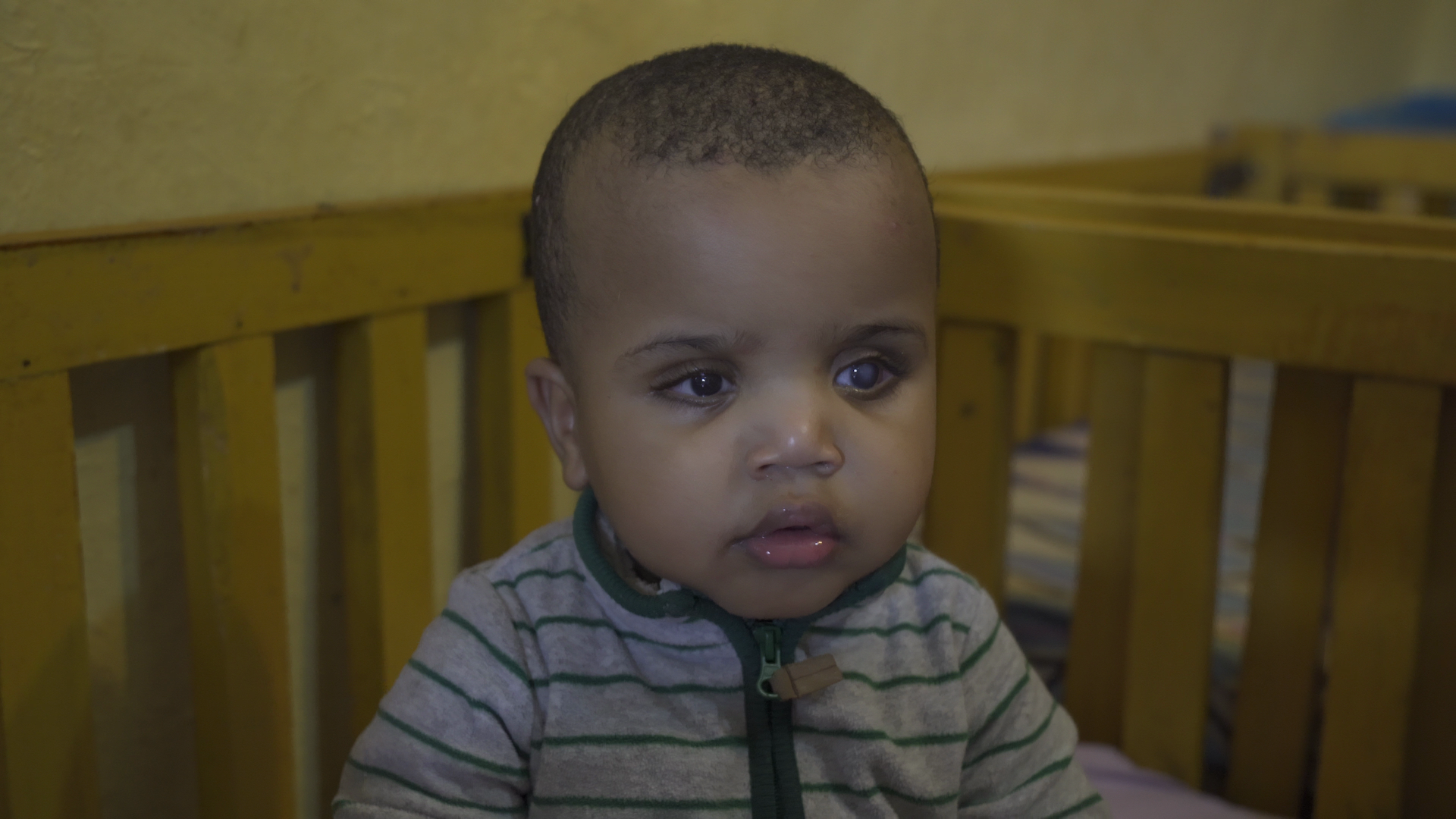
Makbel, who was almost blind, has already had surgery on one eye.
At Talita Rise Up, he not only receives devoted care but also has access to vital medical treatment. Makbel has already had surgery on one eye. The operation was successful, and the coming months and years will show how much his eyesight has improved. A second operation on his other eye is planned and will be performed if the necessary funds can be raised. The operation will cost approximately $1,000.
A unique aspect of this project is that the young children cannot remain permanently in Talita Rise Up's care. Due to legal regulations and a lack of suitable facilities for long-term stays, the children must be placed with new families after a few months. Otherwise, they would have to be transferred to a children's home. Thankfully, so far, the children have always been placed with new families in a timely manner.
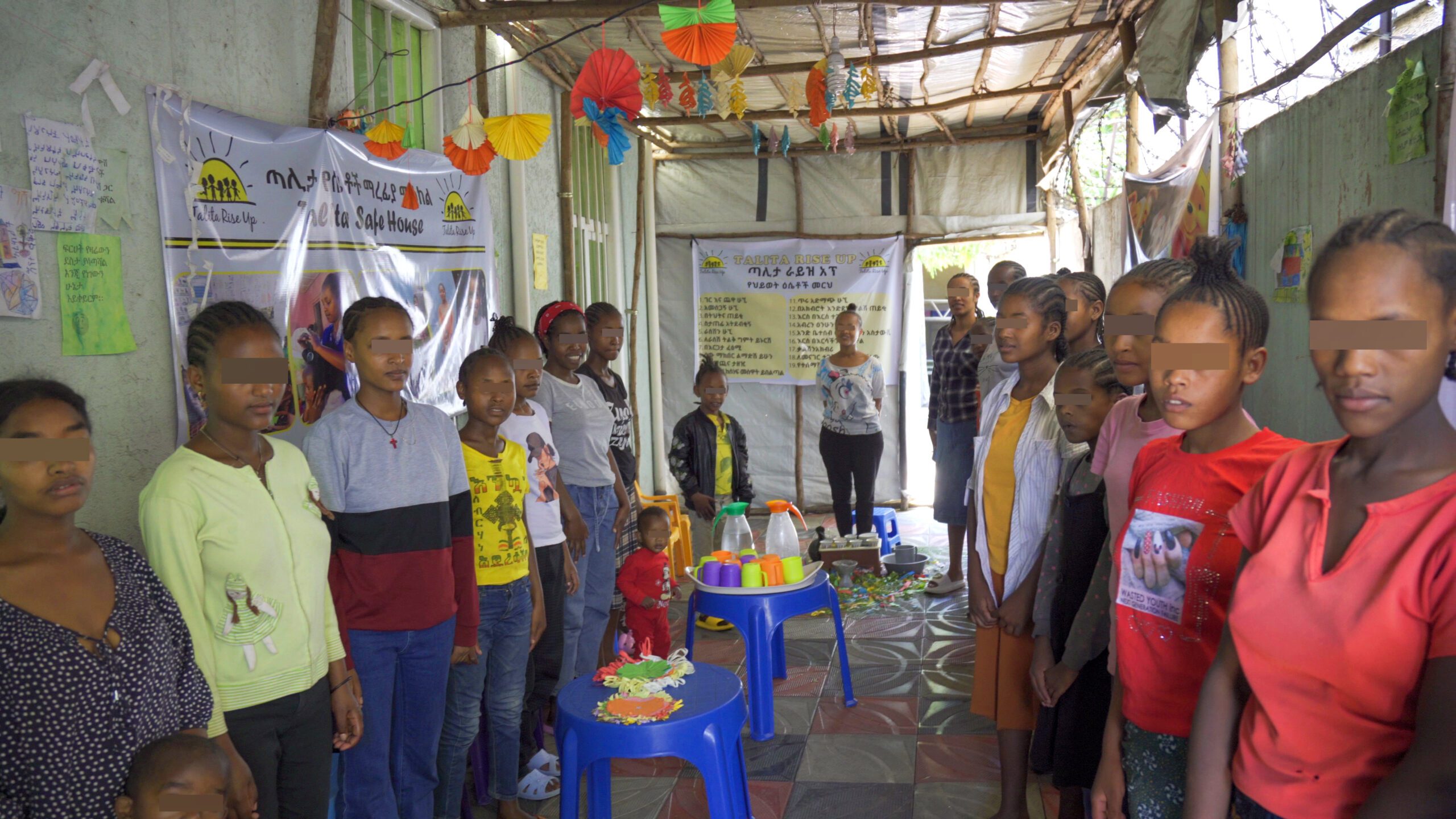
Reception at the Safe House
Second stop: The Safe House
After our visit to the baby home, we drove to another Talita Rise Up location. A good 15-minute drive later, we found ourselves in front of an inconspicuous property surrounded by walls and barbed wire. Behind the guarded entrance gate was the organization's safe house, which provides protection for abused girls and young women. Currently, 27 girls and young women who have been victims of violence find refuge here. This includes, among other things, physical or psychological abuse and rape.
What shocked us was the surprisingly young age of the victims. The youngest girl taken in by Talita Rise Up as a victim of sexual violence was just 10 months old.
Overwhelmed by these initial impressions and information, Amman led us through the rest of the Safe House. The premises contain everything needed for the long-term accommodation of the girls and young women. During their stay, they are integrated into the daily tasks. Overall, we perceived a family-like atmosphere.
In addition to a safe environment, the girls here receive professional pastoral care from a Christian psychologist. Spiritual support is also provided through cooperation with local churches.
In addition, the girls receive access to education and are taught practical skills that will help them after their time in the Safe House.
The project's primary goal, besides physical protection, is the emotional and psychological healing of the girls. Talita Rise Up also advocates for the girls and women in court. However, far more important than a court victory is that the victims experience healing and can participate in daily life again. The fact that this actually happens demonstrates how blessed this project is.
A hopeful example
One example of a rehabilitated young woman is Ethenesh, now 18. Ethenesh was brutally raped by a man from her neighborhood when she was eight years old. The rape was so violent that she suffered severe internal injuries and multiple broken bones. Completely overwhelmed, the girl initially concealed the attack and her horrific injuries. Only eight days later did Ethenesh slowly confide in her mother. The full extent of the rape came to light when Ethenesh called out her attacker's name in her sleep.
She was then taken to a hospital where her injuries were treated. At the same time, her father reported the perpetrator to the police. When Atikilt learned of the horrific crime, she took Ethenesh under her wing. Numerous necessary operations were performed free of charge by the hospital. Nevertheless, there were still costs for treatment and medication, which Atikilt covered herself. For the next four years, she treated Ethenesh like a daughter. Atikilt also advocated for the perpetrator to be prosecuted.
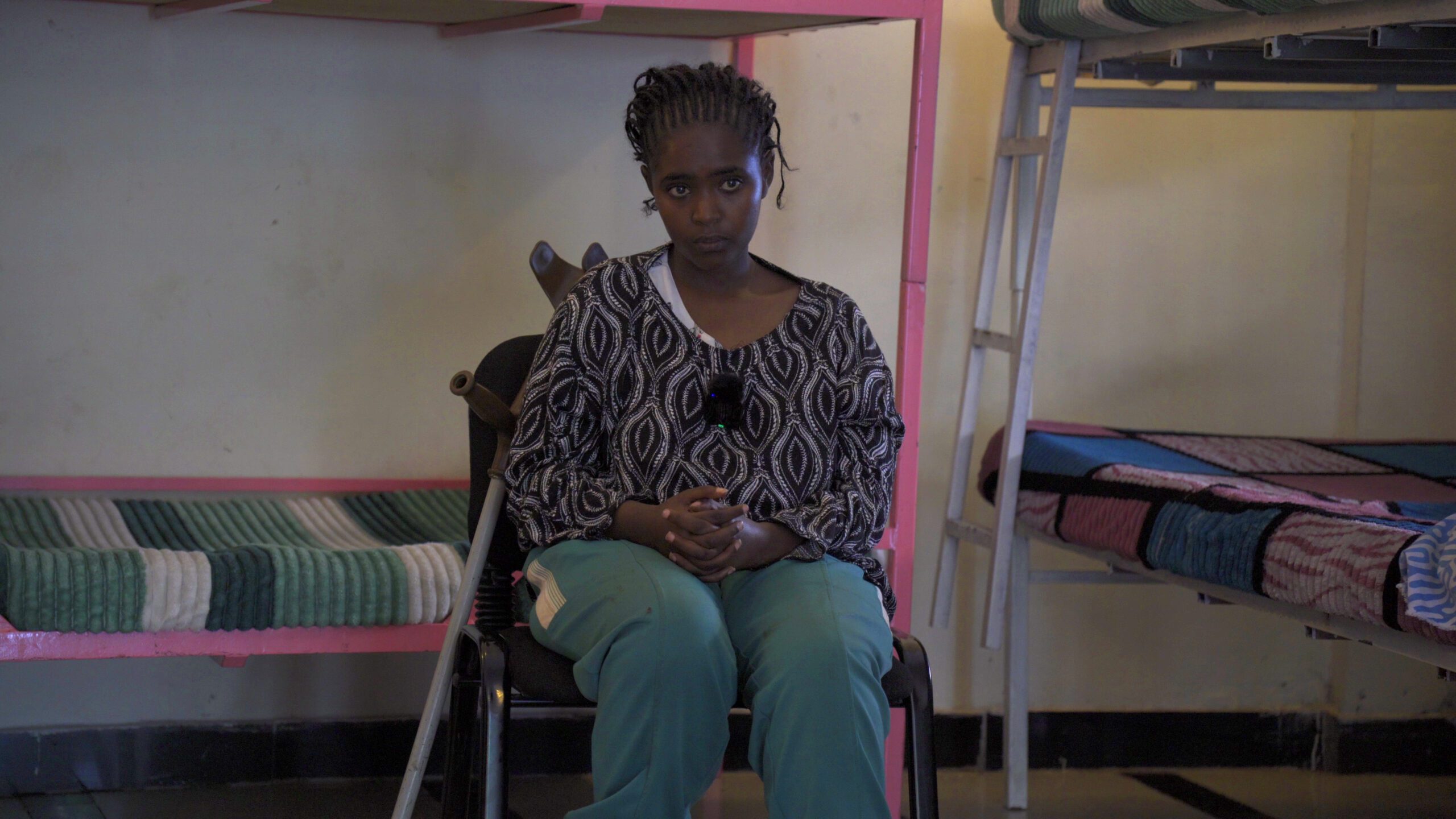
Ethenesh today
Today, 10 years later, Ethenesh has grown into a beautiful young woman. But the physical consequences of the horrific act of violence will mark her for the rest of her life.
Today, she relies on a walking aid and wears a special platform shoe on her right foot to compensate for her legs being of different lengths. Her story is heartbreaking, yet full of hope. Ethenesh agreed to share her testimony with us in the form of an interview. In this interview, she testifies that she has forgiven her rapist and has experienced emotional healing. Ethenesh is a prime example of the importance of Christian-based aid organizations like Talita Rise Up.
During the interview, Ethenesh told us that her walking aid wasn't working properly and that she had already fallen and injured herself as a result. Without her knowledge, we spontaneously decided after the interview to cover the cost of up to 12,000 Ethiopian Birr (approximately €200) for her new walking aid. She received her new aid a few weeks after our visit.

Handover of new assistants and further donations in kind
God-guided donation
In addition to visiting the baby home and the safe house, the potential support of the organization by the Stephanus aid organization was of course discussed.
To ensure that the donation aligns with the wishes of Stephen and therefore also with those of you, the donors, the organization Talita Rise Up was thoroughly vetted both in advance and during our visit. The documents provided, our impressions, and the answers to our questions all reinforced the brothers' decision to financially support the organization.
The aid organization Stephanus presented a donation of 772,000 Ethiopian Birr (approximately €12,500) on this day. This covered the donation for Ethenesh, the organization's debts, staff salaries for two months, and the rent for the safe house for the next 16 months.
Atikilt and Amman were surprised by the donation and initially speechless. Since a temporary grant from a Canadian charity had just expired the previous month, Talita Rise Up's financial future was uncertain. Desperate yet full of faith, Atikilt had turned to God several months earlier. The fact that Stephanus only became aware of the organization a few months ago and is now supporting Talita Rise Up shortly after the previous sponsor withdrew is a testament to the fact that God does not abandon His children and provides for them at the right time.

Handover of the monetary donation to Atilkit
We have the desire and the goal to provide ongoing support for the organization's work. For this, we rely not only on prayers but also on financial support. Currently, for example, we are looking for a church that would like to provide long-term financial and organizational support for this project.
Even though we were able to hand over a substantial monetary donation thanks to you, this alone unfortunately does not guarantee the continued operation of the organization. There are still high ongoing costs for salaries and baby food, which have repeatedly pushed Talita Rise Up to its financial limits in the past. A few weeks after our departure, we received information that funding food supplies for the safe house is problematic due to a lack of donations. Sadly, life-changing procedures like little Makbel's eye surgery can only be carried out if the necessary funds are available.
We also documented our visit to Talita Rise Up in video form. We will publish these on the Stephanus YouTube channel.
David Bechthold
Municipality of Eppingen
More information about the project and the opportunity to donate: