

Podcast: Download (Duration: 5:30 — 3.8MB)
You've surely been confronted with the question of why there is so much poverty and injustice in the world. But have you ever asked yourself how you can contribute to helping these people and giving them hope for their lives? You don't need to be a great missionary! In the following report, you will learn how you can contribute to missionary work in your own sphere of influence.
It's October 24, 2024. In an Indian village called Wokahang, I sat in a tribal house with seven other brothers, enjoying a plate of rice, spicy chili salad, and well-seasoned chicken. After holding a church service and distributing aid packages, we discussed the progress of the mission trip so far with our companions, Brother Peace and Pastor Ningkhan.
During our conversation, my gaze wandered around the room and came to rest on a mural. It was a photograph by William Pettigrew.
(1869–1943), one of the first British missionaries in the Manipur region. Further below the portrait was the Bible verse from Romans 10:15 that suited his life: “How lovely are the feet of him who brings good news!”

Evening after church service with brothers around the campfire
The tremendous power of the Gospel
Inspired by the biography of a missionary named Adinoram Judson, William Pettigrew decided to go to India. In 1894, he began his missionary work among the Thankul tribe in the mountains of Manipur. At that time, the lives of these people were often characterized by physical violence, warfare, and occultism. Particularly popular was "headhunting," in which the goal was to acquire as many human skulls as possible, as this was seen as proof of one's extraordinary strength and courage. The worship of nature spirits and the performance of occult rituals were also part of the daily life of this tribe.
Through the grace of God and Pettigrew's devoted ministry, almost all members of the Thankul tribe were converted 49 years later. Today, 178,568 people belong to this tribe, 99% of whom are Christians.
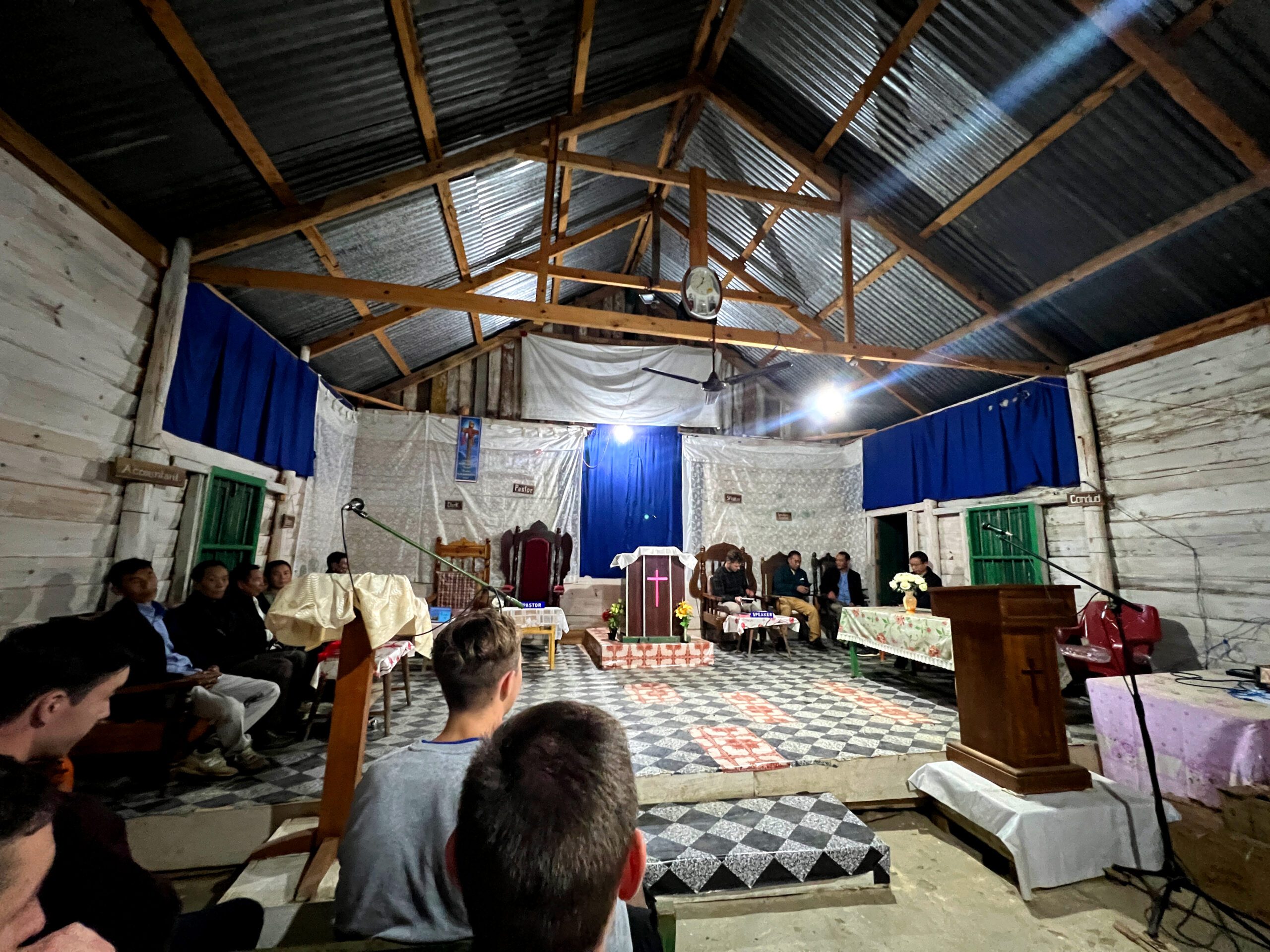
worship
Problems and challenges
Unfortunately, Manipur is still considered economically disadvantaged today, as the Hindu government shows no interest in financially supporting a predominantly Christian state. Most people rely on agriculture to make a living. Electricity and running water are scarce. Young people often migrate to the few large cities seeking education and future prospects, but there they are increasingly exposed to negative influences.
A ray of hope in Manipur
Given these circumstances, individual Christian schools in rural areas, such as the Worrin School, represent a rare opportunity for the surrounding villages to receive essential education. Unfortunately, it was forced to close in 2020 due to the COVID-19 pandemic, depriving Manipur of a vital source of education. Reopening is planned for January 2025 with the support of CDH-Stephanus e.V.
Worrin School offers 100 places for children and will begin with the first four grades, with one new grade to be implemented each year. The goal of the reopening is not only to provide the growing children with a basic education, but more importantly, to lead them to Christ.
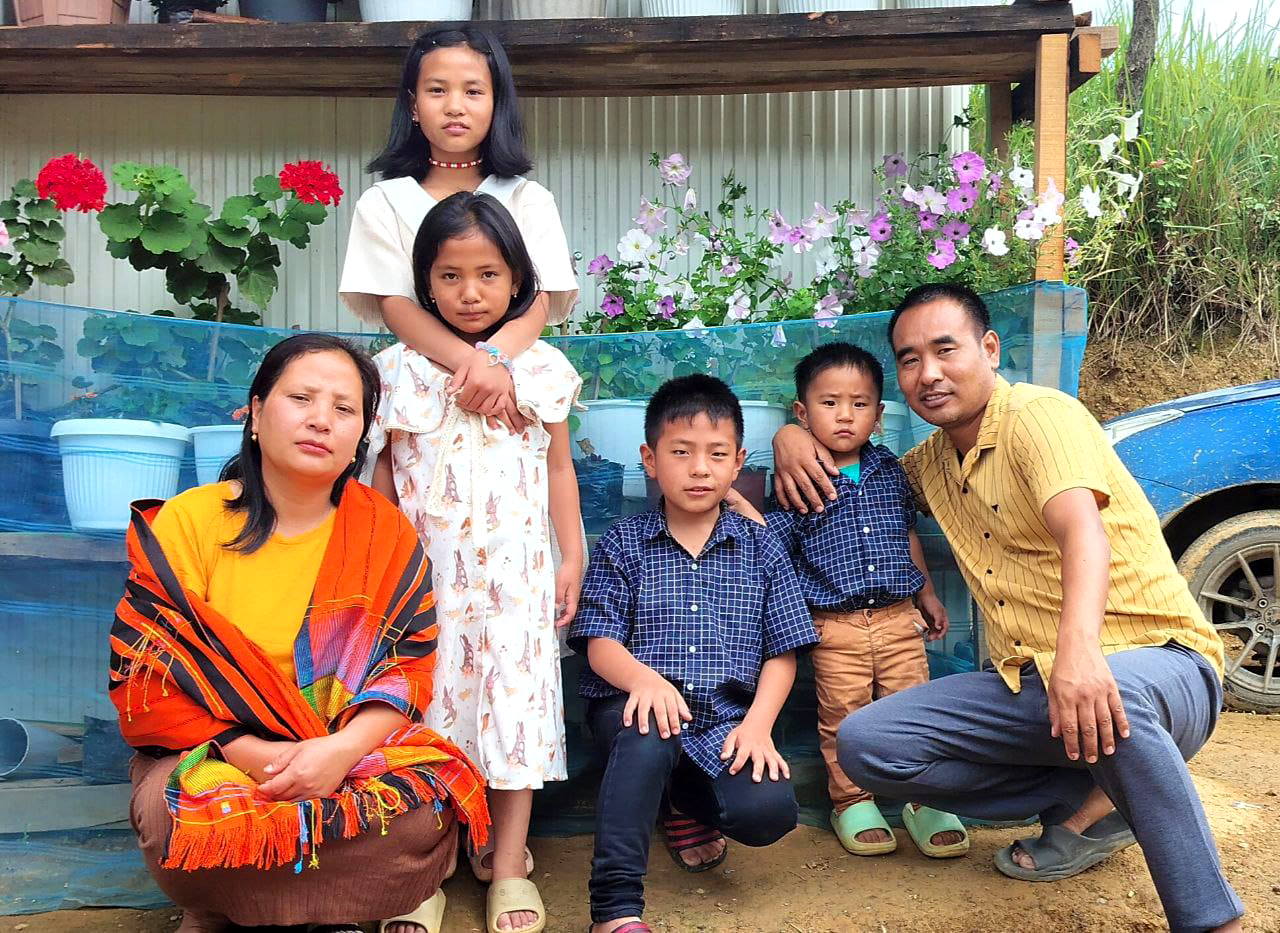
School in Manipur - Brother Peace with his family
Service on one's knees
We are grateful to God for the privilege of participating in such a wonderful project and are also aware of how dependent we are on God's grace. Therefore, in this newsletter, we would like to share the following prayer requests for this project:
- Please pray for a spiritual revival of the more than 40 churches in the Manipur region.
- Please pray that the children will come to know God and experience a profound conversion during their school years.
- Please pray for the teachers at the institution. They need wisdom from above and burning zeal to carry out their ministry conscientiously.
- Please pray that God will provide the necessary financial resources at the right time to continue the further construction work.
CDH-Stephanus Speyer
Philipp Diwold
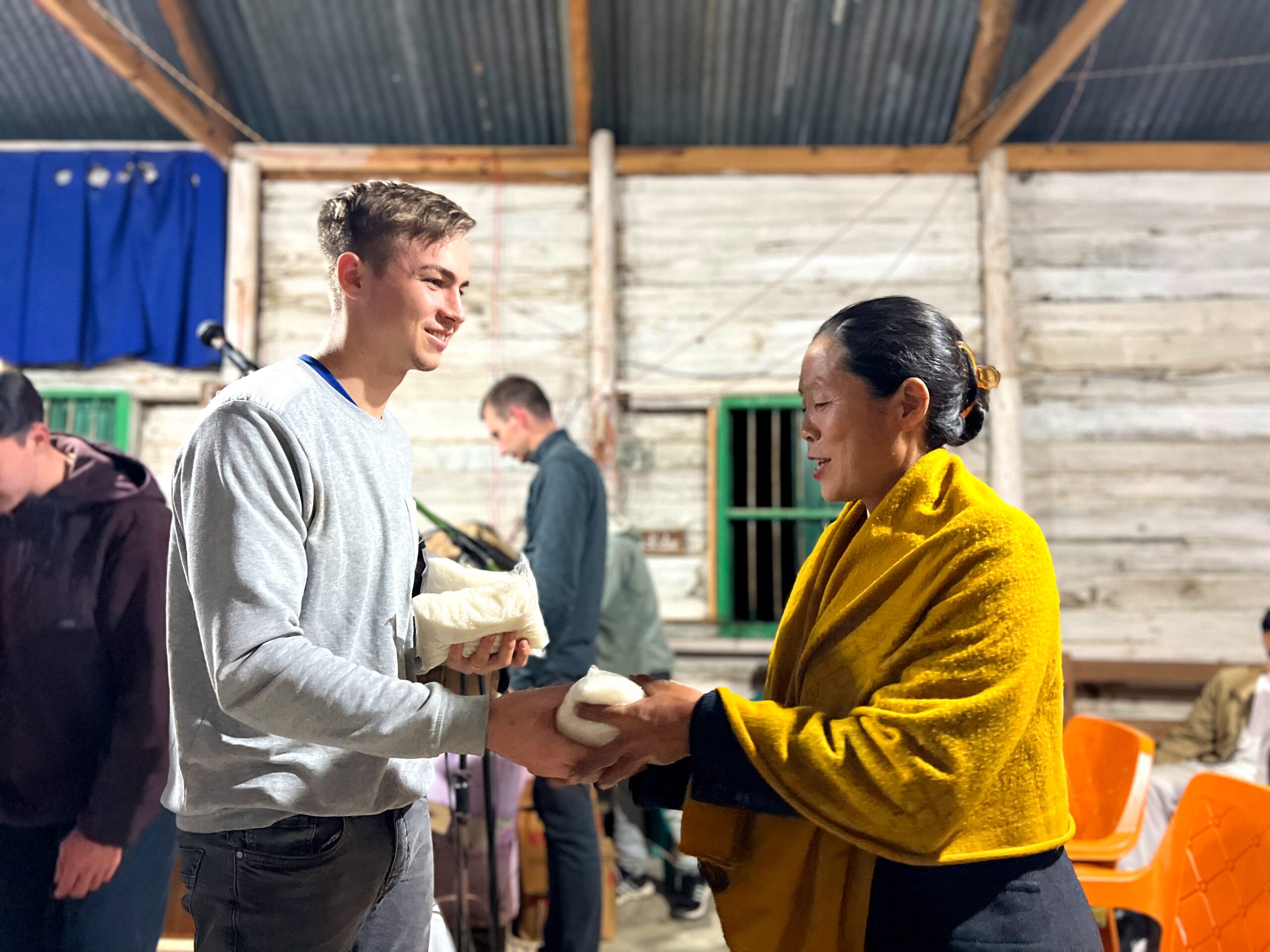
Food distributed