
Podcast: Download (Duration: 11:38 — 8.0MB)
Excerpts from the life of Mina Felker
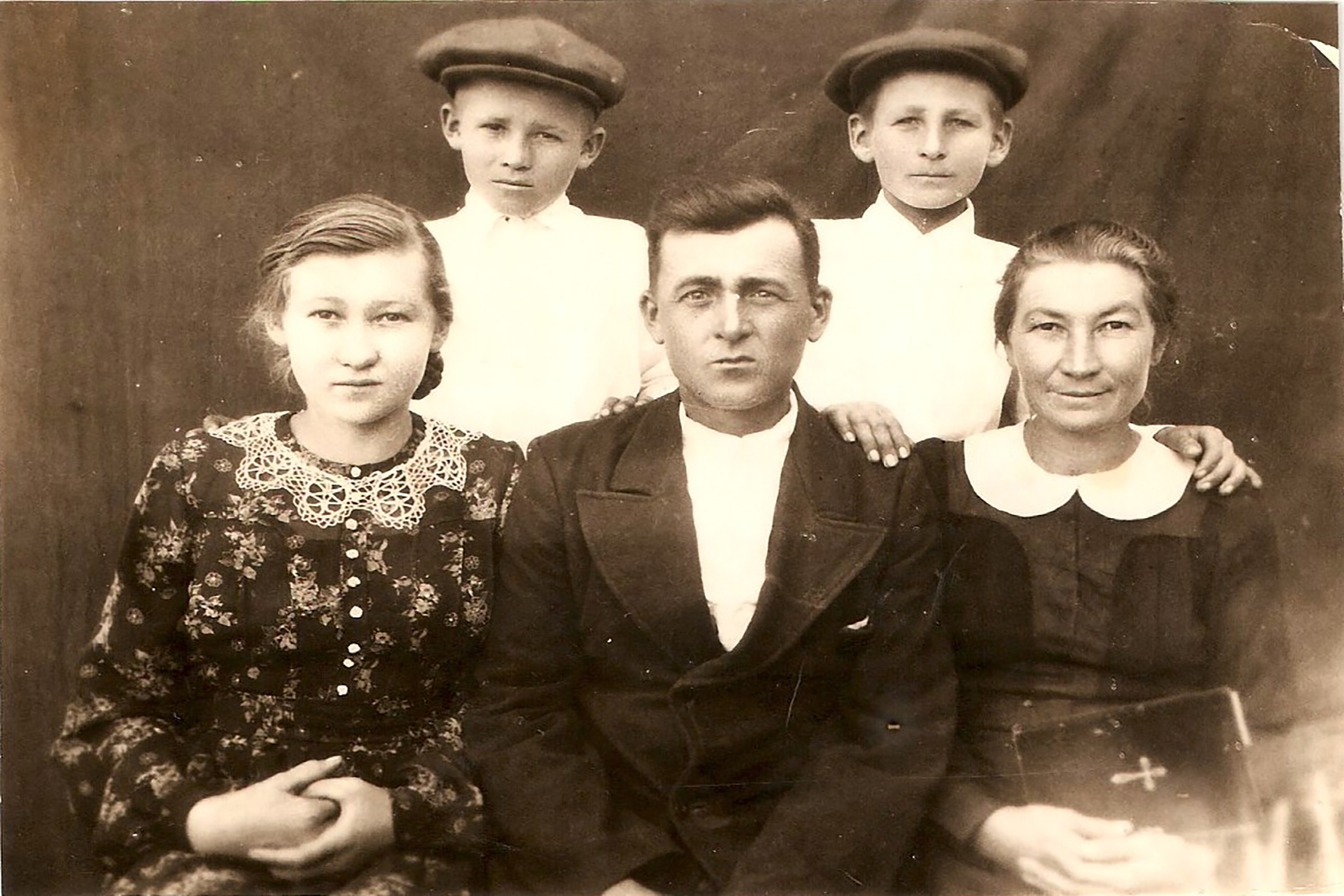
Mina Felker, née Neep, was born on April 17, 1912, in Rostov-on-Don, Russia. She married August Felker on January 30, 1930, and died on January 4, 1998, in Verden (Aller), Germany. The following are some of her life's experiences of faith, intended to fill the reader with gratitude for God's wonderfully guiding hand.
Conversion in war
Mina was born on April 17, 1912, into the family of Karl Neep in Rostov-on-Don, Russia. She grew up there as part of a Lutheran family. Faith didn't play a particularly significant role in her life as a young woman. When it came to festivals and celebrations, dancing and worldly pleasures, she was always at the forefront. However, when she came home after such a lively party, her heart would often be heavy and she would cry. "Why did I do that?" she would ask herself. God repeatedly reminded her through her conscience that this was wrong. And so the years passed. Meanwhile, on January 30, 1930, she married August Felker.
A turning point in her life came with the outbreak of World War II around 1939. One day, overcome with fear, she went into the tall corn growing in her garden, knelt down, and cried out to God. There, she poured out her heart, calling upon God. From that moment on, she was converted. She wanted nothing more to do with worldly life and constantly strove to sing and pray. A fervor for her faith in God swept over her.
The outbreak of war filled many people with fear, leading them to turn to God. They came to church services unbidden, moved by the Holy Spirit, and cried out to God. Voluntarily, without any coercion, they surrendered their lives to the Lord.
God's blessing in times of difficulty
As a young family with three children and their elderly mother, they were finally resettled in the summer of 1942 to Kazakhstan, to a collective farm near a village called Slavyanka, where they were housed in a sheep barn with three other families under very meager and difficult conditions. It was still summer. During this time, her husband August, like many other men and women, was drafted into the labor army and had to leave the family, leaving Mina to fend for herself and provide for the family alone.
In the winter of 1943, she and her children Karl (4), Alexander (7), and Lydia (9) walked at night, carrying a few bundles of their meager belongings on their backs, to Slavjanka, about twelve kilometers away, to avoid being stopped by the other residents of the collective farm. There they lived in their own small house.
In Slavjanka, she also found new fellow believers with whom she met regularly. These were several older women and Brother Heinrich Eva. They were all also Lutherans. Their fellowship was a place of light and joy, and Mina was fervent and strong in her faith. Yet she still felt a certain emptiness within herself. "Brother Heinrich, something's missing!" she would often say. Brother Heinrich, who was older and led the group, would reply, "What more could you want?" Mina was convinced that something was still lacking in her faith.
The hidden, long-sought treasure
Thanks to God, her husband August Felker returned from the labor army in 1947. In the mid-1940s, the persecution of Christians in the Soviet Union intensified, and in the following years, both Brother Heinrich Eva and Sister Mina Felker were reported to the Soviet authorities, partly because they regularly met with Christians. Thus, in 1951, Mina was sentenced to 25 years in prison and sent to a women's prison where the women were housed in barracks.
In prison, she met many different women, including Christians. There were Christian women from twelve different denominations, all calling to her: "Mina, come to us, come to us!" And so she prayed again and again, wondering how she should act and whom she should join. In her earnest questioning and searching, she once went behind the barracks. It was winter and snowing. She knelt there in the snow and, in her helplessness, cried out to God, asking Him to lead her where He wanted her to be. Suddenly, a power came over her.
Guided by this power, she came to a barracks where three sisters who had been baptized by the Holy Spirit were gathered. Even before Mina arrived, God revealed to these sisters: “A soul is coming to you; accept her. She is my chosen one from her mother’s womb.” And so Mina was received there, entered into fellowship with the three sisters, and was ultimately baptized in the Holy Spirit. She was very happy to have received the Holy Spirit.
Her time in prison was difficult. The heavy workload was particularly hard, and it wasn't long before her health took its toll. Soon, the pain made it almost impossible for her to walk, as the mesh under her stomach tore under the strain of the heavy work and burdens, causing her immense suffering. This was followed by an unfortunate operation in prison. It was unfortunate because the stitches kept reopening and the wound healed poorly. She knew she couldn't go on living like that.
And so another operation followed, with the same bitter consequence. The doctor was baffled. When she was about to undergo her third operation and was already lying on the operating table, her fellow believers prayed for her and saw in a vision Jesus standing next to the doctor, explaining how and where to cut.
The Messenger of God
After three and a half years in prison, Mina was suddenly released in 1954. She was informed that an order had been issued to release her and that her prison record should be omitted. What a miracle from God!
It was an unexpected event in the seemingly endless years of her imprisonment. Surprised by this sudden turn of events, she was both happy to be returning home and somewhat saddened, as she had so longed to find strength in prayer with her sisters. Who in her home village would understand her? Who would understand what she had experienced in prison?
Upon arriving home, the family was overjoyed. Mina set out again, not resting from the difficult years of prison work, but going out to preach. She sought out her former congregations and repeatedly and emphatically pointed out that infant baptism had to be replaced by adult baptism and that baptism in the Holy Spirit was necessary. But at first, no one wanted to accept this. Mina kept bringing it up whenever she met with fellow believers, until finally one sister took notice and suggested to the others: "Let's listen to what she's saying; perhaps there's something to it after all!"
They began to listen to what Mina had to say, to examine and reflect upon it, while God worked, and like a spreading fire, one after another they were baptized with the Holy Spirit. Thus, a church began to form in Slavjanka. To have her wound treated and the bandage changed, Mina had to go to the polyclinic, where she met an acquaintance named Martha, who worked there as a nurse. Martha asked where she was from, surprised to find Mina at all. "You know, my brother Johannes has come to us, and he prays in some foreign languages. We don't understand any of it!" Martha told her in amazement. Mina, now as if ignited, immediately understood what she was being told.

Thanksgiving celebration 1959, standing directly in front of the table (from left to right): Mina Felker (née Neep), husband August Felker, Johannes Meier (Wanja)
Full of anticipation, she asked where he lived. "With us!" Martha replied. So Mina sought out Brother Johannes Meier, and together they began working in Slavjanka, with Mina providing invaluable support and assistance. She also organized a "thanksgiving feast" every year, having promised God in prison that she would hold such a celebration annually if she returned home. All her acquaintances from the village, both believers and non-believers, were invited to this annual gathering. Mina would share her experiences in prison, what she had endured there, and how she had found the truth.
In this way, and by God's grace, the congregation in that town grew. When the Iron Curtain fell in the 1990s and many ethnic Germans from Russia resettled in Germany, she and her family also returned to their homeland and lived in Verden (Aller) from then on. Many from the congregation in Slavjanka settled in Bremerhaven and contributed to the formation of the congregation there, some others in Lage-Müssen and later in Bielefeld.
Upon arriving in Germany, another thanksgiving celebration was organized in Bremen. In the following years, Mina's physical strength gradually diminished, and she grew weak until, on January 4, 1998, she passed away.
“Commit your way to the Lord; trust in him, and he will act” (Ps 37:5).
Daniel Asmus
Municipality of Bielefeld