

Podcast: Download (Duration: 28:18 — 19.4MB)
“ Jesus Christ is the same yesterday and today and forever! ” (Hebrews 13:8).
We constantly hear and read that we are living in a time of change. Indeed, we are experiencing profound transformations in many areas, be it in legislation, the concept of family, or the moral values of our society. The circumstances surrounding Daniel's life also changed frequently, yet he remained faithful to his God. Let us learn together from his example and strengthen our own steadfastness and faithfulness in challenging times.
Changing circumstances
Even at a young age, Daniel experienced how quickly circumstances could change. He was taken captive to the Babylonians, finding himself in a foreign land with an unknown language, a different culture, and a strong idolatrous cult. He was chosen and trained for three years for service in the king's court. Due to changing laws and regulations, his life was endangered more than once. During his lifetime, Daniel served under the reigns of four different kings.
Even today, we see many changes. After the Second World War, Germany was a strongly Christian country. Many people attended services of the established churches to find salvation – unfortunately, this has changed. Many large churches are now deserted, except for a few worshippers.
William Booth, a British preacher (1829-1912), said: “ I am convinced that the greatest dangers facing the coming century are these: a religion without the Holy Spirit, a Christendom without Christ, forgiveness without repentance, salvation without rebirth, politics without God, and a heaven without hell. ”
Paul wrote in his letter to Timothy: “But understand this, that in the last days difficult times will come” (2 Timothy 3:1). Paul warned that in later times some would fall away from the faith. We live in this time, under these changing circumstances. The Holy Spirit often reveals that difficult times of testing and purification are coming for God’s people, and just as quickly as in Daniel’s day, the circumstances around us can change.
Longing for purity
“Jesus Christ is the same yesterday and today and forever!” (Hebrews 13:8). His commandments and holiness have not changed—with this knowledge, Daniel served God. He understood that sin would separate him from God, and therefore he was prepared to boldly and resolutely obey God’s commandments. For this, God granted him grace and mercy. Even at the beginning of his time in Babylon, Daniel firmly resolved not to defile himself.
In James 1:17 we read that with God there is no change, not even a shadow of change. Regardless of which direction the world moves in, we must not conform to it. Our task is to serve God with the understanding that He is unchanging. He remains faithful to His Word and desires that we do not deviate from it. The desire to keep our hearts pure before God should accompany us at all times as children of God. John writes, “We know that everyone born of God does not continue to sin; the one born of God keeps himself safe, and the evil one cannot touch him” (1 John 5:18). Take care of yourself! Resolve not to defile yourself!
...With your eyes
Job made a covenant with his eyes (cf. Job 31:1). “The eye is the lamp of the body. If your eyes are healthy, your whole body will be full of light; but if they are unhealthy, your body will be full of darkness. Therefore take care that the light within you is not darkness” (Luke 11:34-35). In our modern age, thanks to the possibilities of digitalization, we can see almost all the realms of this world in an instant. The danger of falling into temptation and defiling our eyes is therefore very great. Men of God, such as David, defiled themselves and were separated from God by sin because they failed to watch their eyes for a moment.
...With your tongue
“I have said, ‘I will watch my ways, and I will not sin with my tongue; I will bridle my mouth while the wicked are before me’” (Psalm 39:1). Be a spring of sweet water, edify others, and speak what brings grace to your listeners.
...With your thoughts
“So that we may destroy arguments and every pretension that exalts itself against the knowledge of God, and take every thought captive to obey Christ” (2 Corinthians 10:5). We must take every thought captive and only allow it space within us if it is pleasing to Christ.
“I cannot prevent evil thoughts from flying like birds over my head, but I must not allow them to build nests there!” (Quote from Martin Luther). Philippians 4:8 gives us guidance on what we should think about.
...With your feelings
The feelings that moved Christ should also move us (cf. Phil 2:5 [Russian translation]). In your youth, new feelings awaken within you, but you must master them. In 2 Samuel 13:1-22, we read about Amnon, who gave free rein to his feelings and sinned. He loved his sister Tamar so much that at first it seemed impossible to him to harm her in the slightest. However, after he sinned against her, his hatred for her grew even greater than his love had been. God's love is always pure, decent, and rejoices in the truth. It does not act rashly but endures everything with patience. In the Bible, we read about Jacob, how he waited for Rachel for seven years and served his uncle Laban until he had her as his wife. Not only the feeling of being in love can arise within us, but also other feelings that we must control.
God-fearing friends
“Therefore flee from youthful passions and pursue righteousness, faith, love, and peace, together with those who call on the Lord out of a pure heart” (2 Timothy 2:22). Daniel had no friends among the Babylonian people, but like-minded individuals at his side. Friends who were determined and ready to serve God completely and stand with him in prayer.
It is often seen how people fall away from the faith and change for the worse because of false friends. “Bad company corrupts good character” (1 Corinthians 15:33). “Do not befriend a hot-tempered person or associate with a hothead” (Proverbs 22:24). We have a free choice about whom we befriend. James writes in his letter that friendship with the world is enmity against God (see James 4:4). David had a God-fearing friend. Jonathan strengthened him in God and was willing to give his life for him. We need friends who strengthen us in faith, are God-fearing, and are willing to pray for us in times of need. “A friend’s blows are faithful, but an enemy’s kisses are plentiful” (Proverbs 27:6). We need people by our side who admonish us with sincerity and simplicity of heart, based on the truth.
A man of desire
“Three times a day he fell on his knees and prayed and gave thanks to his God, just as he had always done before” (Daniel 6:11). Daniel’s joy did not lie in being a high-ranking minister at the king’s court. His thirst and his entire longing were directed daily toward God. Even in his old age, what he had already experienced with God was not enough for him. He continued to approach God with humility, confessing his sins and continually seeking Him in prayer, accompanied by supplication and fasting. “Yes, you will seek me and find me when you seek me with all your heart” (Jeremiah 29:13). “The spirit that dwells in us is jealous” (James 4:5).
Anyone baptized with the Holy Spirit has surely experienced being compelled by Him to pray. Afterward, we realize that God's presence was there, edifying and strengthening our inner being. The Holy Spirit is a source of grace within us. Jesus said, "If anyone is thirsty, let him come to me and drink" (John 7:37). God does not give the Spirit in measured amounts; our souls are meant to always thirst for God and this living water. What we experience in God is wonderful and glorious; there is nothing greater than being in fellowship with Him. When Peter, John, and James were on the Mount of Transfiguration and experienced the glory of God, they said, "Rabbi, it is good that we are here. Now let us put up three shelters—one for you, one for Moses, and one for Elijah" (Mark 9:5).
A person who has tasted how kind the Lord is understands that there is nothing better than fellowship with Him.
He remains true to His word and desires that we do not deviate from His word.
Filled with intellect and wisdom
“Whoever loves God has been given knowledge of God” (1 Corinthians 8:3 [Russian translation]). It is clear that a high spirit (the spirit of the gods) dwelt in Daniel. Where human wisdom and even occult powers reached their limits, God opened to Daniel what was deep and hidden. One can assume that Daniel had experienced and learned much about God during his childhood among his people. Through his love for God, the Lord revealed Himself to him more and more; thus, he knew His God not only by hearsay, but he experienced Him.
“My people are destroyed for lack of knowledge” (Hosea 4:6). Time and again, we see that people don't know and experience God personally. They may be in the church, have a great deal of knowledge about God, but have never encountered Him personally. During a youth service, a youth leader asked a young person when he had converted and given his life to Jesus. His answer was that he had been a believer since childhood. Even if you have been in the church since childhood and have learned a lot, it is important to experience God personally. The prophet Samuel lived in the temple of God even as a small child. But there came a moment in his life when the Lord revealed Himself to him personally. He came to know the voice of God. “Whoever keeps my commandments and obeys them, he it is who loves me. The one who loves me will be loved by my Father, and I too will love them and show myself to them” (John 14:21). If we love the Lord with all our heart, with all our soul, and with all our strength, He will reveal Himself to us more and more. Through His Spirit, He will give us understanding and wisdom in situations where we are alone and see no way out.
God gives grace to the humble.
Daniel faced many difficult tasks, but he found his trust and strength solely in God. He did not rely on himself; rather, he understood that he could do nothing without the Lord. Daniel's heart was set on humbleding himself before his God. When God revealed to him the answer he had sought in his dream about King Nebuchadnezzar and its interpretation, he gave glory to his Lord. “To you, the God of my fathers, I give praise and thanks, for you have given me wisdom and strength and have now made known to me what we asked of you; for you have made known to us the king's plea!” (Daniel 2:23).
Before the king, he made it clear that he was unable to recount the dream and its interpretation, but that there is a God in heaven who reveals mysteries; only then did he let King Nebuchadnezzar know what would happen in the last days (cf. Daniel 2:24-28). When King Belshazzar promised him a reward for interpreting the writing on the wall, Daniel replied, “Keep your gifts for yourself, and give your gifts to someone else!” (Daniel 5:17). He did not use the gifts God had given him for his own glory, but rather he glorified God's name. Through this, the Lord was able to use him even more. If we want to receive grace from God, we must humble ourselves. Humility precedes honor. The reward of humility is honor and a long life (cf. Proverbs 22:4). If a person relies on their strength and intellect, a tremendous collapse will occur. But if he trusts in God with a broken spirit, He will look upon him. The life of King Nebuchadnezzar makes clear how easily God can humble a person. Nebuchadnezzar had to experience this humiliation and said, “But he is able to humble the one who walks proudly” (Daniel 4:34).
Thoughts of pride constantly try to creep into our hearts, much like they did with the disciples. “They began to wonder who was the greatest among them” (Luke 9:46). Jesus told the disciples, “Whoever is least among you all will be great” (Luke 9:48). “What I say to you, I say to everyone: Watch!” (Mark 13:37).
Love for his people
Although God's people had strayed from God, Daniel did not blame or despise them, but rather saw himself as complicit. His prayer to God was: “We have sinned and done wrong and acted unlawfully; we have rebelled and turned aside from your commandments and your statutes” (Dan 9:5). With supplication and fasting, he stood in the way of his people. His desire was that God would turn away His anger and wrath and the scorn of his enemies from His holy city, Jerusalem (cf. Dan 9:16). The consecrated place, the site of the temple where God's people gathered for sacred service, was not a foreign or unimportant place for Daniel. He prayed to God that He would make His face shine upon it (cf. Dan 9:17). His great desire to see the devastated city of Jerusalem rebuilt was deeply ingrained in his heart.
Unfortunately, we see today how people are abandoning their own gatherings and not valuing, and often even despising, the fellowship of saints. Increasingly, we find more and more "Sunday Christians" in the church. We live in a pleasant time. God gives us the opportunity to strengthen ourselves with our fellow believers in worship services. The first church remained steadfast in the apostles' teaching, in fellowship, in the breaking of bread, and in prayer. Believers were together and shared all things; every day they were steadfast and united in the temple (see Acts 2:42-47). It is important to understand that the church is the body of Christ. If I love Jesus, then I love the church because it is the body of Christ. If I despise the church, I despise Jesus. Let us not abandon the first love that God gave us, but rather value one another and love with the love of God. "If we love one another, God lives in us and his love is made complete in us" (1 John 4:12).
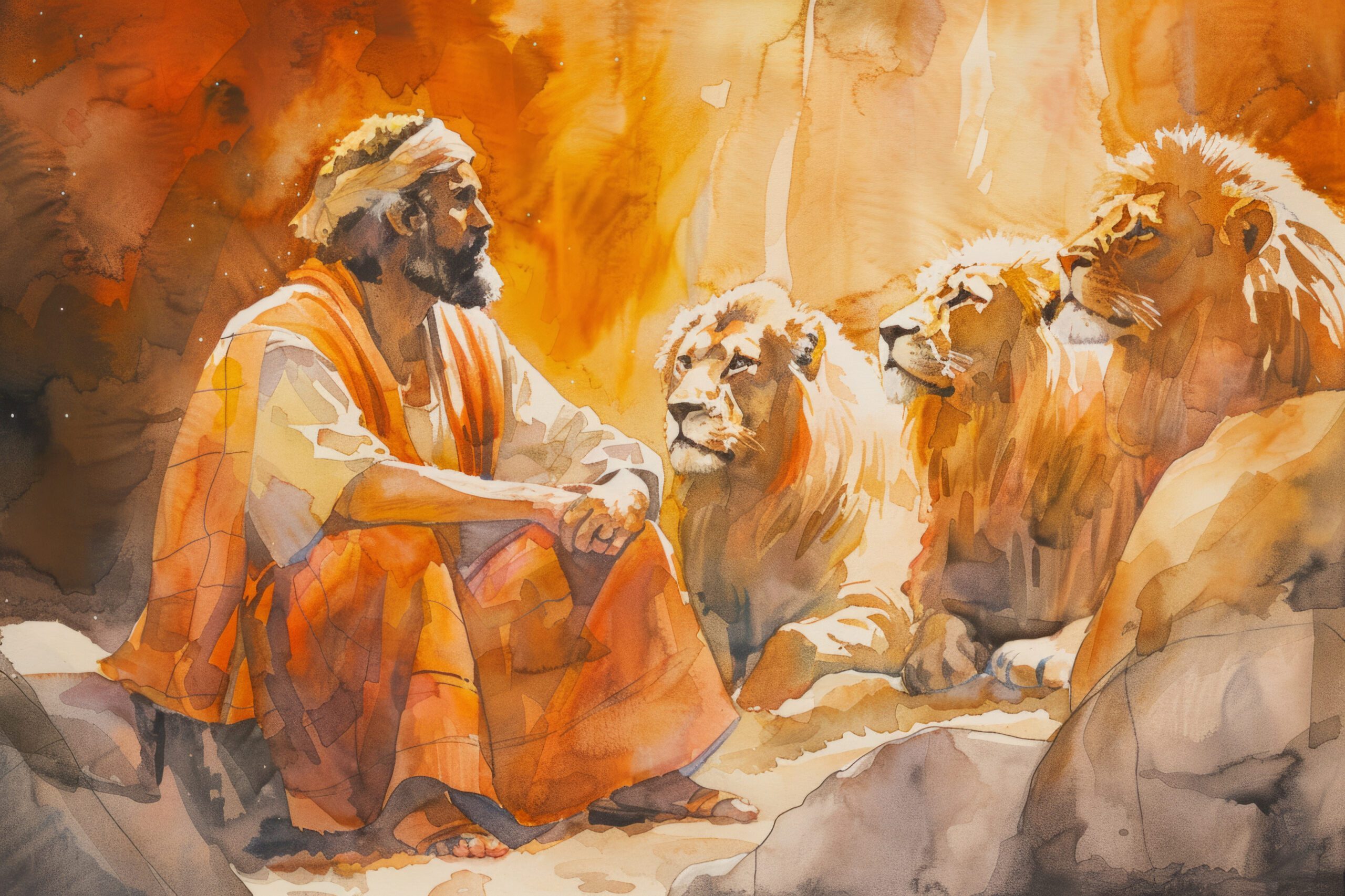
Daniel's loyalty in the lions' den. Image source: AdobeStock @ 810206349 fotoyou
Loyalty to God and man
“The ministers and satraps sought to find an accusation against Daniel concerning the affairs of government; but they could find no fault or anything detrimental, because he was faithful and no negligence or any transgression could be found in him. Then those men said, ‘We will find no grounds for accusation against this Daniel except in the law of his God!’” (Dan 6:5).
Faithfulness to God and man was in Daniel's heart. No matter what tasks were entrusted to him, he did everything as if it were for the Lord. He kept his conscience pure before God and man. A yes was a yes for him—a no was a no; he was unshakably determined to remain faithful to the Lord. No law of the king could lead him to transgress the law of his God. He was even willing to give his life for it. Until the end of his days, he served the Lord faithfully. God himself gives him the promise: “But as for you, go until the end; you shall rest now, and at the end of the days you shall rise to your inheritance” (Daniel 12:13).
“Whoever is faithful in a very little will be faithful in much, and whoever is dishonest in a very little will be dishonest in much” (Luke 16:10). Unfortunately, some members of the congregation are dissatisfied with the services or responsibilities entrusted to them. They see themselves as being called to something greater, such as serving or leading. Some even refuse certain tasks because they seem too insignificant. Jesus is looking for people who are willing to serve with what He gives them. Everyone has received their talents, and the Lord wants us to be faithful in these few things. Jesus said of Himself, “I have given you an example” (cf. John 13:15). He served the disciples not only with words and miracles, but He also prepared breakfast and washed their feet, for example. When God sees our faithfulness in small things, He will entrust us with more and more of His work. “For to everyone who has, more will be given, and he will have abundance; but from him who does not have, even what he has will be taken away” (Mt 13:12).
Good habits
Even at a young age, Daniel made it a habit to worship his God three times a day. Fasting was also familiar to him. There were certainly other ways to adapt to the situation and thus avoid the looming danger and confrontation of Babylonian captivity. But what Daniel had learned from his fathers in his youth, he steadfastly maintained.
What are our habits when we begin our day in the morning? Do we first reach for our smartphone to check the latest news and events, or do we go to prayer and look into God's Word? Our daily routine depends on how we begin it. To remain spiritually alive, it is important to have consistent habits that strengthen and renew our inner being daily. Just as our body needs nourishment and care day after day, so does our inner being. "Train up a child in the way he should go, so that when he is old he will not depart from it" (Proverbs 22:6).
Actions we perform repeatedly become habits over time. Initially, it might be somewhat difficult to incorporate spiritual practices into daily life, such as fasting once a week or reading a certain number of Bible chapters. But with time, we can't help but act this way. Jesus was accustomed to going to the synagogue and the Mount of Olives to pray. These habits renewed and strengthened Him.
Worship without ceasing
When Daniel was in a difficult situation in the lions' den, King Darius came to him and said, "Daniel, servant of the living God, has your God, whom you serve continually, been able to save you from the lions?" (Dan 6:21).
It was quite obvious to those around Daniel that he served God without ceasing. He never set aside his service and then resumed it later. In every area of his life, he was seen serving with complete devotion, whether as a high-ranking minister in society or as the solitary Daniel in his private room. Daniel prayed in his private room; he made no pretense. What he experienced with God on his knees was evident to the outside world.
Unfortunately, some people only outwardly serve God in public before others, but in private, many shameful secrets are kept. It was similar with the scribes; they performed many services to be noticed and honored by others, yet their inner selves were filled with all impurity (cf. Mt 23). We can serve God through visible services, such as preaching or playing in an orchestra. These deeds are good and pleasing to God. But Jesus also spoke about those services that are done in secret: giving alms, praying, and fasting. Our worship should be without ceasing! Paul exhorted the Romans: “Offer your bodies as a living sacrifice, holy and pleasing to God. This is your true and proper worship” (Rom 12:1).
Serve God with all your heart! Only what we are in secret becomes apparent in our public service.
With Jesus, the called, the chosen, and the faithful will be in the Kingdom of God. May God help us, through the changing times, to emulate Daniel's faithfulness, so that we may be faithful unto death.
God's blessing, dear youth!
David Ganske, Municipality of Seckach