
Podcast: Download (Duration: 10:24 — 7.1MB)
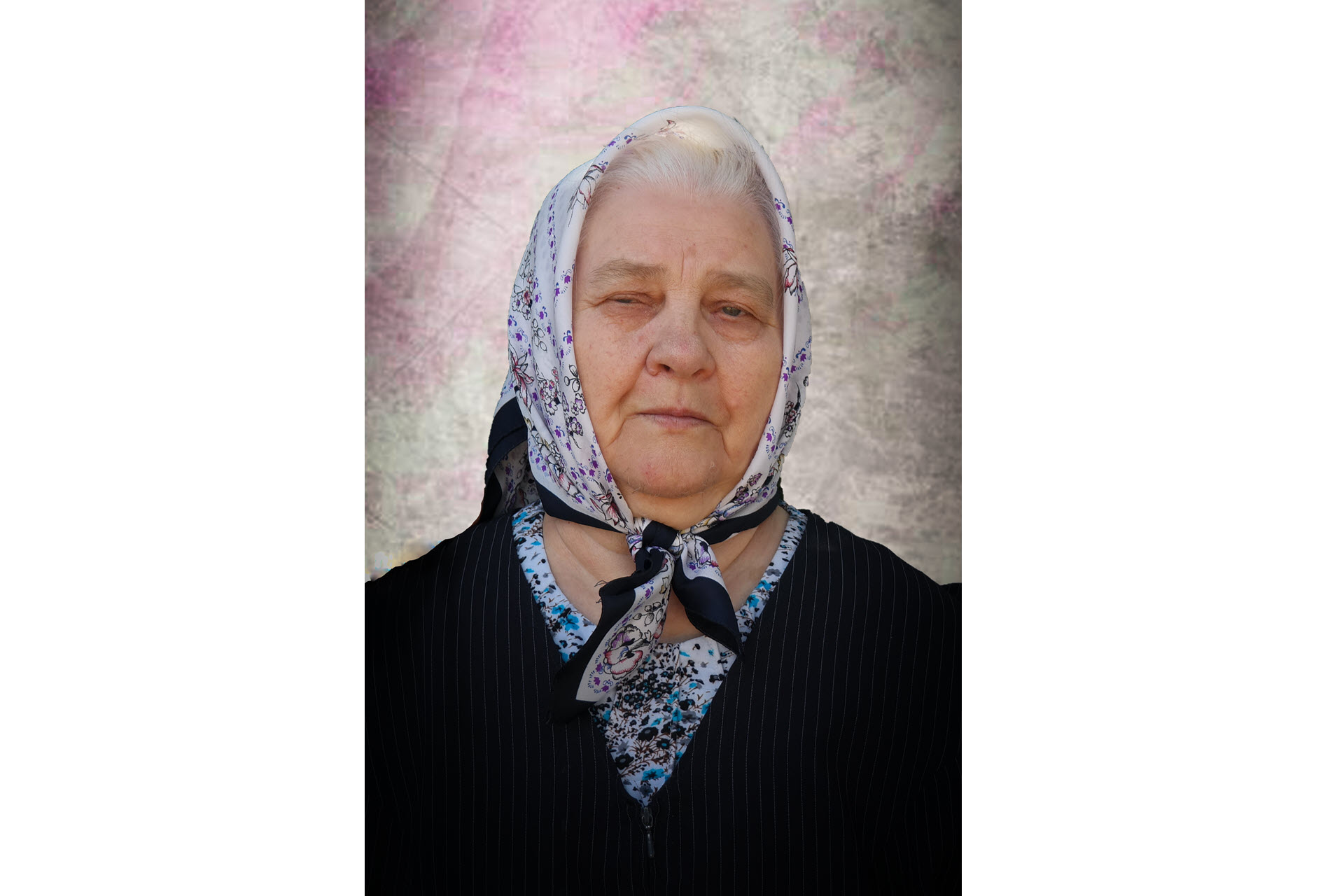
Insights into the childhood of Sister Maria Ped
“Trust in the Lord with all your heart and lean not on your own understanding; in all your ways acknowledge him, and he will make straight your paths” (Prov 3:5-6/SCH 1951).
We often hear these words in church services and not infrequently when we visit elderly people. Sister Maria also often recites these verses. They have become very important in her life.
It could have continued like that.
Sister Maria Ped was born on October 24, 1936, the fifth of eight children. Her parents had moved from Prussia to Ukraine during World War II. The family lived in a beautiful and idyllic landscape with forests and a river. Through hard work, the family's possessions increased significantly in just a few years. Maria's father owned a great deal of land and livestock. He kept workhorses, sport horses, cows, pigs, and sheep. He also produced charcoal for the blacksmith, which they then sold in the region near the Black Sea, in Crimea. The family's daily life was characterized by much effort and care for their possessions. They were content, and life could have continued that way.
But things turned out very differently than expected. In the 1930s, forced collectivization took place in the Soviet Union, forcing farmers to abandon their individual farms and join large socialist collective farms (kolkhozes). People were gradually dispossessed, often through violence. Those who refused faced severe consequences. They were arrested and deported. Often, families never learned where their fathers and husbands were taken. In most cases, the relatives never saw each other again.
In 1938, the government confiscated all the property and possessions the Ped family had earned and built up. Maria's uncle, who had joined the Communist Party, secretly informed her father that anyone who "agreed" with the government's system and voluntarily surrendered all their property would not be killed or deported. Her father was to take all his belongings to the collective farm himself and hand them over within just two days.
That same year, the family's eldest son, who was dearly loved by everyone, became seriously ill. A wound had opened up that urgently required surgery. Unfortunately, the operation was unsuccessful. The wound became infected, and the son died.
In addition, the Ped family had to surrender their entire harvest in the autumn of that same year. The father always appeared outwardly calm and composed, seemingly accepting all these events with equanimity. Nevertheless, the losses hit him very hard. He became so discouraged that he fell ill and died in 1944, before the end of the Second World War.

Family of Sister Maria Ped
God of all comfort
Despite all these blows of fate, God did not abandon the family. The Ped family were Lutheran. The teachings of the Holy Spirit were unknown in the village until 1938. During the communist era, they were introduced to their village by Ivan Voronayev. An illiterate woman was the first, and for a time the only, person in her region to be baptized with the Holy Spirit.
Later, a small group of people who longed for God gathered in a house church at Maria's uncle's house. Her eldest sister also attended these gatherings. There, in 1941, she was sealed with the Holy Spirit. At that time, Maria Ped was 5 years old.
The year 1941 was very difficult for Ukraine. That year, the German army conquered a large part of the country, including the area where the Ped family lived. But the horrors didn't end there. Maria's two eldest sisters were deported to Germany for forced labor on a train that was actually meant for goods and animals. This was a great tragedy for the family, as they expected never to see them again.
Sister Maria describes her memory of this sad event as follows: “I didn’t understand why my sisters were no longer there. I didn’t know where they were. Even my mother couldn’t tell me. I was very sad and worried about it. We had a large stove with several steps in our house. When night fell, I climbed up and prayed to God to protect my sisters. I don’t know how long I prayed there. But up there on the stove, when I was five years old, God sealed me with the Holy Spirit.” This is how the Heavenly Father comforted little Maria.
The miracle during the planned "river shooting"
Shortly afterward, another tragic event unfolded. The village where Maria lived, like other villages, became a zone between the war fronts for a time. Rulers constantly changed: by day, German troops held sway, and by night, when they had retreated in fear, the "partisans" (Russian guerrilla movement) took over.
We are continually reminded that God does not abandon His children who follow Him in purity and with all their hearts.
One day, the German army decided to shoot all the villagers living near a large, fast-flowing river. They accused the villagers of having husbands and sons who were members of the resistance. A horseman rode through the village that day and announced that all the inhabitants should assemble immediately at the river. Everyone was herded together at the river. Anyone who dared to step out of the crowd would have been shot on sight. It was a hot day, and so all the villagers stood together in the heat for a long time: the elderly, the women, and the children. Six-year-old Maria was among them. At the time, she didn't understand why everyone was crying so bitterly. She was fine—her mother was with her.
The German soldiers stood somewhat apart from the assembled crowd on a hill, in a semicircle. They were mounted on their horses and wore large helmets bearing the SS insignia. They took their time with the shooting. Finally, even the children, suffering from the day's heat, wept.
Someone expressed a wish for one last prayer together. However, they had to obtain permission from the SS soldiers; otherwise, they risked being shot on sight. But who spoke German and dared to step out of the crowd? The order was clear: anyone who left the throng would be shot immediately. Suddenly, a person broke away from the crowd and moved toward the SS officers. It was the woman who could neither read nor write and who had been the first person in the settlement to be baptized with the Holy Spirit. She was filled with the Holy Spirit and went to the officers. She spoke with them for about twenty minutes, then returned and announced that they could pray together one last time.
With tears in her eyes and a trembling voice, Sister Maria said in the interview: “Here, no one had to tell anyone else how to pray. Suddenly, there were no atheists and no communists. Everyone fell to their knees and cried out to God.” God answered the prayer. After lengthy discussions among the officers, all the soldiers silently withdrew from their positions. For this miracle, God used a woman who was considered nothing among people, to glorify His name.
God used a woman who was considered worthless among men to perform a tremendous miracle in order to glorify His name.
The aftermath
Throughout Sister Maria's life, during the persecution of Christians, and in her testimony before the courts, this account of the "river shooting," which she had witnessed as a six-year-old, proved to be a powerful argument in successfully refuting all hostility and slander against God and her faith. For this testimony had spread widely throughout the land, and it was undeniable that God and faith in Him had saved these people.
It was the beginning of a challenging yet richly blessed life's journey for our sister in faith. In her youth, a firm and unshakable foundation was laid in her young heart, a foundation that no one could ever take away. We are continually reminded that God does not abandon His children who follow Him in purity and with all their hearts. Rather, He carries them through and prepares for Himself a beautiful bride for eternity.
When this text was first written, it didn't seem likely that we would soon be unable to gather freely as usual. Perhaps it's no coincidence that this text presents two contrasting situations: One person works hard, acquires wealth, and yet must relinquish it in this earthly life; the other, defying all human understanding, is full of devotion, relies on the Lord, endures apparent losses and sacrifices, and is subsequently blessed and transformed into a precious stone in the Kingdom of God.
The following appeal is directed to all of us: As children of God, we should be careful not to be among those who strive much for material possessions and little for spiritual matters. Trials will come in our lives. Is my life securely built on a firm foundation?
Denis Savtschuk
Municipality of Bremen-Mahndorf