
Stories from life – Some excerpts from the life of Bishop Willi Krüger
3. Juni 2022 · 6 Min. lesen

Podcast: Download (Duration: 10:27 — 7.2MB)
Childhood and bare survival
In Ebenfeld, a German village in what is now Ukraine, Otto and Ida Krüger had a son in the winter of 1928, whom they named Willi. The village belonged to the Kronau settlement, which was predominantly founded by Evangelical Lutheran Germans.
In total, five children were born into the family, Willi being the fourth. The first daughter, Klara, died in infancy. At that time, there was great hardship and poverty. The father and mother worked from sunrise to sunset on the collective farm. At the end of the year, their wages were paid according to the number of days worked. However, they had to provide for themselves. Owning a cow averted the worst of their poverty.
Among the taxes levied were taxes on milk, pig hides, meat, and eggs. Owning chickens was irrelevant. After the year's accounts were settled, residents were also obligated to purchase lottery tickets – the so-called "bonds." A widow who could not afford them was arrested and never returned. Her 16-year-old daughter was left an orphan and was arrested shortly afterward as an "enemy of the people."
Until 1933, people managed to get by reasonably well, until crop failures led to a great famine across the country. The government conducted house searches and confiscated all food supplies. People found with hidden wheat were arrested or shot. The NKVD, the People's Commissariat for Internal Affairs of the Soviet Union, began its violent campaign, expropriating landowners and forcing them to join collective farms (kolkhozes). The dairy run by the Krüger family also became state property after its expropriation.
When Willi was in second grade, he had to get up early to help his father with the barn chores and tending the cattle before school started. He did this work with pleasure. His father promised to buy him a small raincoat in return. But he couldn't keep this promise, because on February 1, 1937, during the Stalinist purge, he was arrested as an enemy of the people and shot a month later. In the same manner, 42 men and 3 women from the village of Ebenfeld were arrested. The executions were indiscriminate, unjustified, and merciless. It was a very evil time, in which people were even afraid to speak to one another.
The four Krüger children now had to grow up without a father and helped their mother as best they could. But they suffered greatly and went hungry. Willi could still vividly remember the year 1938. He had to go to school, but he didn't have any trousers. So his mother took a thin sack, dyed it black, and sewed him trousers that reached his knees. Because they also didn't own any shoes, they always went barefoot. When it got cold, their feet would freeze and turn blue. So, while herding the calves and cattle, they warmed their feet in the animals' urine and dung.
Willis's mother had been raised to be devout since childhood. Especially on cold winter evenings, she would tell the children about Jesus and warn them not to tell anyone, otherwise she too would be arrested.
The believers gathered secretly in their homes.
Abduction and conversion
The children first saw chocolate when German soldiers occupied the village in 1941 and distributed sweets to them. The first church services were also held at the school around this time. In 1944, the Krüger family fled to Germany, where they were granted citizenship in the town of Warthegau. However, their stay in Germany was short-lived, as the following year the Russian army invaded Warthegau and deported the family to Karaganda in Kazakhstan. The Russians' promise of their return home turned out to be a scam. As exiles, they were assigned to work in the coal mine.
Willi married Ida, née Dunst, in 1949. They had a total of 10 children. However, the last three children died after birth. Until 1956, the Germans were under the control of the commandant. They therefore had to report to the authorities at regular intervals and were not allowed to leave their assigned places of residence.
The year 1956 brought a turning point in the lives of Willi and his wife Ida. During an evening church service, God worked powerfully, and many people were converted. They, too, found God and dedicated their lives to Him in the local Pentecostal church in Karaganda. Through Brother Schlack from Siberia, they learned about the Holy Spirit. That same evening, Willi was baptized with the Holy Spirit. Soon afterward, he and his wife were water baptized together. At that time, they already had three children.
That same year, he was also ordained as a deacon. Because of his faith, Willi was suspended from his job as "Head of the Transport System" at the coal mine, and his salary was reduced to a minimum. Despite these circumstances, Willi steadfastly professed his faith in God at work. Despite threats from the KBG, the Soviet domestic and foreign intelligence service, he could not and would not remain silent.
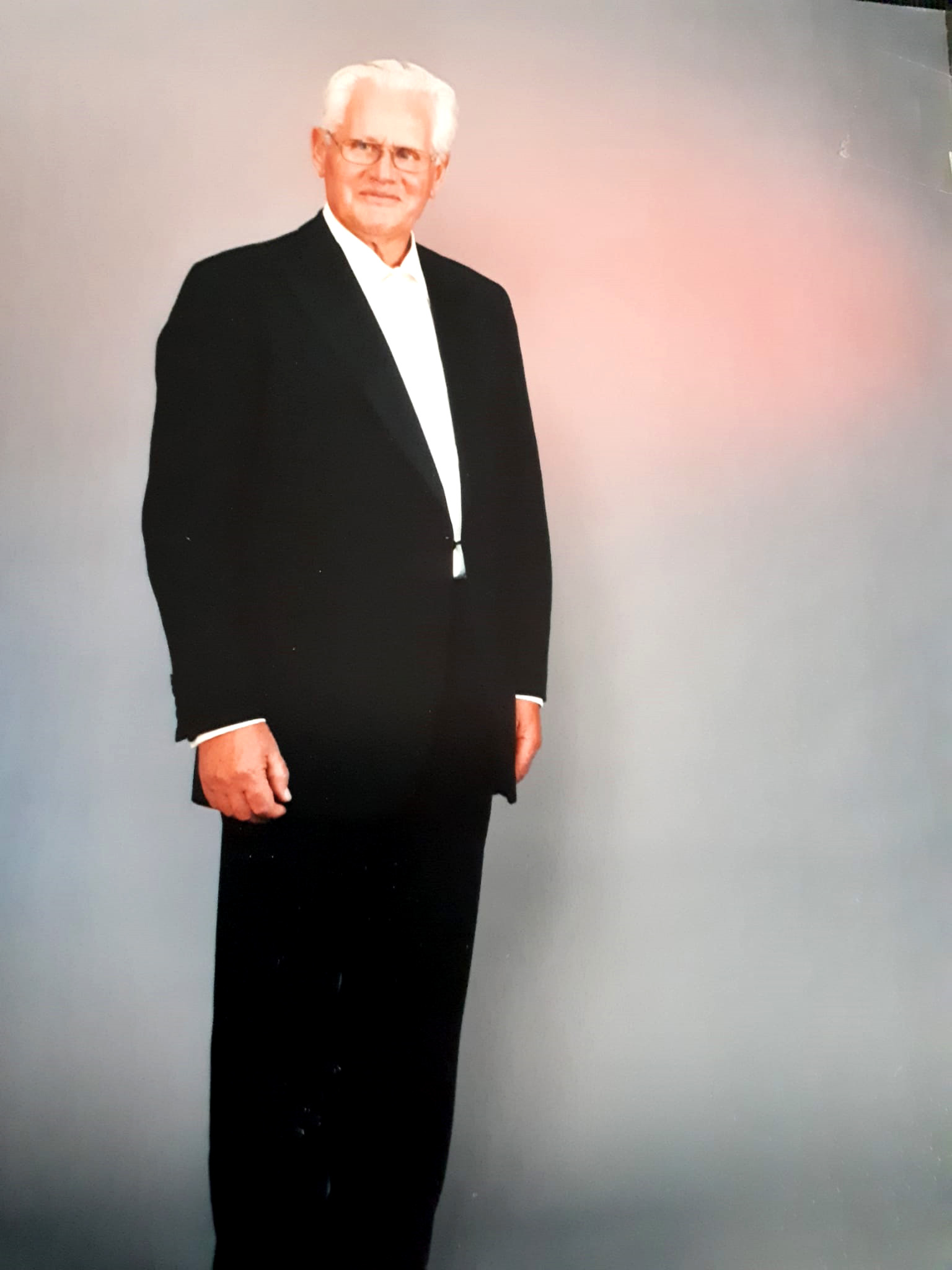
Willi Krüger
In service to others
The worshippers gathered secretly in their homes. From 1960 onward, the services were occasionally disrupted by the KGB. To reduce the risk of being checked, the gatherings were held at 5 or 6 a.m. Often, the worshippers walked for miles to participate in the services.
Church life suffered under the repression. The elder of the congregation and two deacons were imprisoned. The convictions followed public trials in which many false witnesses were summoned. Yet the church of God grew. The youth were active and zealous for the Lord. Despite persecution, the word of the Lord was steadfastly proclaimed. At train stations and other public places, the youth testified to the Lord through song and preaching.
Willi cared for families whose fathers were in prison and had to get by without any state support. In 1961, one night, the Krüger family's home was also searched. Around 3:30 a.m., there was a loud banging on the shutters. The family was abruptly roused from a deep sleep, and the house was searched for almost 24 hours. Every nook and cranny, even the coal in the shed, was inspected. The old family Bible with its gold clasp and embossing was confiscated, and the father, Willi Krüger, was arrested.
His wife wept bitterly while her children clung to her skirt. But God showed mercy, and Willi was released from custody the next morning after questioning, while his other fellow believers were sentenced to five years in prison.
Brother Willi's highest duty was always serving his neighbors.
Willi saw it as his duty to help these families, to provide them with food, to pray for them, and to support them financially together with the community. He modeled this way of life for his children, and they too participated in visiting the other families to help them.
Although the family lived in cramped quarters, guests were always welcome. One day, his wife realized they had run out of food and could no longer accommodate any more guests. They had no bread or butter left. But they entrusted even this worry to the Lord. Unexpectedly, late that evening, the doorbell rang. Brother Erhard Dojan entered, bringing a large loaf of bread, butter, and a goose. Willi's wife prepared a meal and was grateful that God had provided for them.
“The true and undefiled godliness before God the Father is to visit orphans and widows in their distress and to keep oneself unstained from the world” (James 1:27).
Faithful until death
In 1977, Willi was consecrated as an elder in the Karaganda congregation, and in 1986, shortly before his departure for Germany, he was called to be a bishop. He fulfilled this ministry with complete devotion until his death. His highest calling was always serving his neighbors. In 1986, after undertaking a period of fasting before God, he and his family were granted permission to emigrate to Germany. In 1989, his mother, Ida Krüger, passed away at the age of 91, and the following year, his wife, also named Ida, died at the age of 62. However, God did not allow this sorrow to last long, and he soon entered into a second marriage with Lydia Krüger, née Schneider. A son was born from this marriage.
Selflessly and faithfully, Willi continued to serve the Lord in his congregation. His sermons conveyed clear, simple, yet powerful truths, such as the words from Micah 6:8: “He has shown you, O mortal, what is good. And what does the Lord require of you? To act justly and to love mercy and to walk humbly with your God?”
He not only preached these words, but lived them. His warning that things would not always be this way is being fulfilled today.
On November 11, 2021, Willi Krüger passed away at the age of 92 to be with his Lord and Savior Jesus Christ. Until his last breath, he prayed: "Come, Lord Jesus, come soon."
Helene Roth
Municipality of Speyer