

Podcast: Download (Duration: 14:10 — 9.7MB)
From the life of Paul Moser
Even though we are already familiar with some testimonies from grandparents, this life story reminds us once again how wonderful it is to be called and summoned by God. God's call in childhood, military service, and persecution by the KGB are the first stages of a compelling, multi-part testimony.
Paul Moser was born on July 31, 1957, in northern Russia. His parents, originally Lutheran, later joined the Pentecostal movement. Today, Brother Paul leads the Free Evangelical Christian Church in Papenburg. In the following account, he shares his life story, hoping to encourage the current generation to stand up for their faith. This testimony serves to honor and glorify God.
The beating heart
Despite atheistic propaganda and state pressure, I was able to get to know and experience God from a young age. We children always sat at the front during services and witnessed people repent and surrender their lives to God. We saw them experience the filling of the Spirit and receive healing through the laying on of hands.
Even though we ourselves were not yet converted, these experiences shaped our thinking and our attitudes. Due to public pressure, we were forced to stand up for our faith from an early age. Discrimination and public humiliation were commonplace, especially at school. This made it all the more important for our parents to strengthen their children's faith from an early age. My father always encouraged me to read God's Word. I did so gladly. I will never forget the day I first experienced God speaking to me personally.
It was a regular church service. A brother read the passage from Revelation 3:20: “Behold, I stand at the door and knock.” I felt my heart pounding and thought that Jesus was still standing at the door of my heart, knocking. We went into prayer. The prayer in the congregation was very powerful. With childlike understanding, I placed a hand on my chest and listened to my inner self. My heart wasn't beating. Then contentment and gratitude to the Lord welled up within me, that He had accepted me and come into my heart. It was a childlike faith.
When the prayer was over and I placed my hand on my chest again, I suddenly felt with horror that my heart was beating once more. Was the Lord not in my heart after all? The weight of this realization hit me like a blow. I wanted to leave the room quickly and ran out crying. At the door, I bumped into a brother. He looked into my tear-filled eyes and apologized, thinking he had hurt me. I wept bitterly and couldn't say anything. Then my friend came to me and asked what was wrong.
I was preoccupied with only one thought and said, "My heart is beating." He didn't understand, and I repeated the sentence. Then he replied, "If your heart stops beating, they'll take you to the cemetery." I was completely bewildered. He realized something had happened to me and took me to the brothers. They explained everything: God wanted to show me in prayer that He was with me and wanted to strengthen my faith when I didn't feel the beating during prayer. But my heart had to be beating, otherwise I would die. I understood and experienced a new beginning. Now I was certain that Jesus lived in my heart. I was so happy that I wanted to go straight to Him in heaven.
That evening, during prayer at church, I had a vision: the heavens opened and a man in a white robe held a book with its spine facing me. When I asked what God wanted to show me, he turned his hand and I read the words: "I am the way, the truth, and the life." I realized that Jesus was calling me to ministry. My life took a complete turn. From that moment on, I followed Him.
Persecution in everyday life
The circumstances under which we tried to live out our faith and manage our daily lives were incredibly difficult. Komi Krai, our hometown, was only 300 km from the Arctic Ocean. During the polar night, it was almost perpetual darkness for all but one and a half hours. Temperatures sometimes plummeted to -60°C, freezing our blood.
The police were always on the heels of the believers. They would stop at nothing to destroy the communities and track down those responsible.
The KGB's activities went so far as to include infiltrating the community with spies to blackmail members. The pressure was immense, yet it persuaded the Christians to lead holy lives. Church services were strictly forbidden. Meetings were held in private homes. We children and teenagers weren't actually allowed to attend meetings.
Nevertheless, we sometimes deliberately met at the same time to divert the KGB's attention from the community. If the KGB found us, we distracted them and thus gained time to warn the community. We were too young to be afraid. The police rarely harmed children, fearing the public's reaction. Siberian men were rough, but they didn't tolerate violence against children. This sense of security and our naiveté sometimes even made us quite cheeky with the police.
I vividly remember a church service where we were once again disrupted by the police: When they came in, the elders called out that we would not discuss anything but go straight to prayer. We all knelt down. The police officers started shouting and yelling at us to stop. They grabbed one brother and tried to get him to his feet, but he immediately went back down on his knees. Then one of the brothers went up to them and said, “Why are you behaving so roughly? We don’t want to split up. The prayer service is about to end, and then we can talk.”
After the prayer, the sisters acted quickly. They pulled the tables apart as if preparing a meal and invited the police officers to eat. Completely bewildered and perhaps somewhat ashamed, the police officers declined and fled the house when the sisters continued to urge them to join them at the table. After they had left, the woman of the house, utterly surprised, asked her fellow believers, "What were you going to serve them?" The others replied, "We don't know ourselves. We just had the idea to invite them." In this, we saw God's guidance.
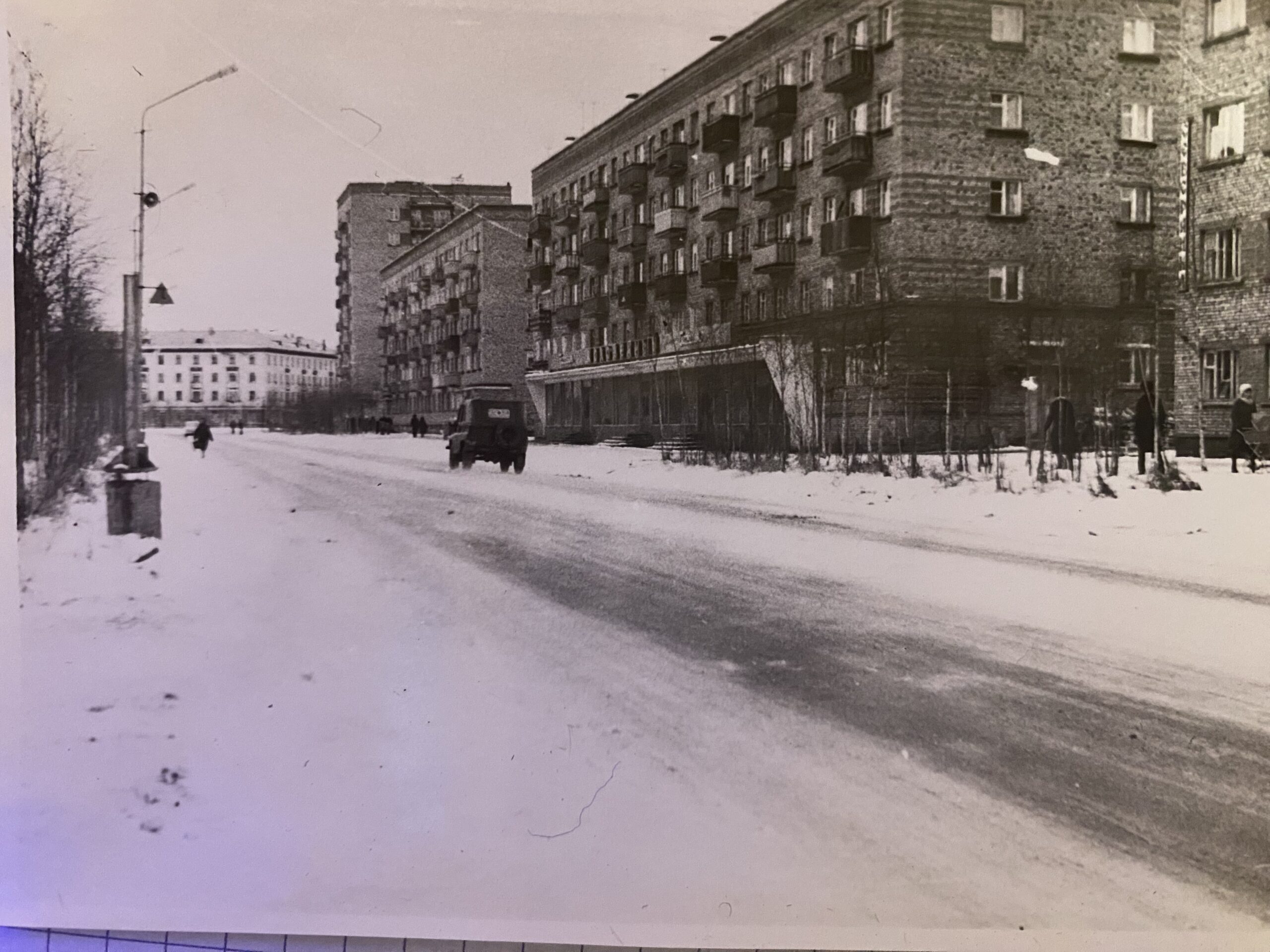
Inta (a city in the Komi Republic) - birthplace of Paul Moser
The oath
Our time in the military was often the hardest test for us boys. It started with our reluctance to take the oath. God commands that our yes should be yes and our no should be no (cf. Matthew 5:37). Therefore, but also because the oath included defending our country to the last drop of blood, our conscience forbade us from uttering those words.
Love for one's country and complete self-sacrifice were instilled in us at school. We heard stories of people tortured by fascists and parents burned alive with irons in front of their children. Yet they remained loyal to their country until death. When I was pressured because of my convictions, I sometimes replied, "If these people remained so loyal to earthly things, shouldn't I remain even more loyal to the divine?" We live in the world, but not with this world. For me, this meant knowing my country's history in order to learn something from it.
Although I hadn't yet been water baptized, upon entering the military I was firmly resolved not to take the oath and to accept all the disgrace that might befall me for Christ's sake. It was around this time that news of Vanya Majeseyev's gruesome death reached us through the Baptists. The government forbade the dissemination of his story and threatened anyone who published it with three years in prison. Many young people at that time defied the military's orders, saying, "We would rather die, just like Vanya Majeseyev!"
Since I refused to take the oath, discussions and insults ensued, as expected. When the time came for everyone to step forward alphabetically to kiss the flag and take the oath, I prayed silently. After my name was called, I took six steps forward to the flag, turned around, and then said aloud, "Because of my faith, I will not take the oath." Immediately, I was insulted again: "Those like you were traitors during the war!" But God intervened, and a Sampolit (political officer of the special unit) stood up for me and even demanded that the officer apologize. Then he dismissed the crowd. Many comrades met me with hostility and publicly wished me dead. However, I received respect from the Muslim Azerbaijanis. They encouraged me to remain faithful to my God.
In another interrogation, a senior officer became so enraged during our conversation that he was trembling with anger. His wife, who was taking notes, approached the distraught man, placed her hand on his shoulder, and asked, “What’s wrong with you? Look at that boy. He’s perfectly calm. I’ve heard you speak to higher-ranking officers who trembled before you, and you always remained calm. And now you’re trembling before such a simple young soldier?” These words calmed him and shifted his focus. God was at work in this interrogation through his wife. I tell this story to the glory of God! Only through His strengthening in prayer was I able to maintain this inner peace.
Thus, throughout my entire time in the military, God held His protective hand over me, and I was also able to experience much grace later in my life.
Edited by Tina Pazer
(Municipality of Speyer) after an interview with Brother Paul Moser
The continuation of Brother Paul Moser's life story will follow in the next issue.