

Podcast: Download (Duration: 12:22 — 8.5MB)
Today we live in a country without persecution and gather in houses of worship. People from the former USSR especially appreciate this blessing. “You will come to a land flowing with milk and honey,” Brother Ernst Guse quoted, already in eternity, God’s promise to the people of Israel, and through his remembrance, he gives us insights into the past in Russia.
expropriation
Following the call of Empress Catherine, Germans came to Russia as early as the 18th century to help develop the country. Times changed, and after the change of government in 1917, farmers were dispossessed of their possessions. A difficult time ensued – also for Ernst Guse's grandparents and parents. They had to relocate from Volhynia (Ukraine) to Siberia to provide their families with the bare necessities. But even there, life was made difficult for them.
In 1935, Ernst's grandfather was shot dead on his farm. Ernst's family lived a few kilometers away. They had several fields that they cultivated by hand. It was hard work. His father owned a horse and a plow. One night, the police came to their house and ordered his father to come with them. Ernst was just five years old when his father was arrested. The cow and the horse, along with their team of horses and carts, were also taken away. This fate befell many other families as well.
It was harvest time, and the family began to reap what the father had sown. The grain was cut with a sickle and bound into sheaves. Shortly after the harvest was complete, men arrived with horse-drawn wagons and, on behalf of the government, took all the sheaves away. Even the haystack that the mother had cut with a scythe was confiscated. Hunger and frost accompanied them throughout the winter until spring finally arrived. They had a thin soup once a day. After the snow melted and the first flowers bloomed, the mother went into the forest to pick primroses for food.
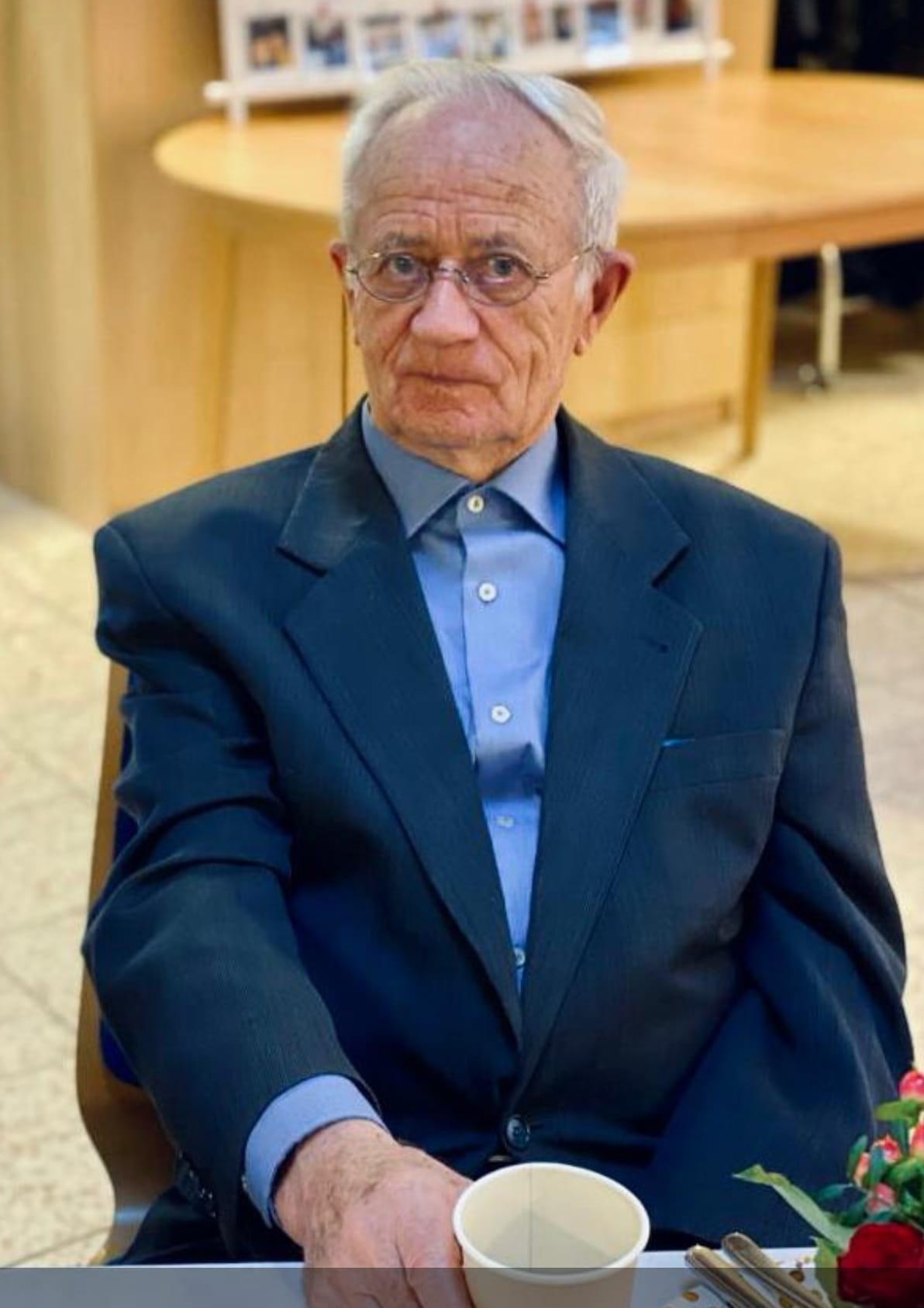
Ernst Guse (1931 - 2023)
In search of bread
When summer arrived, the mother and her five children set out in search of work and food. After a day's march, they reached the Irtysh River. They took a small boat to Omsk. From there, they traveled to villages and sought shelter with relatives. Sometimes they went without food for up to two days; other times, they found lodging for a few days.
Then they learned that some acquaintances lived 200 kilometers north of Omsk, working in the forest logging. The family now made the long journey – barefoot. There, too, they stayed with relatives. The people there lived in meager mud huts and worked in the forest, including the mother. They received bread once a week. However, in the summer, the mother became so ill that she could no longer work. Ernst, by then eight years old, had to go begging with his brother Wilhelm, who was a year older. They went to Russian villages to get some bread. In the evenings, they asked people for a place to sleep, and someone always seemed to offer them shelter for the night.
They usually slept on the stove and early in the morning walked to the next village. Sometimes they were beaten by the older boys in the street. After about a week, they decided to walk the long way home. Barefoot, they walked across the grassy fields and grew very tired. Wilhelm suggested they sit down by the roadside and rest. A little way off the roadside, they both fell into a deep sleep. They didn't know how long they slept. When they awoke, a large, fat, coiled-up otter lay beside them. Carefully, so as not to wake the poisonous snake, they both set off for home. The little bit of bread they brought back was dried by their mother.
Currant bushes grew in the woods. The family often went into the forest during the summer to pick the beautiful, large berries. Sometimes they also gathered mushrooms.
Then autumn came, and the mother said they could no longer stay and be a burden on the family. So they set off on their journey back – 200 kilometers on foot. The youngest was now three years old, but so weak that he often had to be carried. At dusk, they found a place to sleep at the edge of the forest, gathered some wood, and lit a small fire. Then the children lay down around the fire and slept.
The next day, the journey continued on foot until a woman in a village took pity on the family and took them in. The mother worked for other families and received lunch and dinner in return, while the children were left alone during the day.
The war and its aftermath
In the summer of 1941, the war began, and all the men were sent to labor camps. By November, the women had also been drafted. Ernst was then placed with a family where he worked as a farmhand for ten years. When this family moved from Omsk to northern Kazakhstan, Ernst went with them. At 17, he applied for a job working in the forest, logging, and handed over every kopek he earned. In 1950, the government sent him to Karaganda to work in the coal mines. There were about 30 of them, and they didn't know where they were going.
Instead of Karaganda, they were taken to the Kazakh desert. Their task was to build high earthen embankments for the new railway line. There was an empty shed, and everyone was given a hammer and nails to build themselves a bed. A board served as a pillow. The work was hard, and the heat made it almost unbearable. They worked 13 hours a day and received 400 grams of bread daily. The bread baking trays were greased with tractor grease—and the bread tasted accordingly. After six months, Ernst was finally released to go home.
On February 8, 1951, Ernst married an orphan girl. His happiness, however, was not to last. Four days later, police officers came and ordered him to help with the construction of a hospital 30 kilometers away. He was to report there early the next morning at 9:00 a.m. Ernst refused, as it was freezing cold, around -30 degrees Celsius, and he would have had to walk all night to be there on time. He paid a heavy price for this refusal. As a German, he was under the command of the military and had to obey orders. The police officers took him to prison. The bare cell was locked, and he had to sleep or sit on the cold concrete floor. For eight days, he was tormented by hunger and thirst. When he was released to begin work on the construction site, he fled 30 kilometers home. His wife was overjoyed to see him alive again.
The truth
Four years later, the Guse couple moved to a village inhabited by Germans. Ernst built a house, and soon meetings were held there. People prayed, sang, and read God's Word. A friend of Ernst's owned a sermon book from which sermons were read. The people who came to the meetings were Lutherans.
Twenty-five kilometers away was a church of Pentecostal Christians who had been baptized in the Holy Spirit. Although Pentecostals were viewed negatively and spoken of ill, Ernst decided to visit the church. Beforehand, he fasted for two days and prayed to God to reveal the right path to him. His wife accompanied him, and they walked there, staying overnight with fellow believers. The next day was a Sunday, and they went together to the meeting. The church was not large. The service was blessed, and Ernst recognized the full truth of what had previously been hidden from him. He returned home and reported that he had found the truth. Not everyone was pleased with this news and took away his sermon book. From then on, no more sermons were read from the book, but the meetings continued. Some were converted, and slowly the church grew.
In January 1956, Ernst and his wife were baptized with the Holy Spirit and entered into a covenant with God through water baptism. This took place around July. Everything had to be done in secret. They went to a lake where the baptism was performed. Ernst had never experienced such joy as he felt in that moment. It was as if he were lifted from the earth. He was now a child of God!
He had lived in many places on this earth, experienced and lived through different times and circumstances, but he always had the longing for his eternal home in his heart.
He became a role model for many in selfless service and in quietly and patiently enduring difficulties and injustices. Throughout it all, he maintained his humor and humility. His love for the Bible and for singing was the source of his strength. He was a man of peace.
On January 19, 2023, Brother Ernst passed away at the age of 92 to be joined by his Heavenly Father and Savior. He left behind 10 children, 95 grandchildren, 314 great-grandchildren, and seven great-great-grandchildren. His appeal to the next generation was: Dedicate your lives to the Lord!
“Do not be zealous, be fervent in spirit, serve the Lord!” (Romans 12:11).
Adapted by Helene Roth (Parish of Speyer) from an audio recording by Br. Ernst