
A report about the trip to Koch-Bihar
Koch Bihar is a town of approximately 77,000 inhabitants in the north of the Indian state of West Bengal. In 1952, Norwegian missionaries led by Olav Hodne arrived to expand the local school and community work. Following Bangladesh's independence struggle, hundreds of thousands of refugees from Bangladesh flocked to Koch Bihar.
In 1964, Brit Hodne saw many blind children begging among the refugees. She and her husband then opened a home and school for blind people. In the early 1980s, the missionary couple returned to Norway to retire. The school was handed over to the local director, who is also blind.
Initially, everything went well. But over time, support from abroad dwindled. Out of necessity, the home borrowed money from Indian businessmen, which unfortunately could not be repaid. Since no further financial assistance arrived, the home had to close and the children sent home to their parents.
When Raj, the son of the former headmaster, grew up, he revived the school. Raj sought out sponsors in Norway. The Hodne couple had already passed away, but the other missionaries helped. In Norway, he also met Svetlana Savchuk, a Belarusian woman, whom he later married. The home now houses 82 children between the ages of 5 and 20.
During a mission trip in early 2018, we spent three days at this orphanage in India. We saw the poverty, the dilapidated buildings, the broken roofs. This experience ignited a desire within us to help. We first financed the renovation of the ceilings and roofs, then the purchase of computers, followed by toilets, and currently, new flooring is being installed in the bedrooms.
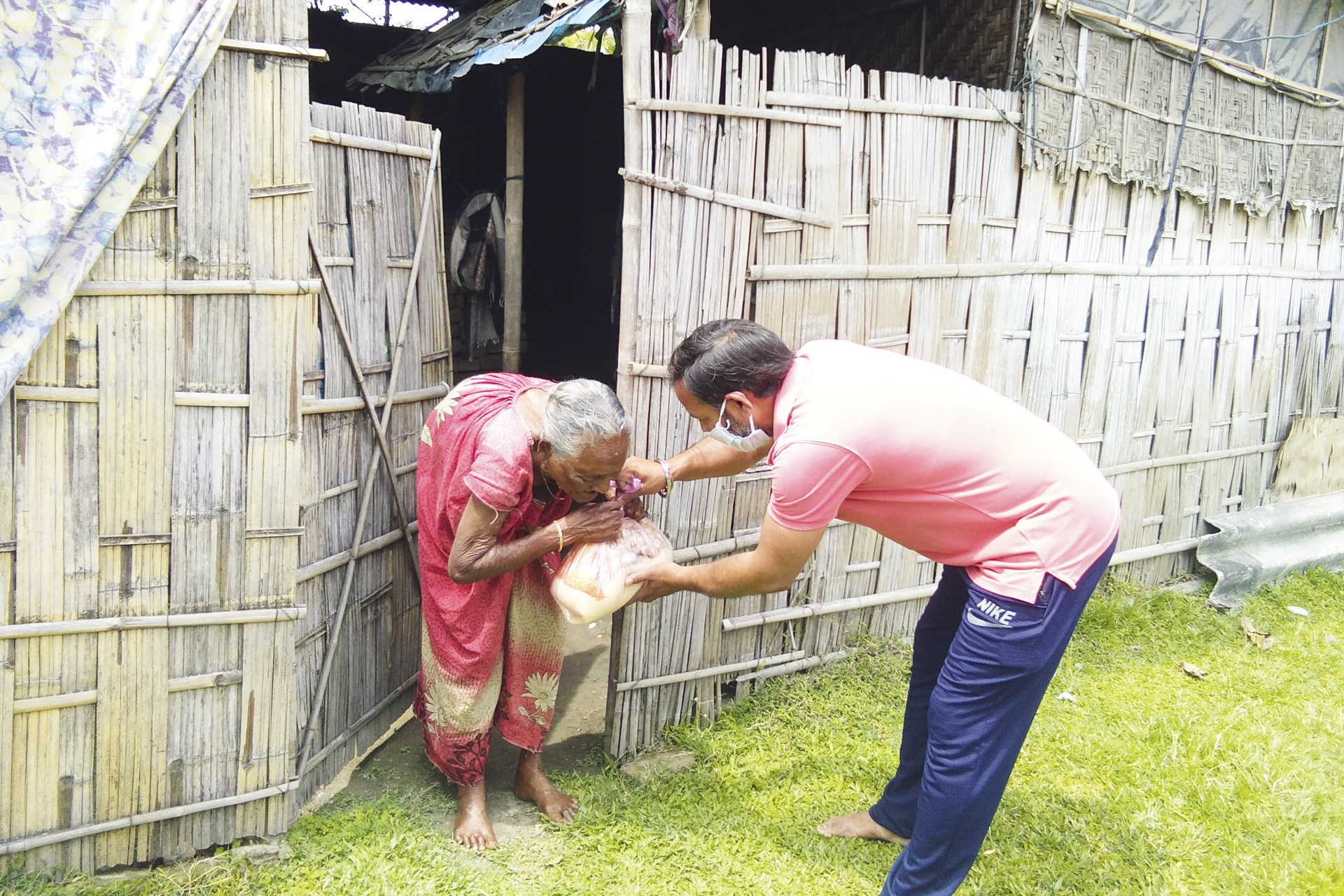
This year brought the infamous coronavirus crisis, forcing the children to be sent home. Only those children who cannot be cared for by their families are allowed to remain at the orphanage. Food is needed for these children and their families, as well as for all the poor people in the village.
Living conditions in India are very different from those in Germany. Buying supplies in advance isn't an option. Money only lasts for one day at a time, as people work as day laborers and don't receive a monthly salary. The teachers and the remaining students at the orphanage pack and distribute food to all those in need in the village. Baby food and vitamins for pregnant women are especially needed. Every day, women line up at the orphanage building very early to get at least some rice. A lockdown has been in place since March 25th, and until recently, there were no COVID-19 cases at the orphanage. Now, however, many workers are returning to their hometowns, bringing the virus with them. It is now spreading like wildfire.
On May 20th, a cyclone, a powerful wind with torrential rain, swept across the country, destroying many homes. This was compounded by a locust invasion that devoured the entire harvest. It's devastating what the region is going through.
Kali (literally: the Black One) is a significant Hindu goddess of death and destruction. She is highly revered in India. This year we planned to conduct evangelistic outreach and offer training on Christian doctrine, but unfortunately, the coronavirus crisis prevented this work. We hope that the situation will soon normalize and that we can carry out our plans.
We pray that God will help us meet these challenges. It is hard for the sick and the blind to maintain social distancing, wear masks, and be unable to socialize.
A huge thank you to everyone who has supported us and continues to support us. We hope for a swift improvement in the situation. Please pray for the people there, for the country, and for us.
Alexander Gruslak,
CDH-Stephanus

Tour group with students from the school for the blind


Loading of the aid packages


Tour group with students from the school for the blind


Distribution of aid packages
