
Stories from life: Insights into the life of our Bishop Viktor Folz
8. Juli 2025 · 6 Min. lesen
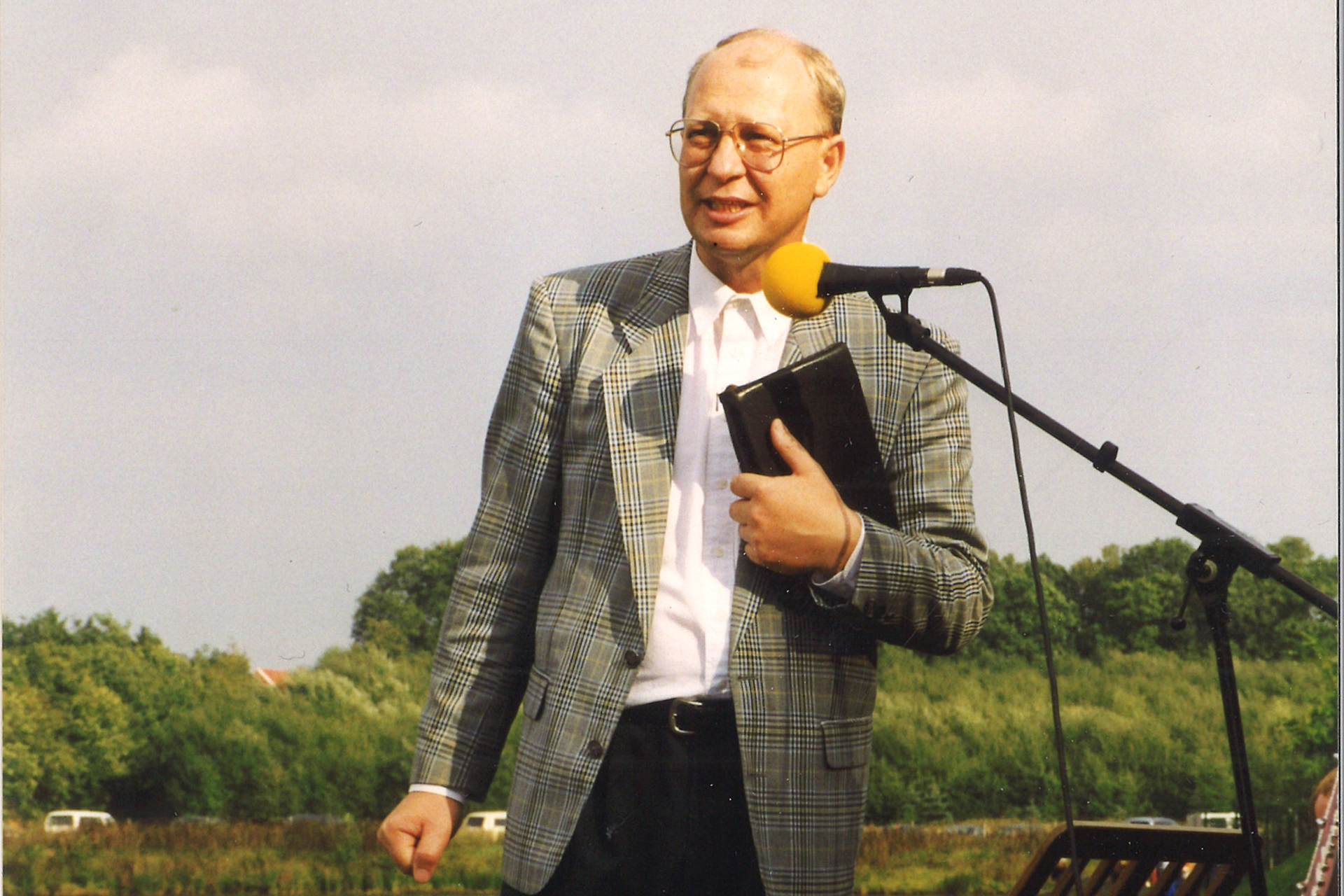
Podcast: Download (Duration: 19:27 — 26.7MB)
Bishop Viktor Folz's ancestors also experienced the difficult times of the Soviet Union, marked by political repression and economic challenges. This account offers a glimpse into the lives of his ancestors and how he himself found God.
Resettlement to Russia
During the reign of Empress Catherine II, the resettlement of Germans to Russia began. The trigger was overpopulation in Germany. There were too many people and too little land. This suited the Empress very well, as she wanted to transform backward Russia into a great state and achieve economic and political parity with Western Europe.
My ancestors lived near Stuttgart and earned their living through agriculture, like most people at that time. My father's ancestors emigrated during the reign of Catherine II and settled in Rostov in the Volga region. Finally, in the early 1790s, my mother's ancestors also left Germany and settled in the city of Yevpatoria in Crimea.
In 1937, the repressions under Stalin began. At that time, my maternal grandfather was a Lutheran pastor and was sentenced to 25 years in prison in 1939. For my grandfather, this meant salvation, because in prison he received food and accommodation. He fared better there than those who were forced into labor in the Trudarmiya (labor army) during the war in 1941.
My grandmother and her children, including my mother, were taken to the border between Uzbekistan and Kazakhstan and abandoned in a field in the middle of nowhere. Since my grandfather was in prison, my grandmother had to go to work.
One day, however, she was unable to go to work due to illness. The chairman of the collective farm where she worked then went to see her and beat her so brutally with a club that she died two days later. Shortly after this incident, my mother's siblings also died, leaving my mother completely alone.
My father, who was resettled from the Don region of the Volga to Uzbekistan, had to start working at the age of seven because his father was deported to the Trudarmiya, the Vorkuta labor camp. My father received a bucket of water from his mother. He sold this water in cups for 10 kopeks each at the bazaar to passing merchants – that's how he earned a little money to survive.
Life was very difficult and marked by famines. My father experienced these to such an extent that he was unable to walk due to the swelling that resulted.
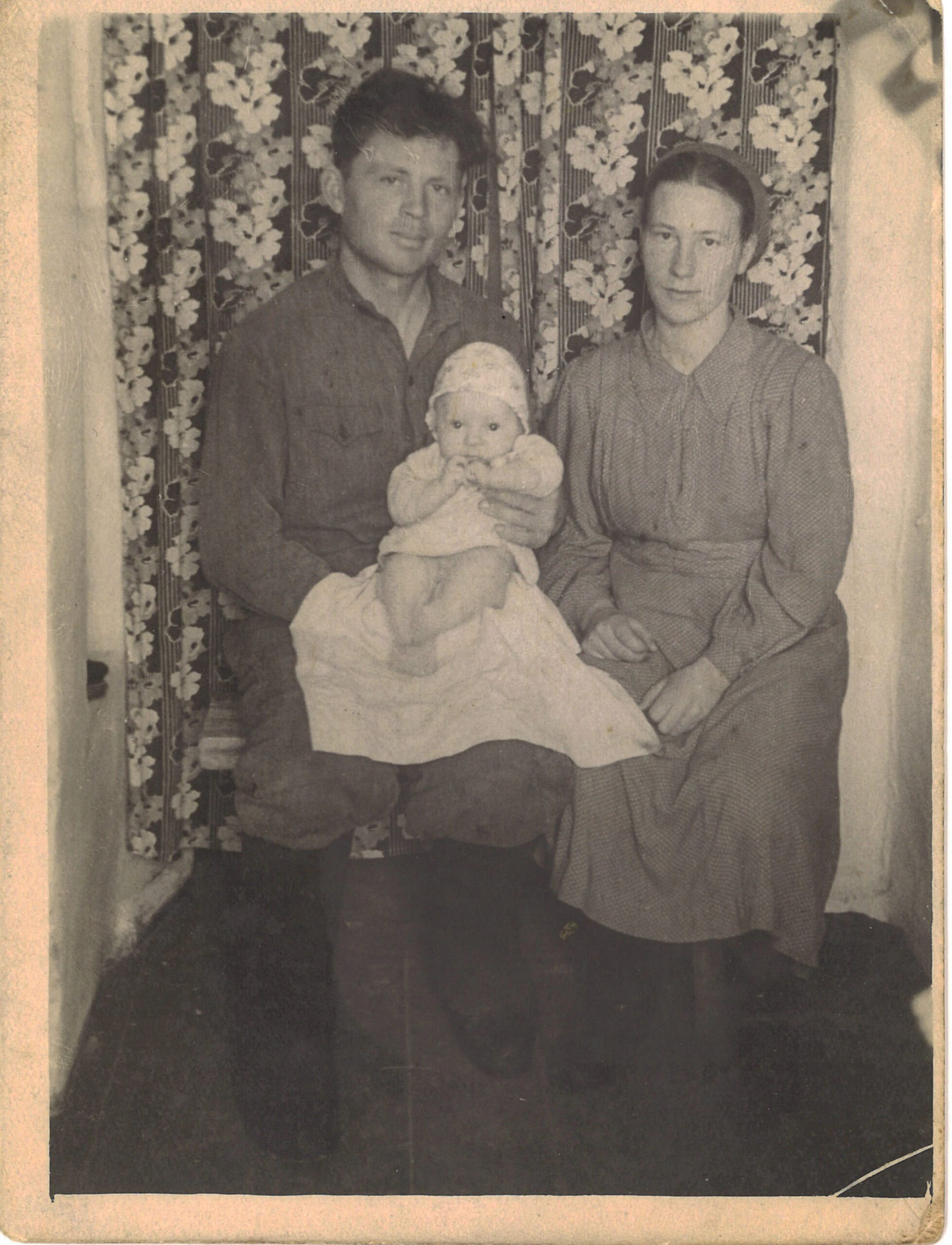
Viktor with his parents Gerhard & Valentina Folz in 1959
Marriage and birth of the first son
At the age of 20, my father was sent to the fallow land. There he was not forced into labor in the Trudarmija, as the young German farmers were needed to make the agricultural land usable.
At that time, my mother reconnected with her relatives, who also lived in that village. Her cousin and my father became friends, and that's how my parents met and eventually married.
After the wedding, my mother learned that my grandfather had been released and was living near the Chinese border in Kazakhstan. So my parents moved to Kazakhstan (Taldykorghan region), and there I was born in 1958 as their first son.
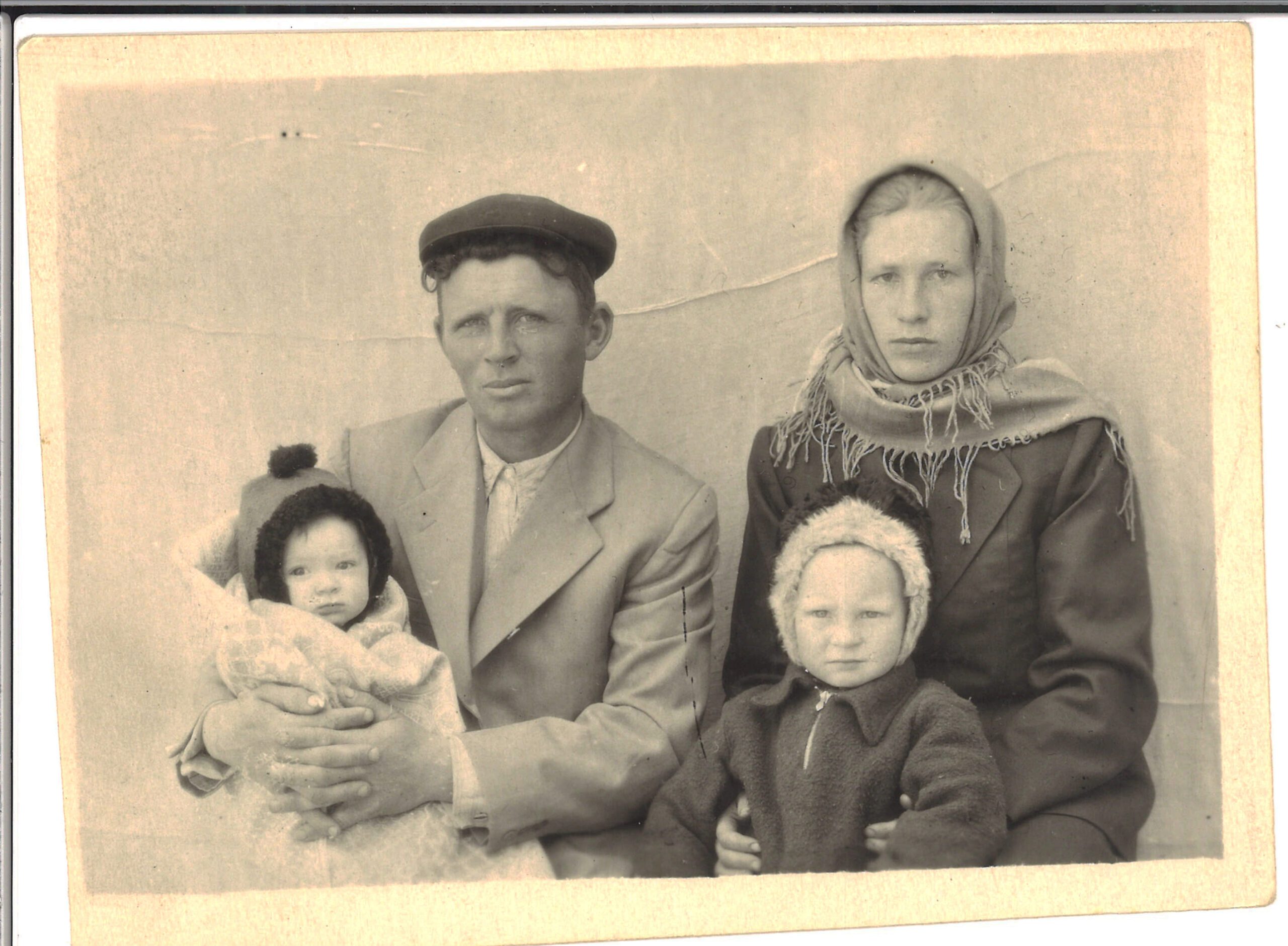
With his parents and sister Erna in 1962
After my birth, my parents debated whether I should be baptized. My grandfather, a pastor of a Lutheran church, was convinced that I should be baptized. My parents themselves didn't yet belong to a church, but they were religious nonetheless.
Around this time, my mother's half-sister met some Pentecostals and converted to Christianity. She was sealed with the Holy Spirit and believed that the Lutheran faith was "not the true faith." My grandfather had also come into contact with the Pentecostals by this time.
Gradually, my mother's family, and she herself, were sealed with the Holy Spirit. I was not baptized as a child. My father was also sealed with the Holy Spirit when I was about six years old.
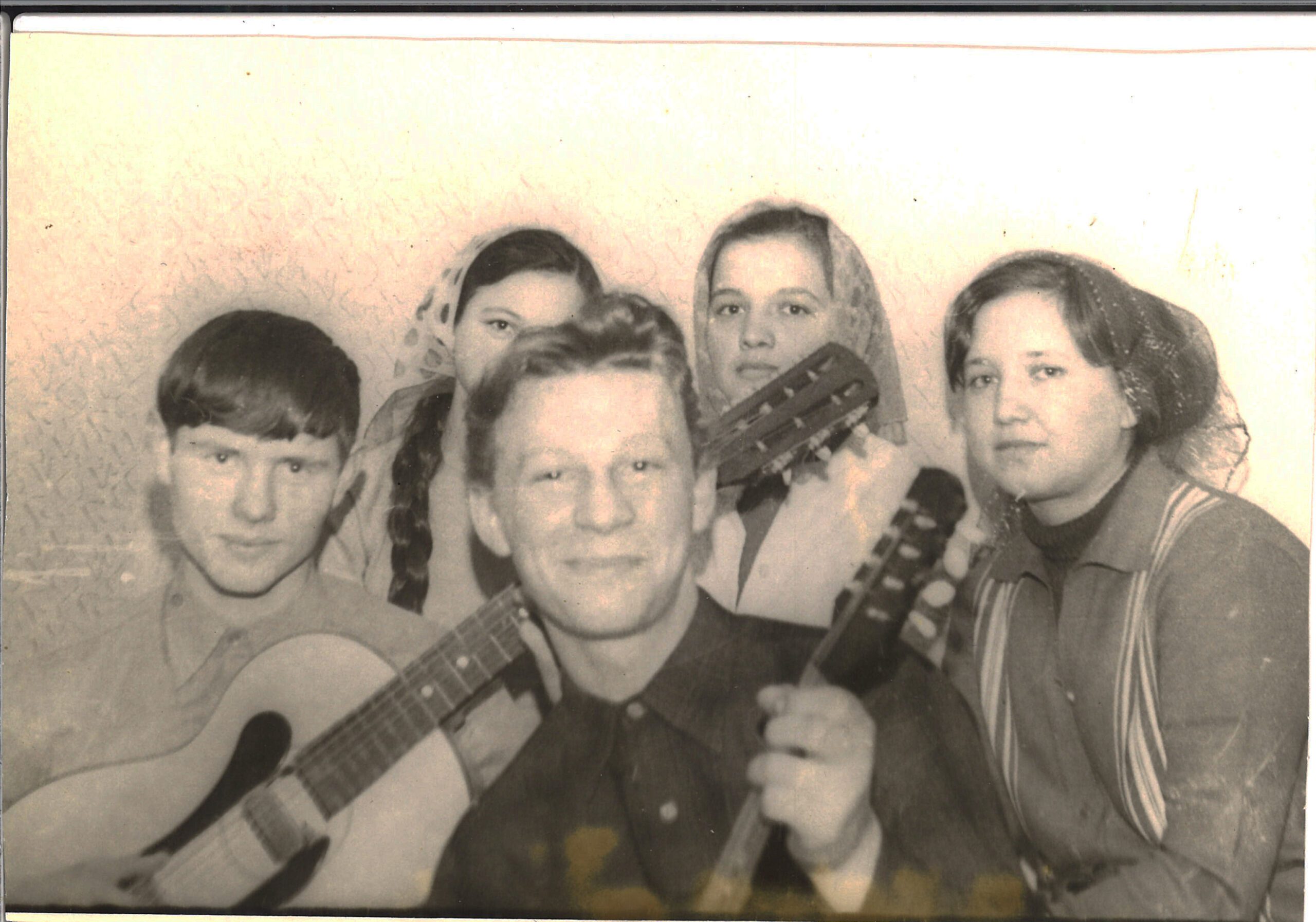
Young people from the municipality of Riga; around 1975
Conversion and Baptism of the Holy Spirit
Before we moved to Latvia, I did attend church services, though not always willingly. This changed in 1972 when we moved to a remote farm in the woods in Latvia (in the Baltic states). I was always happy when my parents took me to the services, as this was the only way to escape the loneliness of living on the farm.
In the church community I found friends and began to seriously seek God. During a flu epidemic in January 1973, when the schools were closed and I was lonely, the fact that I had not been baptized with the Holy Spirit made me reflect.
When I met my friends at church services, one after another told me that they had been baptized with the Holy Spirit and I hadn't. They would go to paradise, while I would end up in hell. This situation saddened me and compelled me to pray and cry out to God.
My struggles on our farm, in the barn, bore fruit, and on January 19, 1973, God sealed me with the Holy Spirit. From then on, I began to seek God even more intensely and strove for a good life. Our church services took place in the homes or on the farms of the believers, and youth group meetings were often held in the woods due to persecution.
In Latvia, we Germans were treated well. However, the Soviet system didn't allow us to move freely; we couldn't simply relocate but had to stay where we lived. Our career choices were also limited, and we had no opportunity to study to become, for example, a doctor or engineer. Therefore, I completed an apprenticeship as a lathe operator in Riga and subsequently worked in that capacity at a factory.
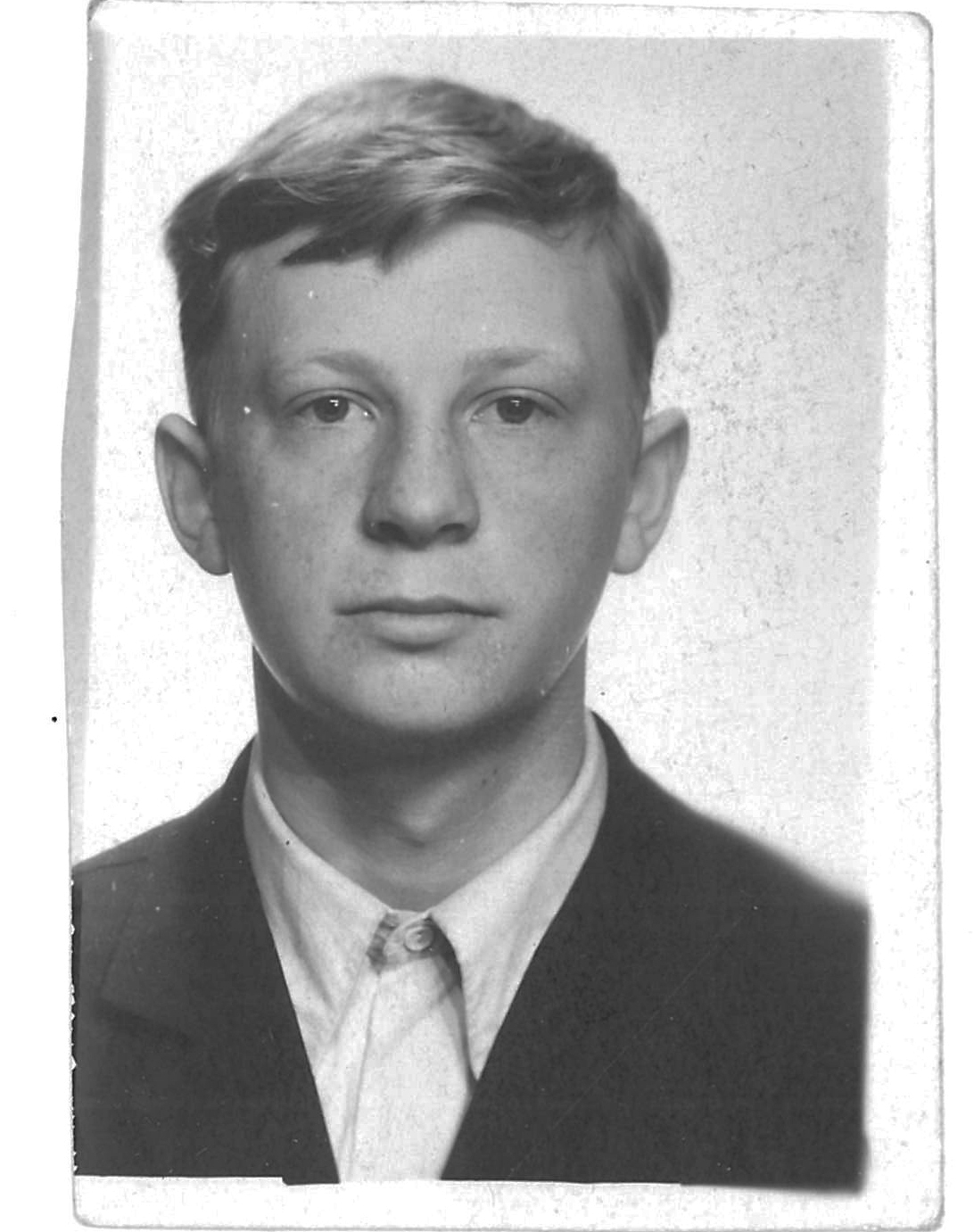
1976; shortly before departure
Structure and services in the community
In 1976, we received permission to emigrate to Germany, and so we arrived on October 5th. This step was very difficult for me, because at that time I had already been water baptized and was very active in youth work. In Germany, there were about 100 members of the congregation, spread throughout the country.
But the congregation grew. With 75 members, we independently built our first church building in Cloppenburg. The ministers of our congregations had already been ordained in the Soviet Union. In 1980, Brother Jakob Wiebe came to Germany as an ordained bishop.
From 1978 to 1982, I was active in the children's ministry, after which I was entrusted with youth ministry. In 1988/89, I was ordained for diaconal service and in 1993 became an elder. The following year, our pastor at the time, Eduard Buchmüller, was killed in a traffic accident, and the brothers entrusted me with the ministry of pastor of the congregation in Cloppenburg.
At 35, I was a young servant, while other elders had already been serving for 35 years. I found support and backing in them, but they also admonished and instructed me. I was simply in my place because I had prayers behind me—brothers and sisters, but above all, the Lord.
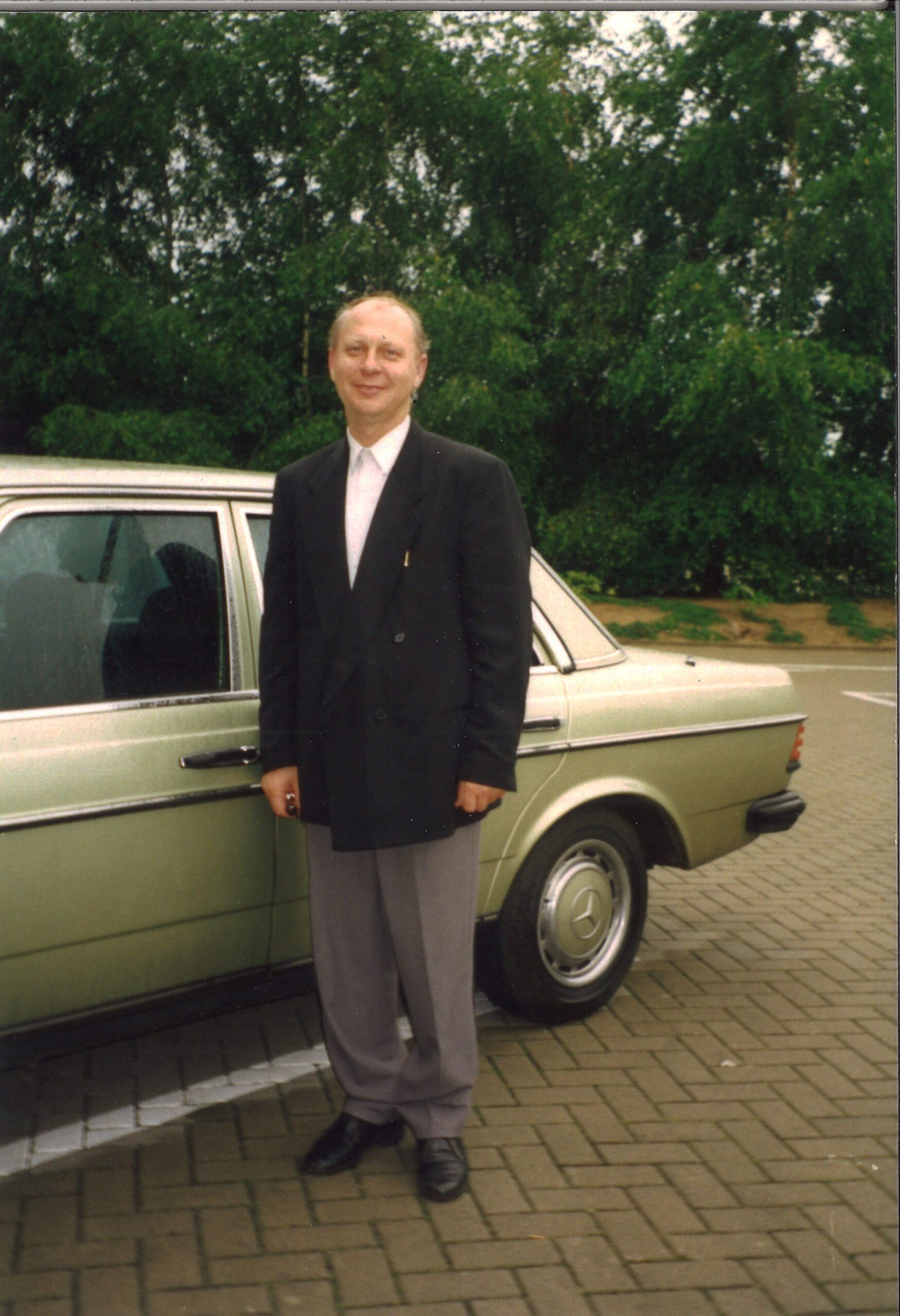
July 1998: serving as elder and community leader
Origin of the mission
In 1998 I joined the Council of Bishops and was a regular member until 2000. On October 29, 2000, I was consecrated a bishop through the laying on of hands. There were about nine of us bishops on the Council, and Brother Jakob Wiebe was the presiding bishop. Through the work of Rubin Firus and Alexander Konradi, and with the assistance of the bishops and brothers, the "Stephanus" mission was established in 1990.
This mission has existed for many years and has a global impact: it helps many people in spiritual, material, and physical needs. Happily, the Stephanus Mission and its associated work have also contributed to peace and reconciliation in the fractured society of the Soviet Union.
But things weren't always easy; there were problems, too. After the tragic accident involving Eduard Buchmüller and Rubin Firus, some people wished that the work, the mission, and the church would be destroyed. But God was with us. In Matthew 16:18 we read: "On this rock I will build my church, and the gates of Hades shall not prevail against it."
May God grant that our brotherhood remains faithful, united, and peaceful. That is my wish, my prayer.
An interview after a recording with Viktor Folz,
Municipality of Cloppenburg