
Podcast: Download (Duration: 13:39 — 9.4MB)
Born during the turbulent times of the Stalinist Soviet dictatorship, Johann Kliwer was unjustly arrested as a teenager and fought for his very survival. In this darkest period of his life, he encountered the Lord and experienced undeserved grace.
childhood
Johann Kliwer was born on October 29, 1923, in Orenburg, the second of four children. His parents were devout Mennonites.
His father led the Sunday school as a youth leader. Until 1929, Christians could still assemble freely. Then began the era of collectivism, which led to the prohibition of religious gatherings. The concept of God was to be eradicated from the hearts of believers. This period was marked by reprisals, persecution, and arrests. During this difficult time of forced collectivization, the farmers were dispossessed by the communist regime.
Community life and fellowship suffered greatly. Many Mennonites tried to emigrate to Pennsylvania at that time. But those who hesitated too long missed their opportunity.
Johann completed seven years of schooling at the village school and then worked on the collective farm.
The war began on June 22, 1941. My father was drafted into the labor army. After almost a year of working in the mines, he was hospitalized due to exhaustion, malnutrition, and diarrhea, and died there one night, alone and isolated. He was only 50 years old. From his last letter, the family could sense that his end was near. He wrote: "It will soon be evening, for the day is drawing to a close" (cf.
Luke 24:29). Because all mail was strictly controlled, many were forced to encrypt their messages so that the letters would arrive at all.
The news of the father's death only reached the family long after he had been buried. What was a human life worth in the labor army?
Wrongfully convicted
At the age of 19 – it was 1942 – Johann was drafted into the labor army in the Perm region. After two months, he received a bonus for good work performance. In his division, he met other German boys from the villages around Orenburg who were just as diligent and considered hard work a virtue. Then a dark chapter of his life began.
On January 3, 1944, Johann, then 20 years old, was unexpectedly arrested – along with nine other young men from the villages around Orenburg who were also serving in the labor army. They arrived at work as usual that morning, but all ten were suddenly detained. At first, they believed it was a misunderstanding that would soon be cleared up. But most of them would never see freedom again.
The young men were confronted with absurd accusations, charged with counter-revolutionary crimes, and forced to confess through months of torture. Finally, they were compelled to sign a pre-prepared indictment. Each of the ten defendants was sentenced to varying punishments under the infamous political paragraph.
As a result of these repressions, Johann – along with two others – received the death penalty, without the right to appeal or be pardoned (amnesty).
Since his arrest, Johann's family had received no sign of life from him, not a single letter. They therefore assumed he had already been shot.
Johann was so emaciated and weak at that time that he could barely walk. His daily ration consisted of 400 grams of bread and a watery soup that offered little nutritional value. One of his fellow prisoners, who had also initially been sentenced to death, died shortly after his release from death row.
Because Johann was in a pitiful state and at times barely able to move, he was transferred to a so-called prison for the disabled in Kazan, where he spent nine months. The once healthy, hardworking young man was now just a shadow of his former self. Surrounded by invalids—people without arms or legs—he repeatedly heard the same words: that he probably wouldn't live much longer.
The road to Vorkuta
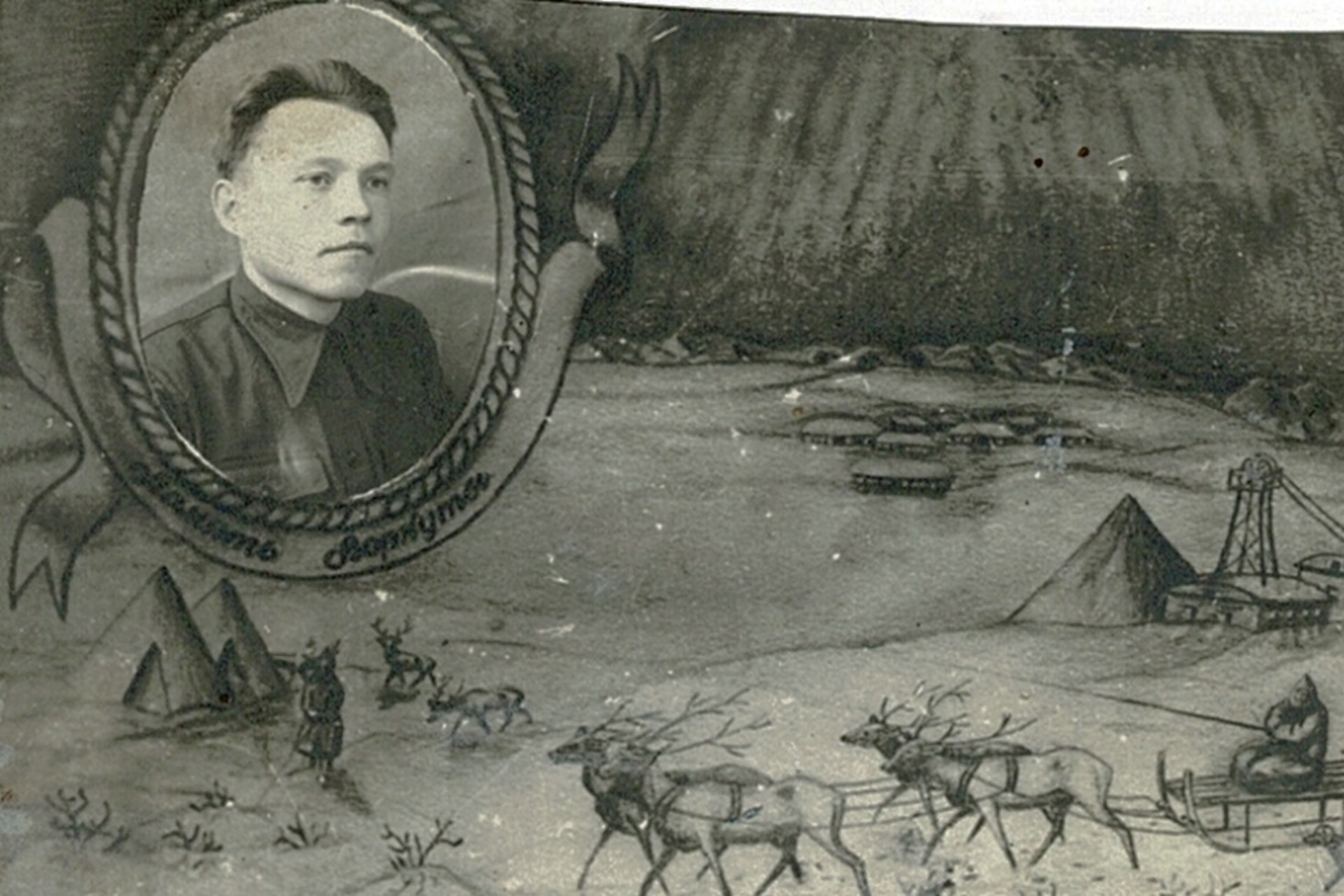
Johann remained in prison until the end of the war in 1945. Afterwards, it was decided to transfer him to a penal and labor camp in Vorkuta. Vorkuta – a city north of the Arctic Circle – is known for its subarctic climate and was considered one of the largest and harshest forced labor camps of its time.
Before departing for Vorkuta, the prisoners were given a soup made from half-rotten nettles. Many suffered colicky abdominal cramps on the train; some collapsed during the journey. Johann and his comrade, who was screaming in pain, were taken to a hospital after their temperatures were taken.
Between his fever attacks, Johann had brief, lucid moments in which his will to survive rekindled. During one of these lucid moments, he noticed that his fellow prisoner was no longer lying next to him.
He died of dysentery. Johann remained in the hospital for three months. But God's grace preserved him, and he survived the illness. Afterward, he was finally taken to Vorkuta.
After a year of construction work, Johann was forced into grueling pit labor in coal mines in Vorkuta. He lived in barracks and slept on bare bunks without bedding. They slept with what they worked with; their shoes served as pillows.
Until 1946, all correspondence was forbidden, and the family had long believed Johann to be dead. Only as a reward for good work performance were the prisoners allowed to write twice a year. This is how his relatives received the first news: Johann was still alive.
On the ninth day of his work in the mine, a serious accident occurred. While changing levels, Johann was suddenly pressed against the ceiling in the cage and suffered a fractured vertebra. The mine rescuers recovered him and took him to the hospital, where he remained for six months – until August 1947. As his condition improved, he had to painstakingly relearn how to walk. But by the grace of God, he did not become disabled despite the serious accident. After his release from the hospital, Johann was given lighter work on the surface of the mine.
as a crane jack.
Every day after work, the work crews had to assemble for a written roll call to confirm the prisoners' presence. Warm clothing was unavailable. Barely clothed and surrounded by dogs, they stood for hours in the freezing cold – at temperatures of minus 40 to 50 degrees Celsius. The guards wore warm fur coats, while the prisoners had to wait shivering until all the miners had arrived. Only when the group was complete were they led – accompanied by dogs – back to their barracks to prevent any escape attempts.
Light in the darkness
Under these inhumane conditions, Johann miraculously survived. During this time, a new chapter in his life with the Lord began. Among the prisoners were also Christians who had been condemned for their faith. Johann had fellowship with them, and through their preaching, many people came to faith. Johann himself was converted during his imprisonment in 1952 and became a member of the Church of Christ in Vorkuta.
Spiritual life could not be extinguished even during deportation – it continued underground. In the labor camps, small groups of believers formed, meeting in utmost secrecy. They were called the "barracks communities."
In 1956, Johann was released on parole. At that time, he entered into a covenant with the Lord through water baptism. The faithful continued to gather in the barracks, praying and reading the Word of God. The preaching took place in secret, under the most difficult circumstances. Often there was only a single copy of the Gospel, which was read in turn.
The persecution of Christians continued unabated. Believers hid from their persecutors in unfinished barracks.
Preachers often traveled long distances on foot or by horse-drawn cart to visit the scattered congregations. Meetings were also held in overcrowded mud huts (zemlyanka). Anyone caught praying together was locked in a cell for 15 days and then transferred to a penal colony.
The punishment cells were small, cramped chambers where movement was nearly impossible – with no place to sit or lie down. Prisoners had to undress before entering. Some cells were completely iced over, others infested with rats that attacked the inmates. Survival in such chambers seemed almost impossible.
But despite all these cruel circumstances, communities emerged – in captivity, in the labor army and in the special settlements – and they continued to grow.
pardon
After Stalin's death in 1953, Khrushchev came to power, and many prisoners benefited from an amnesty. At that time, Johann wrote a complaint to the Supreme Soviet to have his wrongful conviction reviewed. A year later, he finally received the answer he had longed for: he was pardoned and granted amnesty.
In 1957, after almost 14 years of imprisonment, Johann was finally released. At the age of 34, he returned home and saw his family again, whom he had been forced to leave at the age of 19.
However, the amnesty did not undo the original verdict or the social disadvantages. Former prisoners continued to face difficulties finding work and housing.
For Johann, it was particularly important to choose a place to live where he could connect with a church community. So he moved to the town of Korkino in the Chelyabinsk Oblast and became a member of the local Pentecostal church.
Finally free, Johann prayed for a wife. God answered his prayer and Johann married Katharina Bergen on July 5, 1959 in Chelyabinsk.
Five children were born to them in Korkino: four daughters and one son.
Old age
On July 12, 1989, Johann and Katharina moved to Germany. They settled with their family in Bruchmühlbach-Miesau, where they remained members of the congregation and faithfully attended meetings until the end of their lives.
In 2009, Johann and Katharina celebrated their golden wedding anniversary with 120 guests, testifying to the grace of God in their lives. A year later, Johann fell, broke his hip, and had to be hospitalized. Two weeks after the operation, he died at the age of 86, surrounded by his family.
Every day of his life, Johann was a good role model for his children and fellow human beings.
Helene Roth
Municipality of Speyer