
Podcast: Download (Duration: 8:43 — 6.0MB)
A few days after the disaster, the mission launched a fundraising campaign: Many of those affected lost everything and faced a hopeless situation. In addition to all their suffering, their homes and their contents were uninsured, meaning they had to cover all the costs themselves. Thanks to numerous expressions of sympathy, approximately €501,000 has been donated so far (as of September 4, 2021).
What criteria are used to distribute financial aid?
A person is considered affected if they have lost their belongings and do not have natural hazard insurance. We traveled through the flood-affected area, primarily in the Ahrbrück and Swisttal region, and assessed the individual damages. Some families suffered only minor damage to their homes, while others had their houses and farms completely destroyed.
These families typically lack natural disaster insurance and must bear the repair costs themselves. In most cases, they cannot afford this. Following an official agreement with the tax office, a special regulation was issued for disaster relief, making donations of up to €5,000 per person tax-free.
How exactly will the money be distributed?
Approximately 20 percent of the just over €500,000 budget has already been spent. Nearly €11,000 has been spent on electrical supplies and €3,000 on plumbing and gas supplies. Currently, almost all construction sites are still in the drying phase. Construction work can only begin once the building permit has been granted. The exact quantity of plastering materials required is not yet known.
In the first few weeks alone, around €2,000 was spent on meals. Both breakfast and hot meals were prepared and paid for. We received numerous donations in kind, including meat, frozen food, vegetables, and especially bread rolls.
We also made provisions for our cooks for the winter and financed the purchase of two specially equipped containers for the winter kitchen with a sum of 5,000 euros.
The largest sum we used went to the families who were found to be in need of assistance.
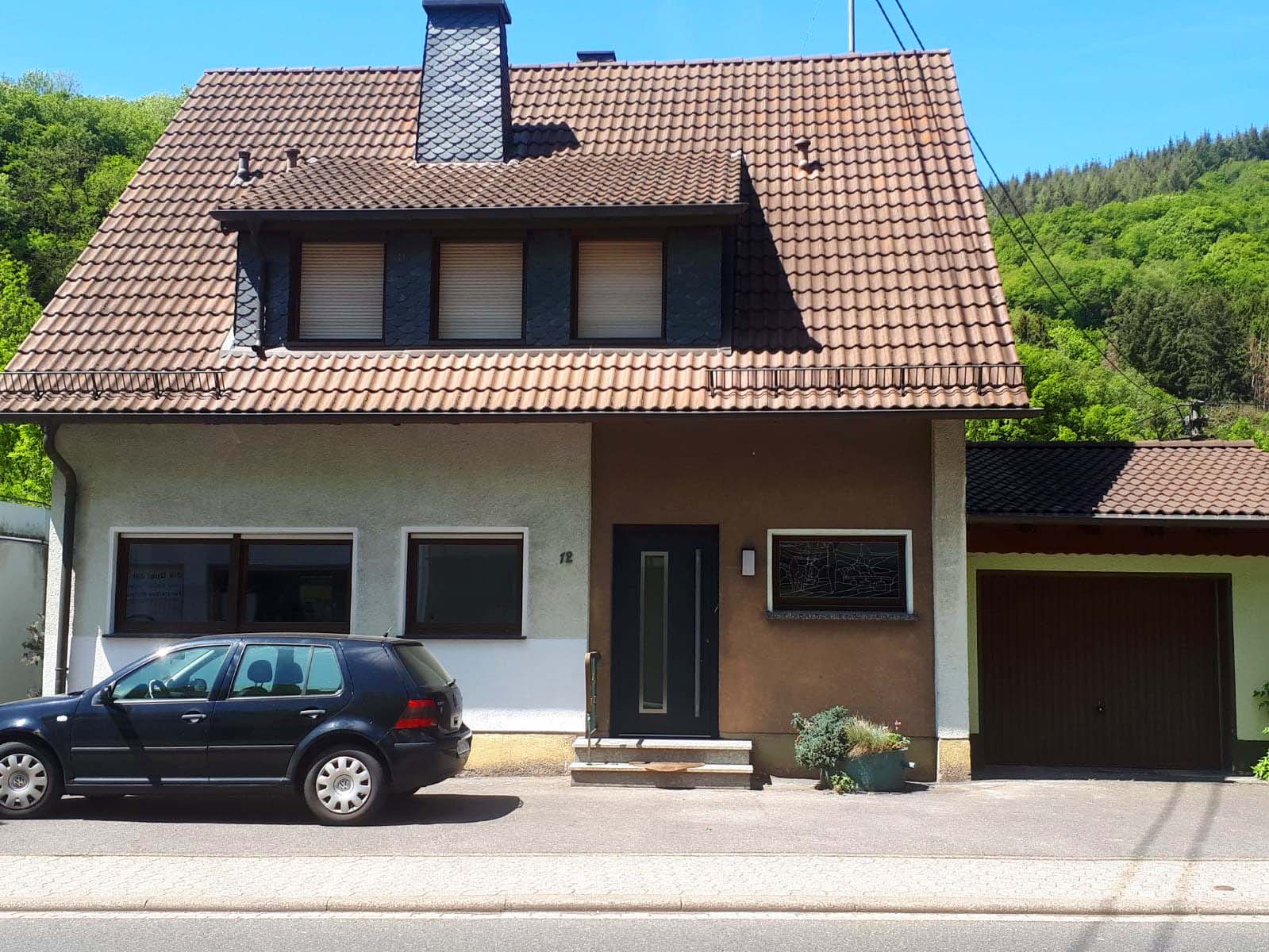
Before the flood: The newly renovated house of the Wieland family.
How have the monetary donations been distributed so far?
At the beginning, we contacted the mayors of Ahrbrück, Liers, and Hönningen to find out who had been identified as needing assistance. We then visited those addresses. In Ahrbrück, we helped three families with building materials worth €2,000 per family and also provided practical support: our siblings worked on-site.
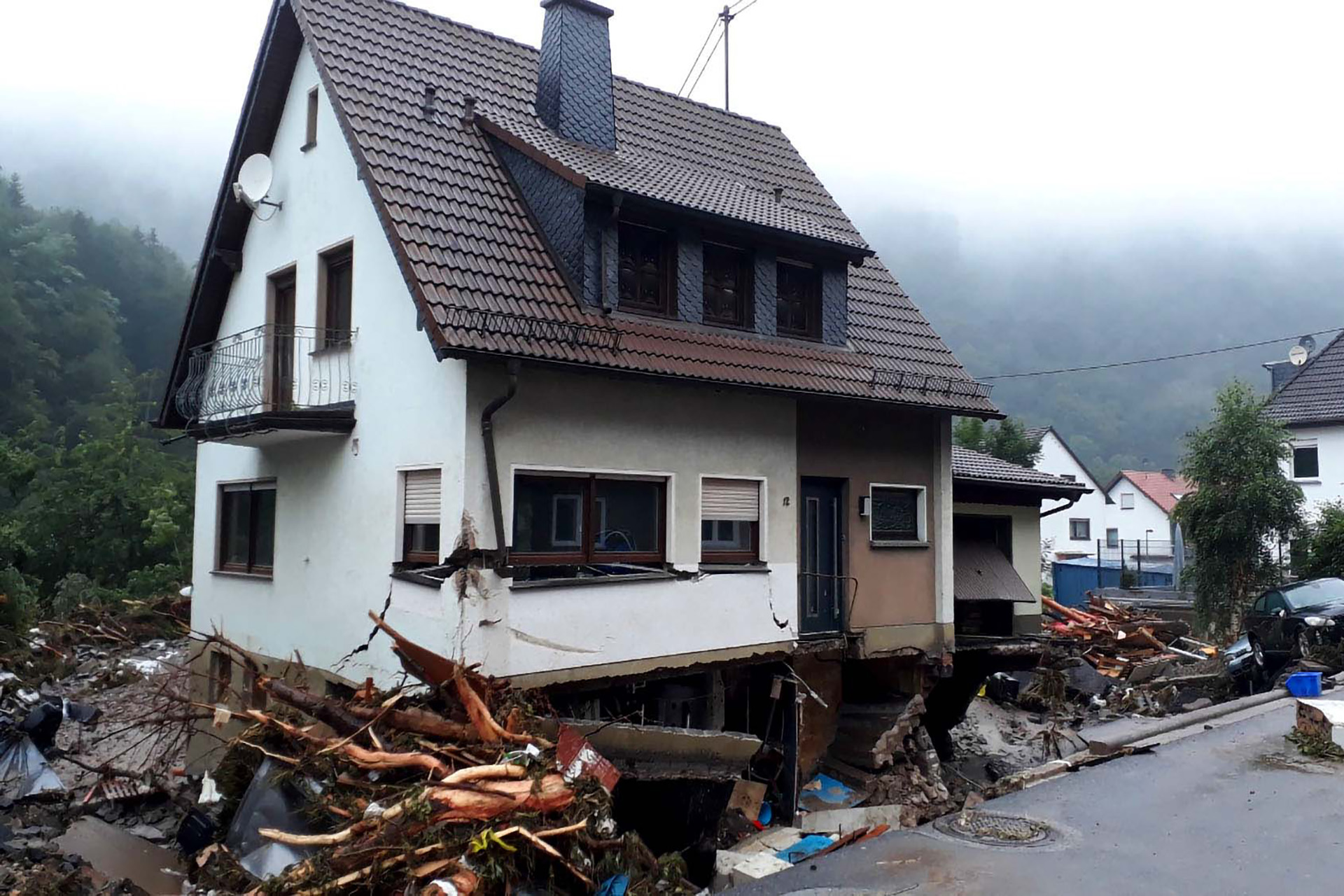
The Wieland family from Ahrbrück lost their entire home. The house had been renovated shortly before the disaster. Now it must be completely demolished; their beautiful, well-maintained garden was also destroyed. The family was suddenly left with nothing. They are grateful that everyone survived, as they were trapped inside when the water rose too quickly. We pledged this family assistance equivalent to two of our maximum donation amounts. They don't yet know if or where they will begin rebuilding, but our promised support stands.
We helped the Wolff and Huth families with building materials. In another house, which was also badly damaged, we met a privately organized team of skilled workers whose goal is to completely restore the house they are taking over. They have some funds, but these are often insufficient to complete the construction work. This team also received a maximum donation.
In the Swisttal valley, there are families who have also been severely affected and do not have natural hazard insurance. The total damage amounts to approximately €30,000 to €40,000. We have provided financial assistance of €2,000 to €10,000 to eight families there, depending on the extent of the damage and their overall family situation. For example, there are families with five and seven children whose homes suffered extensive damage.
Our siblings are also very active on the construction sites in their private capacity as experts. For example, Willi Horn from the municipality of Gifhorn had the opportunity to travel to Dernau and help out in the heating and plumbing department. Damaged water pipes were repaired and a temporary kitchen for a multi-generational household was installed (dishwasher and washing machine connections).
The necessary building materials were also financed by the mission. Furthermore, they managed to get the heating system working again. This involved replacing electronic components and installing a new oil burner. Although the floodwater had reached the top floor of the house, the oil remained in the tank. The affected residents were overjoyed when, after about five weeks, hot water flowed again from the showerhead and faucets.
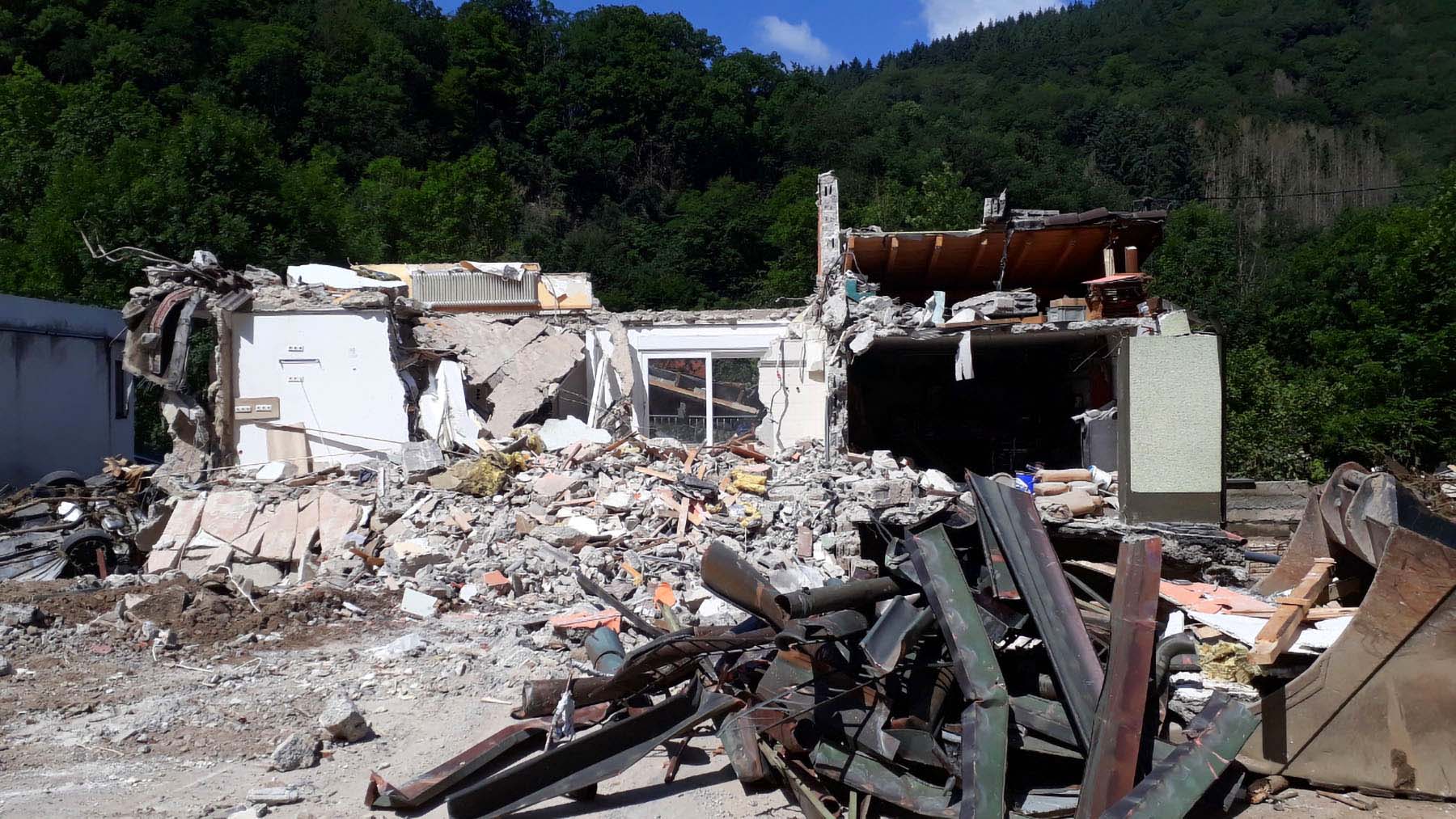
Due to the acute risk of collapse, the house had to be demolished immediately.
How did the local members of parliament and politicians react to your efforts?
They were often very surprised. These days, one rarely expects such support. But generally, they are grateful, because the need is truly great. A few weeks after the disaster, some politicians attended a church service in the town of Ulmen to thank the parishioners for their efforts.
We recently met with the local council representative in Altenburg. We discussed how we could help the community, where 90 percent of the houses are damaged. Since many of the 600 residents are related, it was impossible to select individual families. To avoid any disputes, we decided to transfer a sum to the village's shared donation account. The per capita donation in this village is calculated according to a formula and ranges from 500 to 3,000 euros per household.
We transferred €100,000 to this account, and the mayor assured us that the money will go to those affected who do not have natural hazard insurance and whose homes were severely damaged. We will be present for the distribution of the funds and will also personally inspect the houses.
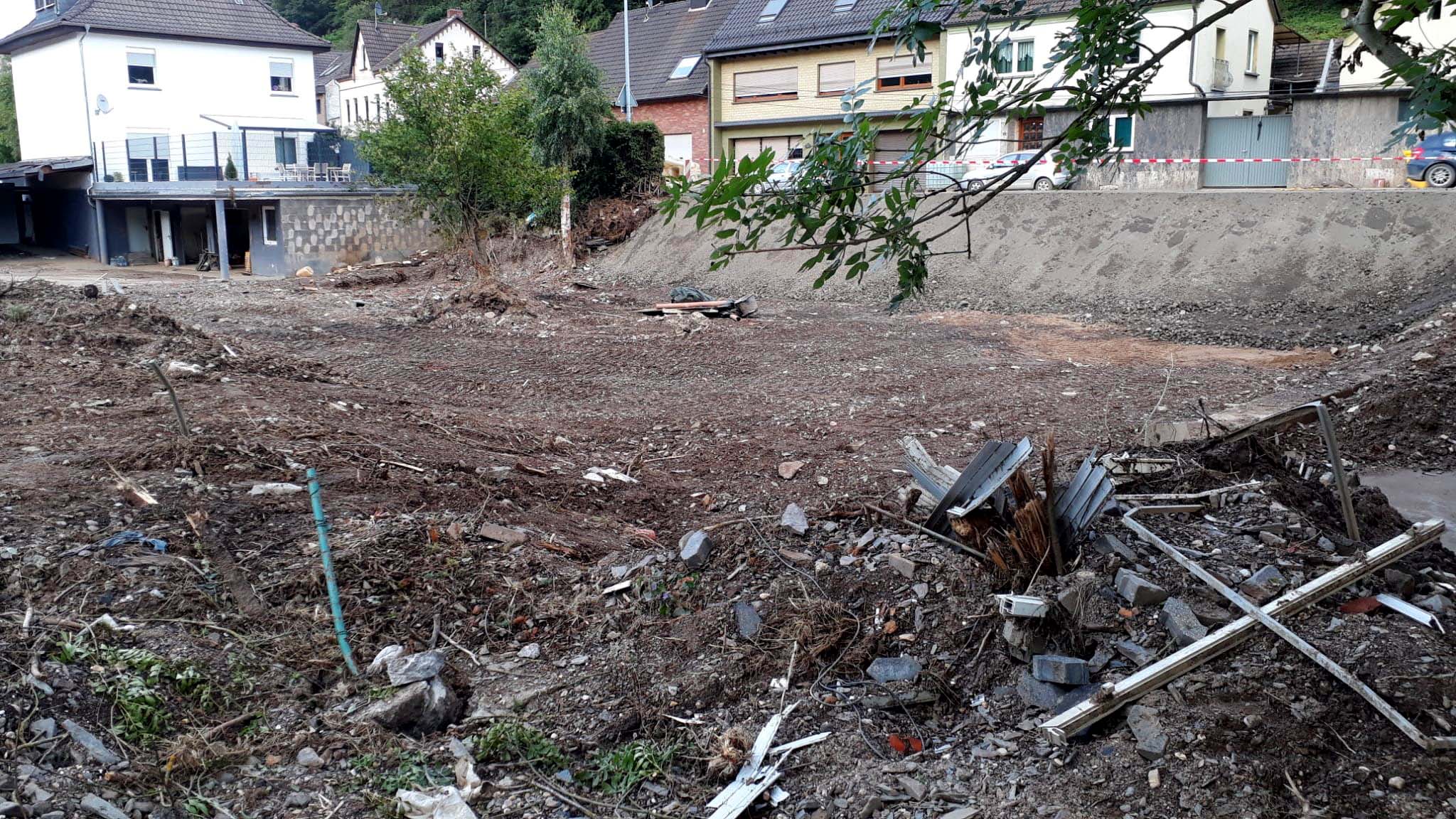
After the demolition, nothing remains of the former house.
What will happen to the funds that have not yet been used?
After consulting with the mission board and representatives from the congregations in Germany, we have decided to contribute an additional €100,000 to the fund of the local congregation in Altenahr. This sum will then be distributed to those affected according to a specific formula. The local notary will also be involved in the distribution process to relieve the burden on the local council.
Furthermore, we would like to contribute to the financing of a public space, such as a children's playground, in Altenburg. We believe this could be a good public meeting place where people can talk about God and faith.
According to current information, those affected will receive the promised government aid in 2021. Each affected family is to receive 80% of their losses from the government. This would significantly improve their situation and reduce their need. We at CDH-Stephanus intend to use the donations we receive wisely and thoughtfully. After the government payments are made, we will identify and support other households in need.
Excerpts from the conversations
with Michael Akulenko
and Markus Klippel