
Podcast: Download (Duration: 10:37 — 7.3MB)
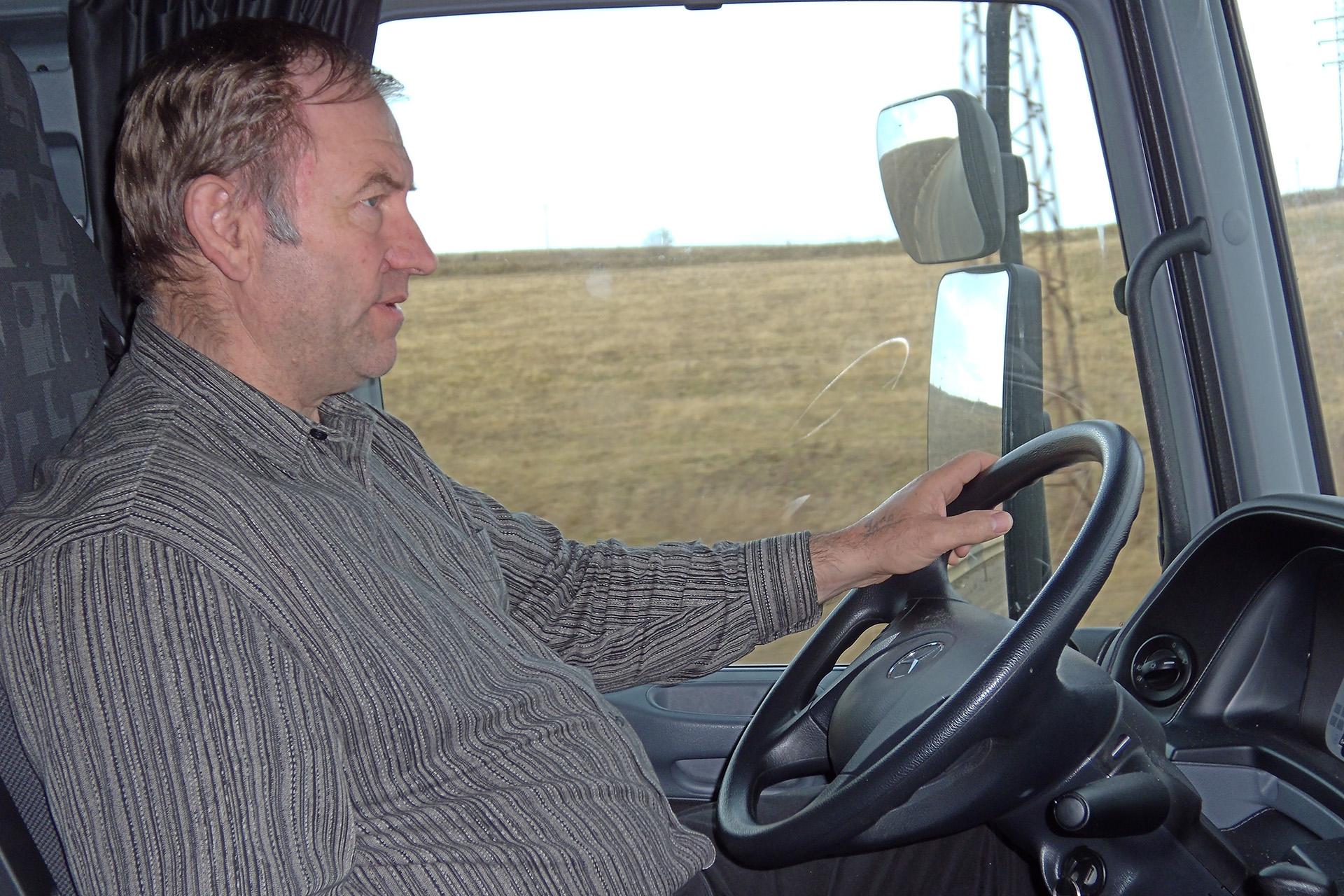
In this interview, we report on Brother Waldemar Brauer from the Bremen-Sottrum congregation. He played a key role in establishing the district association in Bremen when our mission was still in its infancy. We read about the obstacles and blessings he experienced along the way in this report.
You were one of the first officials of the district association in Bremen. How did it come about that, in addition to the national central association, the district associations were also founded?
The need to establish another district association was recognized because a large portion of the donations came from northern Germany. Transporting the aid supplies from the north to Speyer by truck and then delivering them to the places where they were needed was very cumbersome and time-consuming. Planning began, and after some deliberation and discussion, the plans were finally implemented.
Initially, there was only one camp here in Bremen, which continued to be administered from Speyer. However, the development continued. This process took almost 10 years until 2003, when I was finally commissioned by the brothers to lead this district association.
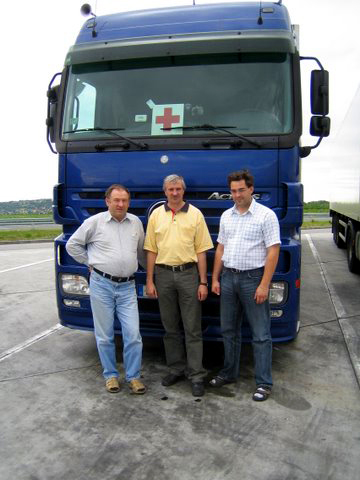
God protected the truck drivers on their missionary journeys.
How did it come about that you were given this responsible task?
The brothers were looking for someone to manage the work in Bremen and approached me one day. At the time, I was still a youth leader and initially declined. In my opinion, there were younger and more suitable brothers who could perform this service. However, the brothers persisted. They told me that, unfortunately, no one was willing to take on the task.
I didn't want to disobey the Lord's will, so I agreed. I then took a year of unpaid leave from my job to focus entirely on missionary work. We had a huge amount of aid supplies and could barely keep up with transporting them to Ukraine and other countries.

Help arrived in time even when a truck tire broke down.
You were not only the head of the district association, but also a truck driver. How did you manage to do all that?
It wasn't easy. We had to make a lot of phone calls to get food and other supplies from various companies. I spent very little time at home. When I was traveling, I often didn't come home for several days, and when I was at the district office, I often worked late into the evening. The office work, in particular, was very extensive.
At the same time, there was also a need in our congregation in Bremen. The church council then decided to release Brother Roman Eggert from his duties to handle the bureaucratic matters. He was also to support me in my missionary work. This was a great help to me. In this way, I was able to concentrate more on transporting the aid supplies.

Now you could focus more on the trips abroad. You must have seen a lot of poverty there. Is it even worthwhile transporting the aid supplies there by truck, or would another form of aid be more effective?
This question comes up all the time. It's definitely worth driving the truck. Just the other day, some brothers asked me with a grin, "How much did the truck actually cost?" I told them, "Three fish!" They looked at each other and asked, "What do you mean?" I replied, "Quite simply, we recently had three shipments of fish fillets. Each load was about 18 tons, so you can do the math and figure out how much a kilo of fish fillets costs. The truck has already paid for itself after just these three trips."
How long does a truck journey like that take? How difficult were the border crossings? How did you deal with them?
It varies. Border crossings, especially at the beginning, were very time-consuming. There were many borders with extremely long queues. We tried to register with the local police as a humanitarian aid transport to speed things up. Over time, however, the respective countries began setting up separate lanes at the borders for transports of, for example, live animals or highly perishable foodstuffs. We were usually able to use these lanes, which eventually made crossing easier for us.
The customs officers treated us differently; for example, one Ukrainian official thanked us, saying, "I thank God that there are still people like us who care about the suffering of others." On another occasion, however, we were accused of enriching ourselves through these actions and profiting personally. There were many truly difficult moments, but we always saw God's blessing in them.

However, there are also dangers on such journeys. Have you experienced dangerous situations where you clearly saw God's guidance and protection?
I can't say that there were never any problems. We had several such moments where we clearly saw God's hand. I can even give a specific example. We were driving our truck just before a border when we passed a group of men who immediately got into their cars and stopped us. We spoke with them, and they informed us that we had to pay them.
I explained to them that we knew nothing about it, as we didn't drive that way very often. At that moment, one of the men glanced at our driver's side door and saw that we were from CDH-Stephanus. Upon seeing this, they immediately apologized for stopping and let us continue on our way without payment.
We were also well-known among the criminals because we often delivered aid to the prisons. That's why I think they left us alone. We used to hear about other truck drivers being attacked, and sometimes even injured. So we can clearly see how God protected us.
Regarding the roads, I have to say they were often very slippery. A specific example: I was traveling alone to Kyrgyzstan and had to take an alternative route on the way back due to a road closure. This route was extremely slippery. I checked my map and realized I had almost ended up in the ditch.
I was able to prevent it and immediately pulled over afterward to thank God for this protection. It was also raining heavily, and my visa was due to expire the next day. I prayed to God to change the weather so I could continue my journey. The road dried within two hours, and I was able to proceed. Through such miracles, which I experienced time and again, I can truly say that it is solely God's grace and love that sustained us.

How was it for your family? Your wife and children must have been very worried; they have to bear this burden just as much.
Before I was married, I prayed to God that He would give me a wife with whom I could start a family. I trusted that He would send me the right one, someone who could handle it all. One night I had a dream in which I saw my now-wife's childhood home, with her parents and two of her sisters in the living room.
When the time came and I entered that house to become engaged, I was startled. Everyone was sitting in the exact same place as in the dream, even though I hadn't known where they lived before I arrived. It wasn't easy for my wife, of course, but by God's grace she managed to bear it all.

May God reward your wife and bless your family. We thank you for this conversation and for sharing your experiences with us. One last question. What advice can you give to the younger brothers who are also serving in this or a similar ministry?
In the 1990s, I had an accident where I hit the windshield and lost consciousness. I briefly regained consciousness at the scene, but when I saw all the blood, I immediately fainted again. I woke up in the hospital and heard Polish being spoken around me. I realized I was in the hospital.
In my mind, I began to wonder why God had allowed this. We work for Him, and God allows such a thing? Suddenly, I heard a clear and distinct voice telling me, "Those who grumble will not enter the kingdom of heaven." I was so ashamed that I had allowed such thoughts and asked God for forgiveness. Therefore, I want to tell the young truck drivers to perform this service for and, above all, before the Lord. Trust in God and don't forget that God will accomplish it.
An interview with Waldemar Brauer
Municipality of Sottrum
