

Podcast: Download (Duration: 27:45 — 19.1MB)
Someone once said, "Whoever strives to love God above all else must strive to know God as best as possible." Sooner or later, everyone is confronted with the question of whether God exists. And if so, what He is actually like. These are existential questions of life! What about your understanding of God?
Knowledge of God is the will of God.
To find a satisfactory answer to the question of God's nature, it is absolutely necessary to know God as well as possible. The salvation of every person depends on true knowledge of God. But God is spirit. And therefore, He can only be known through faith: "And without faith it is impossible to please God, because anyone who comes to him must believe that he exists and that he rewards those who earnestly seek him" (Hebrews 11:6).
We only attain true knowledge of God when we stand in genuine, living faith in the Lord. It is simply impossible to know Him with human reasoning alone! Zophar, Job's friend, once expressed it this way: "Can you fathom the depths of God or fathom the perfection of the Almighty?" (Job 11:7). The Apostle Paul takes up these words and, in turn, attempts to describe the majesty of God: "Oh, the depth of the riches of the wisdom and knowledge of God! How unsearchable His judgments and His ways beyond tracing out!" (Romans 11:33).
What infinite depth lies in the majesty of God! And yet—the eternal, the incomprehensible, the infinite God allows us, finite beings, to recognize Him who is limitless. Moreover, it is even the sovereign will of God that His children recognize Him, the true God, and grow and increase in His knowledge (cf. 2 Peter 3:18). The almighty and loving God does not leave us in darkness. He reveals Himself to us through His holy Word: “In the past God spoke to our ancestors through the prophets at many times and in various ways, but in these last days he has spoken to us by his Son, […] who is the radiance of God’s glory and the exact representation of his being” (Hebrews 1:1-3). In the Gospel of John, it is explained: “No one has ever seen God; the only Son, who is in the bosom of the Father, has made him known” (John 1:18).
Following this glorious revelation, the knowledge of God has become an indispensable prerequisite for receiving salvation and eternal life: “Now this is eternal life, that they know you, the only true God, and Jesus Christ, whom you have sent” (John 17:3). Jesus Christ came to earth and became human so that we might know God: “And we know that the Son of God has come and has given us understanding, so that we may know him who is true. And we are in him who is true, in his Son Jesus Christ. He is the true God and eternal life” (1 John 5:20).
As long as we are pilgrims on this earth, our task is to know the Eternal One more and more, to grow and mature spiritually. That is His will for us. The day will come very soon when believers will know their Lord perfectly. They will stand before Him and see Him clearly: “For now we see only a reflection as in a mirror; then we shall see face to face. Now I know in part; then I shall know fully, even as I am fully known” (1 Corinthians 13:12).
We only gain true knowledge of God when we stand in genuine, living faith in the Lord.
The attitude of the heart is crucial.
Our knowledge of God, however, should not come about arbitrarily. It is essential to attain the correct understanding of God—a knowledge worthy of Him. This can only be achieved through righteous conduct before Him. God is a jealous God and will not share His glory with anyone. It is impossible to serve two masters (cf. Matthew 6:24). The worship of God should be in spirit and in truth. Earthly components or even inanimate objects have no place here. We read in the Ten Commandments that the people of Israel were strictly forbidden to elevate any things in their lives to the status of secondary gods and to serve them (cf. Exodus 30:3-4).
Because God is spirit, nothing material or even made by human hands can be like Him. He is zealous and deeply concerned that His people worship Him with dignity and reverence. God's uniqueness also requires a unique devotion to Him. The lack of complete devotion and spiritual zeal is a sin in God's eyes and carries serious consequences (cf. Exodus 30:5). However, He shows mercy to those who demonstrate their loyalty to Him through obedience: "For this is the love of God, that we keep His commandments" (1 John 5:3).
To attain not just any, but the right, appropriate understanding of God, we need the attitude that John once had: “He must increase, but I must decrease” (John 3:30). Knowledge of God can only increase when we recognize and accept human insignificance. We must be clearly aware of how dependent we are on the One who brings life to us. King David once found himself in a situation where he had to appear before the Lord. He already knew from experience what was important. When the prophet Gad demanded that he build an altar for his sins, to offer a sacrifice to the Lord so that the plague would be averted from the people, he said: “For I will not offer to the Lord my God a burnt offering that costs me nothing” (2 Samuel 24:24).
This statement reveals David's heartfelt attitude and understanding of God. He understood that he couldn't bring just anything to the Lord. It had to be something valuable, something that cost him something. Only if it is the very best is it a gift worthy of His majesty and pleasing to Him.
God is indescribable and incomparable.
Before their entry into the Promised Land, Moses earnestly instructed and admonished the people of Israel. He addressed an important point from their experiences during their wanderings in the desert (see Deuteronomy 4:14ff). When the Lord spoke from the fire at Mount Horeb, the people saw no form whatsoever (see Deuteronomy 4:12). Therefore, they should never attempt to represent God by means of any image or likeness.
The Israelites saw that the nations around them practiced a religion of idol worship of all kinds. They, however, were forbidden then, just as we are today, to clothe God in any image, to give Him a limiting form, and thereby to call His mysterious "transcendence" into question. The result of such an act and of pagan conceptions of the Godhead would be spiritual bankruptcy.
Another reason why Israel had to reject all forms of idolatry was the fact that they had been led out of Egypt, a pagan land where dozens of false gods were worshipped through images. Their time in Egypt as slaves among idol worshippers is compared to being in an "iron furnace" (see Deuteronomy 4:20). But now they had become God's possession, freed from the yoke and designated by Him for a special calling.
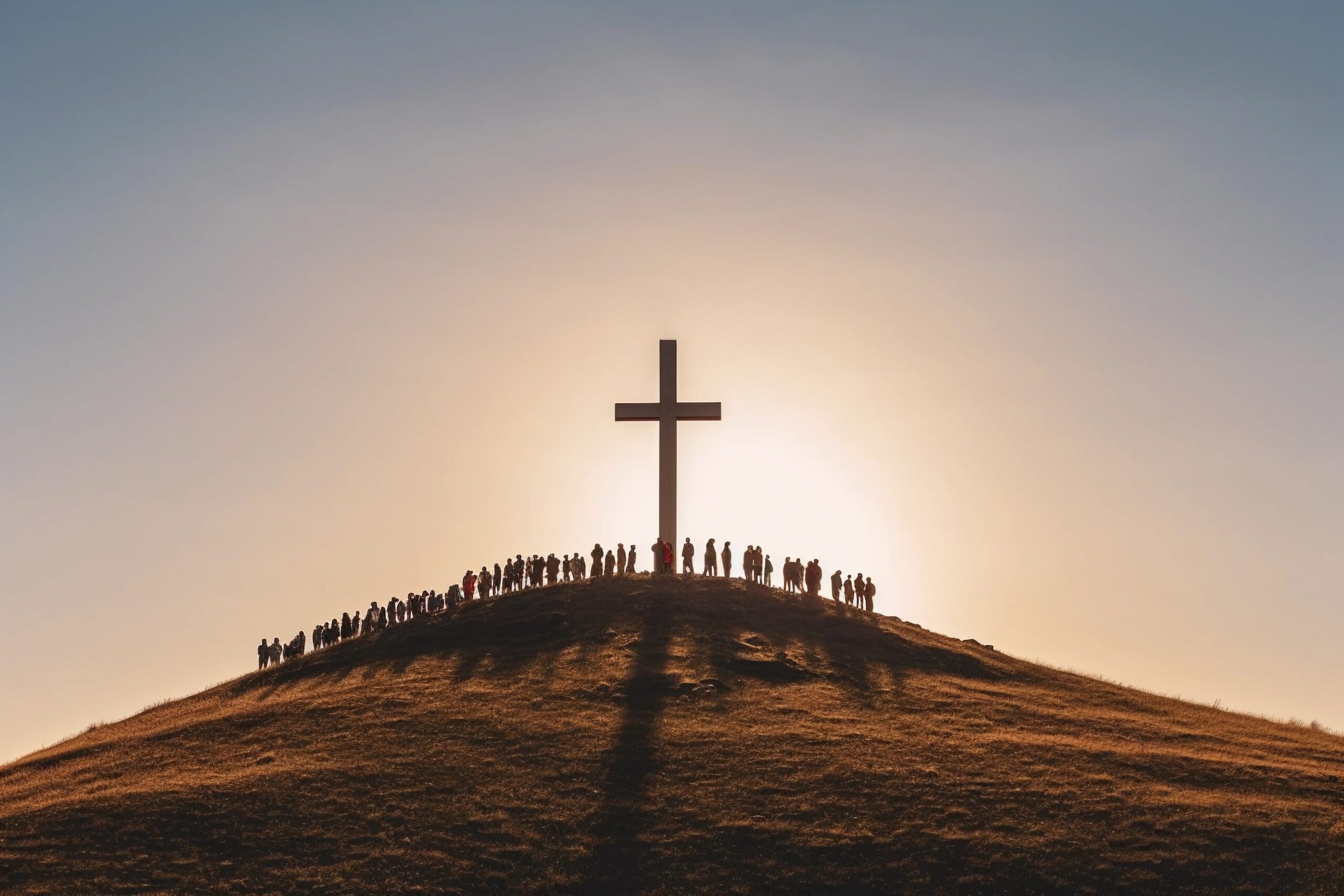
Jesus Christ came to earth and became human so that we could know God. Image source: AdobeStock_624366164 @ MAXSHOT_PL
Humans cannot fully comprehend God.
Similarly, the Apostle Peter describes our calling: “But you are a chosen race […] that you may proclaim the excellencies of him who called you out of darkness into his marvelous light […]. Abstain from the desires of the flesh, which wage war against the soul. Live a good life among the Gentiles, […] that they may glorify God” (1 Peter 2:9-12). The sovereign will of God is “that all people may be saved and come to a knowledge of the truth” (1 Timothy 2:4).
God wants us to recognize who He is. “God must be recognized in the midst of life; in life and not only in death, in health and strength and not only in suffering, in action and not only in sin,” as Dietrich Bonhoeffer once put it. And He allows Himself to be recognized. Through Holy Scripture, His divine nature is revealed to us.
The Apostle Paul begins his letter to the Romans with the following words: “He promised beforehand in the holy Scriptures through his prophets [namely the gospel] about his Son, who was descended from David according to the flesh and was declared the Son of God in power according to the Spirit of holiness by his resurrection from the dead, Jesus Christ our Lord” (Romans 1:2-4). “Declared” means “was presented and is present even today.” For us, the only remaining task is to allow the Spirit of God to establish His dwelling place within us and to do everything in our power to make this happen.
Toward the end of his teaching on the righteousness of God, which manifests itself in His sovereign election, the Apostle Paul praises and glorifies the Almighty. He exclaims, “Oh, the depth of the riches of both the wisdom and knowledge of God!” (Romans 11:33). God’s plan for the salvation of humanity testifies to the omniscience and omnipotence of the Creator. God reveals the meaning of His judgments and ways so that people may recognize and fully understand that God loves them all and desires to save them. But also that no human being is ever able, nor will ever be able, to fully comprehend Him. And yet, He allows Himself to be found by those who seek Him with all their hearts.
God communicates Himself through His Word
God's will is to glorify Himself through His creation. To this end, He created humankind in a wondrous way, so that they might fulfill this task in a special way. The humble person recognizes this miracle of God and says: "I praise you because I am fearfully and wonderfully made; your works are wonderful, I know that full well" (Psalm 139:14).
The psalmist here compares his entire inner structure, in its astonishing unity and interdependence, to an intricately woven fabric, in which every thread, in relation to the others, expresses the completeness of the great artist's intention. Blessed is he who recognizes his dependence as a created being and, like a wise builder, digs deep to establish his life on a firm foundation. “He is like a tree planted by streams of water, which yields its fruit in its season, and whose leaf does not wither; and whatever he does prospers” (Psalm 1:3).
We must understand that apart from Him we can do nothing and that the Almighty has already revealed everything we need for understanding Him in His Word. Jesus once said, “You did not choose me, but I chose you and appointed you so that you might go and bear fruit” (John 15:16). Just as the disciples were then, we too are reminded today that, contrary to the practice of the time, they did not choose their Master themselves, but that He chose them so that they might continually bear fruit and thus give glory to the Almighty.
For what can a person offer the Creator that does not belong to Him from the beginning? After all, His hand created everything, and every beginning belongs to Him alone. How much less, then, can a person dictate the conditions under which God can be found and experienced.

It is simply impossible to comprehend God with human intellect! Image source: AdobeStock_209866700 @ kras99
Jesus Christ – the perfect revelation of God
In the Gospel of John we read: “No one has ever seen God; the only begotten Son, who is in the bosom of the Father, he has made him known” (John 1:18). The statement that no one has ever seen God seems, at first glance, to cause difficulties in understanding. After all, we also find other statements on this subject in Scripture, such as Isaiah once said: “For my eyes have seen the King, the Lord Almighty” (Isaiah 6:5).
And yet, it is true that God, in His essence and His fullness, remains invisible to the human eye. Indeed, neither Isaiah nor Moses nor Elijah, nor any other human being, saw God personally. What people sometimes glimpsed was His glory. Sometimes they experienced God appearing in the form of an angel or in human form.
But when the time was fulfilled, the inner being of God was revealed to humanity in Jesus Christ. “And the Word became flesh and dwelt among us, and we beheld his glory, the glory as of the only Son from the Father, full of grace and truth” (John 1:14). The image of the Son in the bosom of the Father testifies to a special closeness between the Father and the Son. The Son reveals the Father in the sense of a revelation of paternal love and the intention to save humanity. The way to the Father has been opened to us through His Son, Jesus Christ.
Jesus says, “I am the way” that leads to the Father, who is also “the truth and the life” (cf. John 14:6). And because He bears in Himself the form of “the truth and the life” of His Father, He is also the only connection through which people can gain access to the Father, “the truth and the life.” With the words “no one comes to the Father except through me” (John 14:6), Jesus emphasizes that, contrary to human understanding, there are not many paths that lead to salvation. There is only one way that leads to the Father, and that is the Lord Jesus Christ! He alone, who with the joyful cry on the cross, “It is finished!” completed the work of redemption and restored the once-lost connection to the Father.
World influences – dangers to our concept of God
The Word of God encourages us to be mindful of our conduct and admonishes everyone to hold fast to what they have. There is therefore a real danger of losing what one has once received. Today, there are countless ways to access a wide variety of information quickly and easily. This also opens many doors behind which dangers lurk. The risk of being led astray is greater today than ever before. With the internet, the world is open to the user in seconds. The information we consume, whether audio or video, influences our consciousness. What we hear and see leaves its mark.
God, the Lord, desires to protect His people because we are precious to Him. Through His holy Word, He has assured special protection for those who heed and follow it: “And you will know the truth, and the truth will set you free” (John 8:32). God is truth, and the more we abide in His Word, the truth, the better and clearer our knowledge of God becomes.
This special protection acts like an immunity. It preserves from all kinds of temptations and illnesses and offers everyone true freedom in Christ. People today want to be free. They don't want to make commitments. But consciously or unconsciously, they fall into the nets of deceivers when they go about their lives unprotected, without a firm foundation in true knowledge of God.
The danger of liberalism
Another major danger, which unfortunately is also becoming clearly visible in our congregations, is the liberal human conception of God. This attitude is based on the idea of being enlightened and wanting to think freely. The principle is often: "I can serve the Lord how and where I want." Many so-called Christians want to be free in their own way, no longer want to submit to the local church, and withdraw more and more from church life. "I won't let the church leadership impose anything on me," such people say.
The Lord Jesus Christ offers us protection from such false notions. We find this protection in the words: “On this rock I will build my church, and the gates of Hades will not prevail against it” (Matthew 16:18). The attentive reader of the passage in chapter 16 will not miss the context in which this statement is made. For it is described beforehand how the disciple Peter came to the true knowledge of God, which led to his salvation and the guarantee of special blessings.
The Lord pointed out that Peter didn't arrive at his conclusion on his own, but that the Father in heaven had revealed it to him. If Peter hadn't been in close fellowship with Jesus Christ, would he have received this revelation? I don't think so! Jesus goes on to emphasize that even the gates of Hades will not be able to overcome the church, in which He Himself serves as the builder. The church of Jesus—what a secure place to encounter God!
God can be found by those who seek Him with all their heart.
The danger of “cheap mercy”
A false understanding of God can also arise when God's grace is treated carelessly. When true grace is confused with "cheap grace," a grace without price or cost. In such cases, God's majesty is reduced to a human level, and humanity falls into the sin of idolatry. And in such cases, God's grace can be missed. "See to it that no one falls short of the grace of God, and that no root of bitterness springs up and causes harm, and contaminates many" (Hebrews 12:15).
Those who neglect God's grace are likened to a bitter root, a root that produces poison and wormwood. Moses had already warned the Israelites that they would repeatedly encounter people who, by turning away from God, had become idolaters (see Deuteronomy 29:17-18). They had already had such experiences in Egypt, and even on their way to the Promised Land, they had fallen into the sin of idolatry. They had seen pagan idols with their own eyes and were familiar with the abominations that accompany idolatry.
However, it should be clear to them, and to us today, that someone who turns away from God in their heart and begins to worship “false gods” is like a bitter root. A root that spreads, grows, and brings ruin. May God protect each of us from falling into such a blind state, so that we, too, do not have to bear the same harsh testimony that Paul once gave to some in Corinth: “For some do not know God; I say this to your shame” (1 Corinthians 15:34).
Good and bad role models
We find many examples in Holy Scripture of how God, the Lord, has revealed Himself to humankind. Many exemplary figures invite us, through their way of life, to follow their example. After the Apostle Paul had previously formulated his life's goal of becoming more like Christ, he did not hesitate to urge and ask the Philippians to imitate him. In his tireless striving to know Christ and become more like Him, we have been given a wonderful example of how to come to know God more closely.
Unfortunately, it also happens that some, in their discipleship and search for knowledge of God, stray from the true path. This was also the case in the church at Philippi: “For many, as I have often told you, and now again with tears, live as enemies of the cross of Christ. Their end is destruction; their god is their stomach; they boast in their shame; their minds are set on earthly things” (Philippians 3:18-19).
Paul was so concerned for the spiritual well-being of the Philippians that he often warned them of the danger posed by the people he described. He even did so in tears. Paul says of them, "Their god is their stomach," meaning that they were guided only by their physical desires and, in particular, wanted to please their flesh and their stomachs in every way imaginable. Instead of giving glory to God, they sought praise and fame for themselves and were proud of things they should have been ashamed of. Beforehand, the apostle calls on the congregation to follow the good examples and become their imitators. Believers must learn to distinguish truth from error and to live in a way that pleases God.
May God be with us and help us to live up to our calling. Our calling is to live worthy of the gospel of Christ. To know Him is the duty of everyone who calls themselves a child of God. To know God means to gather personal experiences with Him. As the believer is renewed in the Spirit through the knowledge of God and becomes ever more like Christ, he is seized by an ever-growing desire to strive and live not according to his own will, but according to God's will. Ultimately, everyone who desires to know the Lord will understand that the knowledge of God will bring him into God's good grace.
Vladimir Scheling
Municipality of Bremen-Vahr