

Podcast: Download (Duration: 20:04 — 14.0MB)
We all know fatigue. There are times when we feel alert and full of energy, and other times when we are exhausted and tired. The Bible also speaks of the Lord Jesus Christ, in His servant form, experiencing fatigue and needing rest. It is worthwhile to consciously pay attention to emerging fatigue and to investigate its causes. Our effectiveness in serving God can depend significantly on it.
On the origins and consequences of fatigue
If fatigue is consistently ignored, it can have serious consequences. Our bodies are designed to require regular periods of rest for recovery. By ignoring these signals, we harm ourselves and those around us. Fatigue can not only impair our daily performance but also pose a danger in traffic or at work, for example, when operating machinery.
It is therefore advisable to pay attention to fatigue and investigate its causes. Those in employment certainly appreciate and understand the importance of legally mandated rest breaks. We can see this particularly clearly on our roads and highways when an accident causes a traffic jam.
Accidents often occur because driving and rest times are not observed and the driver falls asleep due to fatigue. Of course, this doesn't only happen to professional drivers; it can happen to anyone. Exhaustion becomes a real danger and can even endanger human lives. The reason for this is frequently the failure to heed body signals and adhere to regulations.
Some scientists speak of a so-called "internal clock" that governs our lives. It determines when we are most productive, but also when we feel tired or want to sleep. This biorhythm is controlled by a sophisticated system of interaction between our brain, nervous system, and various hormones. Light, emotions, our stress levels, and the daily demands of our lives also influence whether we feel sluggish or energized.
Taking a break is not a sign of weakness for someone who serves the community.
For example, fatigue occurs more frequently on darker days, such as in winter, than on sunny days or during exciting events. Fatigue also arises when we have exerted ourselves—whether physically, mentally, or emotionally. If we then take the necessary rest to recover, we remain productive. Illnesses also lead to fatigue. Regular sleep generally allows the body to regenerate and support its immune system. Even for a Christian, persistent fatigue can become a major problem. It makes them sluggish and gradually ineffective in their ministry.
Often, fatigue and lethargy hide behind "boredom" or the desire to simply "relax." Either way, it doesn't leave us unaffected. Severe fatigue can dangerously restrict our daily ministry. The affected person feels utterly exhausted. In the long run, they become spiritually dormant and ultimately exposed to the dangers of spiritual decline. Those who are constantly tired tend to withdraw more often, becoming inactive and unproductive for ministry. Attending church services, actively participating in the life of the local congregation, quiet time, and many other useful and necessary activities then seem far too strenuous.
Just as muscles atrophy over time due to lack of exercise, the human mind also deteriorates with inactivity. Without regular exercise, even minor demands become so taxing that the motivation to remain active disappears. Therefore, the best remedy for chronic fatigue is to stay active! Of course, this doesn't mean working through every break.
Rather, this can be compared to a loaded sled in winter. As soon as you come to a stop, the sled's runners freeze to the ground quite quickly, and it's no longer easy to move. It requires greater effort to get moving again. After that, it becomes easier again. (Source for Medical Background: Fatigue)
(As of March 31, 2020). https://www.praxisvita.de/muedigkeit-1167.html [04/09/2020].)
Prevention of fatigue
Christians are just ordinary people according to the flesh. Therefore, it is perfectly natural for them to tire over time and need some rest. However, it must be remembered that even when a Christian is in a phase of physical rest, they must never completely switch off their mind. Their spirit must always be in so-called standby mode, meaning it must always remain ready to serve and respond appropriately to any situation.
Doing nothing, consciously thinking nothing, simply resting, means idleness for the brain. In other words, a vacuum is created where our thoughts originate. This vacuum, this emptiness of thought, usually doesn't remain empty. It is precisely in such a situation that the pull of various thoughts, which have accumulated before the gates and doors of our perceiving sensory organs, begins. These thoughts forcefully attempt to penetrate us.
A Christian, especially now in this state of rest, must filter their thoughts and take the utmost care to ensure that nothing harmful slips through and takes root. For as long as harmful thoughts remain outside our awareness, they cannot harm us.
The fitting quote comes from Martin Luther: “Just as you cannot prevent birds from flying over your head, but you can prevent them from nesting on your head, so you cannot prevent evil thoughts, but you can prevent them from taking root in you.” God the Lord once spoke to Cain and warned him: “But unless you do good, sin is crouching at your door; its desire is for you, but you must rule over it” (Genesis 4:7).
This warning applies equally to us, the people of the twenty-first century: never to let our thoughts run wild, but to always be equipped with a sober mind. The Apostle Paul describes it similarly: “But since we belong to the day, let us be sober, putting on the breastplate of faith and love, and the helmet of the hope of salvation” (1 Thessalonians 5:8).
The best remedy for chronic fatigue is to stay active!
The instructive story of Jesus Christ and the woman at Jacob's well also makes it clear that human fatigue is perfectly normal, and that the body needs a break after exertion: "So Jesus, tired from the journey, sat down by the well" (John 4:6). Thus, even the Lord Jesus Christ allowed His tired body a respite. However, during this rest, He did not enter a state of complete inactivity, but continued to focus His mind and thoughts intently and attentively on the things happening around Him.
When He saw the woman coming to draw water, He was inwardly moved to begin a conversation with her. His relationship with Heavenly Father was always current, healthy, and active. Therefore, it is important to remain mentally clear-headed even during physical rest, so that we can respond appropriately to the things happening around us and be prepared for all possible dangers.
We can learn something else from this example. Even when our body shows weakness and needs rest, the human spirit should always be ready to be a blessing to those around us. That is God's will for us. We humans are instruments in God's hand, and God wants to accomplish His work of salvation in and through us. Jesus sat by the well and rested. But he continued to think about the Kingdom of God and used every opportunity to make people blessed. We, too, should have this mindset: "Set your minds on things above, not on earthly things" (Colossians 3:2).
The service is important – adequate rest breaks are too.
Rest is of great importance for every Christian who serves in a ministry. Firstly, simply because we are all human and eventually reach our limits and become fatigued. Furthermore, everyone who serves in the church bears a great responsibility before God and others. It doesn't matter what kind of ministry it is or what office one holds. God expects complete devotion from everyone, not only in service to the church but also in our personal lives. Our personal relationship with God comes first. Then comes family, and only after that, ministry in the church.
As we have already established, it is perfectly normal to be tired. It can also happen that we reach the limits of what we are capable of in life and inevitably have to stop. Then we should take a break to review the service or work entrusted to us and, if necessary, make timely adjustments. God expects the work entrusted to us to be carried out according to His will. His plan must be fulfilled.
It is not God's intention to harm us in any way. Rather, He wants us to be guided by His Holy Spirit—and that is something that needs to be learned. Often, we only perceive the lessons of the Almighty when we have reached the end of our abilities and strength, lying exhausted and searching for a way out. Only then—unfortunately—are we truly ready to receive them.
Interim recharging: Sustained performance also requires the necessary rest for balance. Image source: AdobeStock © mc_noppadol
We humans often think that this or that is no big deal for us. We think we can easily handle one task or another, even "without God." And then it happens that we quickly reach our limits, and exhaustion and fatigue take hold. To prevent this, the Lord Jesus always sent his disciples out in pairs. If one grew tired along the way, the other was there to support him. Taking a break or a time out is anything but a sign of weakness for someone who serves in the church. Rather, for many, it is a conscious and important step.
It can happen that service in the church demands such a great willingness to sacrifice that, in the long run, one's personal relationship with the Lord or domestic and family responsibilities are neglected. Such a persistent spiritual state often leads to a shipwreck in faith. This is a terrible thing, not only for the person affected, but also for all their relatives and for those who have looked to them and who themselves have to fight and endure certain spiritual battles.
For no matter what the task, one thing should never be forgotten: the personal relationship with God must always come first. The Apostle Paul writes: “If anyone does not provide for his or her relatives, and especially for those of his or her household, he has denied the faith and is worse than an unbeliever” (1 Timothy 5:8).
Perhaps someone will object and say, "But that refers to widows!" Yes, the passage in question primarily concerned widows. But I think it's not justified to think that way and abandon our families to their fate. For what was good for widowed families in God's eyes will not harm families in general.
The following order of priorities must be observed during duty:
1. Personal relationship with God
2. Family
3. Each additional service
In the First Book of Kings, chapters 18 and 19, an interesting event is described that happened to the man of God, Elijah, on Mount Horeb. Elijah was a servant of God who was very zealous for his Lord: “I have been very zealous for the Lord God Almighty, because the Israelites have forsaken your covenant and torn down your altars and killed your prophets with the sword, and I am the only one left; and they are trying to kill me!” (1 Kings 19:10). Elijah saw how far the people had strayed from the Almighty, the God of Israel. His own situation was becoming increasingly dangerous, yet he continued to fight tirelessly.
His zeal was so great that he even confronted the king directly about his false ways and ultimately challenged the prophets of Baal before the assembled people. But shortly thereafter, we see Elijah's response: “He himself went a day’s journey into the wilderness, and he came and sat down under a broom tree. And he asked for death, saying, ‘It is enough! Now, O Lord, take my life, for I am no better than my ancestors!’” (1 Kings 19:4).
What had happened? From a human perspective, what Elijah had just experienced was simply awe-inspiring. To see and experience God's work in such a powerful way must have been indescribable. Yet, just a short time later, we see the drained, exhausted, and weary state of a man sitting in despair under a bush, longing only for death. The Bible is silent about the details of the events in the days leading up to it. But Elijah's inner state allows us to glimpse some of them.
Surely, now that God had shown His mighty and wondrous hand to the entire people of Israel on Mount Carmel, a widespread conversion to the God of Israel should have taken place. But no. Neither King Ahab nor his subjects, indeed not even the people themselves, had understood what God had truly done. There was no one, not a single person, who dared to stand by Elijah against Jezebel. In her rage, she had threatened him with revenge and vowed not to let Elijah live: “May the gods do this and that to me if by this time tomorrow I do not do to your life as you did to hers!” (1 Kings 19:2).
Thereupon, Elijah fled. He escaped into the desert, seeking peace and security. He was so exhausted and desperate that he no longer wished to live and begged for death. Elijah felt completely alone. He felt abandoned, lay down under the broom bush, and fell into a deep sleep. Now the moment had come when Elijah realized he could go on. He needed a rest. He withdrew completely to replenish his weary body and mind. We do not know how long he slept. However, we read that he went back to sleep after an angel woke him for a meal, until the angel woke him a second time.
Servants of God experience something similar to what Elijah did back then. They are so busy, they have no time to think about rest, until their strength gives out and even their health suffers. In the end, their families and loved ones suffer too. May God grant all those affected enough wisdom to understand that they should not carry the entire burden alone, but rather share it. This is precisely the advice Jethro gave his son-in-law Moses when he noticed that Moses was becoming tired and weak as a result of the constant strain (see Exodus 18:17-27).
God's work is a communal endeavor. It's like a team of horses. Each servant must offer their shoulder so that the tasks can be evenly distributed and breaks can be taken when needed. Such breaks are justified and can be very useful and beneficial in certain situations. The only important thing is that there is a legitimate reason for taking a break.
Let God refresh you!
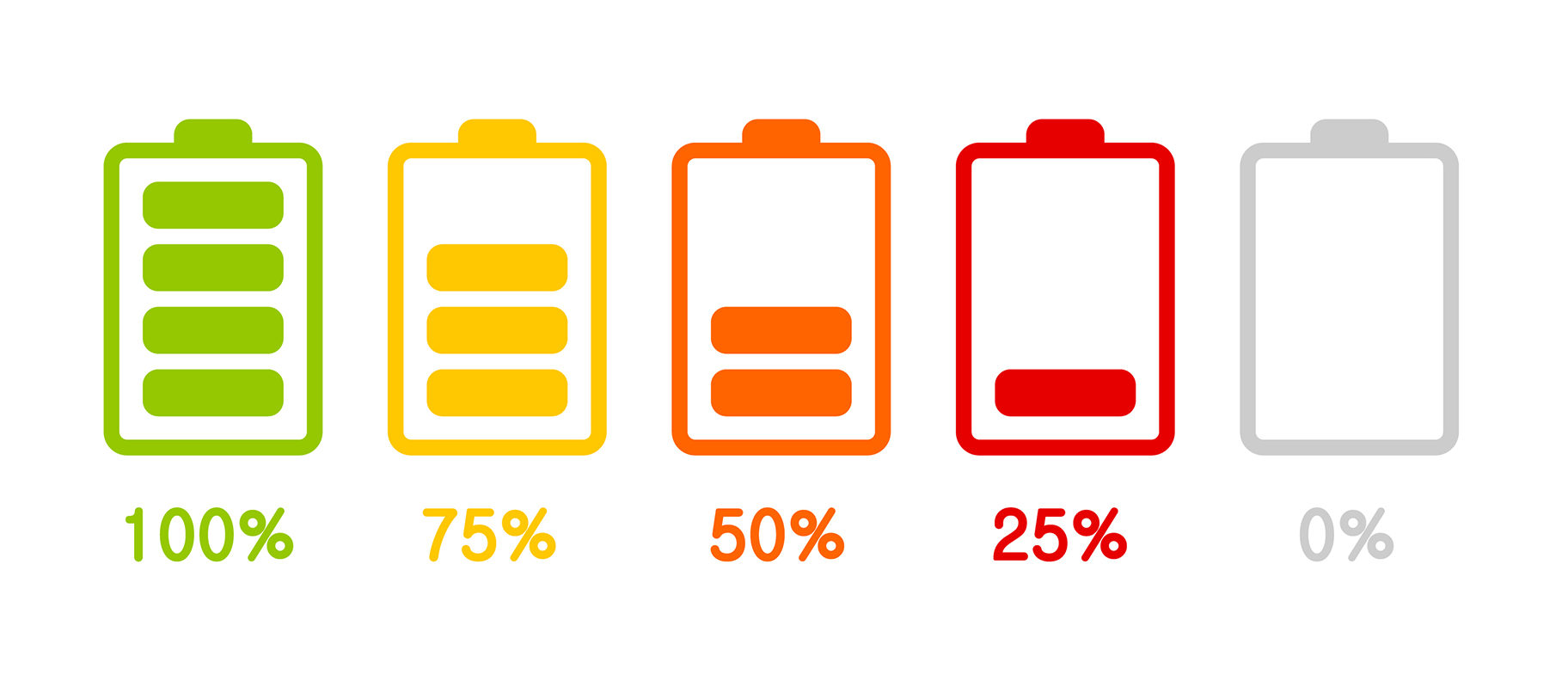
Our Savior, Jesus Christ himself, was then, as now, deeply concerned for his servants. After sending out the apostles and their return, Jesus sent them to rest: “And he said to them, ‘Come away by yourselves to a solitary place and rest a while’” (Mark 6:31). The lesson here is this: just as a battery needs to be recharged after use to be able to perform at its full capacity the next time it is needed, we too need to recharge. We humans are limited in our abilities and must allow ourselves to be refreshed and replenished from the living spring from time to time.
God expects His servants to rest a little away from the hustle and bustle. He wants them to withdraw and take some quiet time to listen to the Almighty. This doesn't happen automatically. It also requires a certain willingness to act. For a tired and exhausted servant, who, like Elijah, is lying under a broom bush, God has a word of comfort ready as balm and waits for the acceptance of His divine power. And not only that. God has prepared, as he did for Elijah, toasted bread and a jug of water.
He wants to equip His servants with new, heavenly powers for their service, so that, like Elijah, after rest and taking the heavenly food, they are once again full of energy and ready for further tasks: “And he got up and ate and drank, and in the strength of that food he traveled forty days and forty nights, until he reached Horeb, the mountain of God” (1 Kings 19:8).
May God equip every servant in His vineyard with His wisdom to recognize when breaks are needed and how they can be used wisely.
Vladimir Scheling
Municipality of Bremen-Vahr
What's behind the door
A friend of the American inventor Edison, who visited him frequently, one day expressed his astonishment that the front door was always very difficult to open. "An inventor like you," he said, "should have a door that is easy to use. You would surely have no trouble finding something that would make your door move more smoothly."
“Ah,” Edison replied, “I know very well that my door is hard to open; because every visitor who pushes it open simultaneously, through an invention of my own, causes a certain amount of water to rise into the water tank located on the roof. I always have enough visitors that I never have to pump my water up there myself.”
The ingenious inventor had found a way to automatically fill his water reservoir with his guests, without them even thinking about it.
God always has a plan when He places obstacles before us—certainly not for His own benefit, but to help us grow inwardly. Our efforts prepare the way for blessings, without us being able to see or realize it.
From "Hear a Parable"
Christian Publishing House Stuttgart