
Russian side: "I do not want to leave you, brothers, in ignorance."
30. August 2022 · 16 Min. lesen

“Now concerning the workings of the Spirit, brothers and sisters, I do not want you to be uninformed. You know that once you were pagans and were carried away to mute idols, just as you were led. Therefore I want you to know that no one speaking by the Spirit of God calls Jesus accursed, nor can anyone call Jesus Lord except by the Holy Spirit. Now there are differences in spiritual gifts, but it is the same Spirit; there are different kinds of service, but it is the same Lord; and there are different kinds of working, but it is the same God who works in all of them and in all of them” (1 Corinthians 12:1-6).
“But concerning the effects of the Spirit, brothers and sisters, I do not want you to be uninformed. ”
The believers in Corinth needed instruction on how spiritual gifts manifest themselves in the church. Therefore, the Apostle Paul devoted a large part of his letter to the church to this topic. We should be aware that this is not an interpretation based on human wisdom. Rather, it is the true and unchanging word of the eternal God and therefore "truth" from beginning to end. It is also not addressed only to the Christians living in Corinth at that time, but to all believers who have lived and are living in all times and places. The examination of spiritual gifts cannot be separated from the doctrine of the baptism of the Holy Spirit. And the latter is inconceivable without a discussion of the Holy Spirit in general. For this reason, the Apostle Paul did not begin his exposition with spiritual gifts or the baptism of the Holy Spirit, but with fundamental truths about the Holy Spirit and His influence on the life of every person.
"You know that you were once heathens and allowed yourselves to be carried away to the silent idols, just as you were led."
If the Spirit of God hadn't done something great in the heart of each of us, we would be just as drawn to these silent idols as any unbeliever. No one could stop us because of the power of Satan, which only the Lord can and has stopped. Through His love and justice, through His suffering and resurrection, He has disempowered the devil and destroyed His work. Praise be to God!
Many Christians mistakenly believe that the presence and work of the Holy Spirit in our lives only begin with the baptism of the Holy Spirit. No, that's not the case. It begins with the Lord knocking at our hearts. We are called " in the sanctification of the Spirit, to obedience and sprinkling with the blood of Jesus Christ" (1 Peter 1:2). The Holy Spirit is a person. He is the third person of the eternal, unchanging, triune God. Therefore, the " fellowship of the Holy Spirit " (2 Corinthians 13:13) is the most important thing that connects us with Him in our lives. The Holy Spirit works in the human heart, establishes a connection with Him, and desires to maintain this connection throughout our lives. This is inseparable from another fact: that He separates us from the ways of the world in order to convert us to obedience to Christ and sprinkling with His blood. Therefore, whoever believes in this Redeemer can receive the fellowship of the Holy Spirit.
When a person first testifies that Jesus is Lord, it is not because the idea simply popped into their head. It was the Holy Spirit who had already begun to touch their heart and point them to Jesus Christ. He revealed the Son of God, our Lord and Savior, in their heart and showed that there is no salvation for us humans apart from Him. At this point, it is not yet about baptism with the Spirit or gifts of the Spirit. It begins much earlier. Even before the person is born again, the Holy Spirit has already stopped their soul in its tracks, so that it is not drawn by satanic powers to mute idols, but recognizes and believes that Jesus is Lord of all things. However, it is not always possible for us humans to immediately discern when and how this happened.
The Holy Spirit cannot be treated like a sacred church object, something you can put away and take out whenever you want. The Holy Spirit is the eternal Spirit of the living God. You can grieve Him and even reject Him. He is very gentle, unlike the spirit of Satan, which is filled with impudence. He is not an intrusive spirit of aggression, but a completely different personality, revealing himself as the Spirit of power, love, and chastity. And fellowship with Him and knowledge of Him are the most important and precious part of our lives in God.
Unfortunately, the devil has succeeded in creating a caricature of God for humanity. Much of what happens "in God's name" has absolutely nothing to do with God or the divine. Whether it's the medieval Crusades in "God's name," the inscription "God with us" on Nazi belt buckles, or the human arbitrariness hidden behind the oft-quoted words "God told me so," there is no real God behind it. God speaks far less than we do. Much of what we believe God has revealed to us has nothing to do with God. We simply often confuse the Spirit of God with the human spirit. If we paid more attention to the Spirit of God in our lives, we would recognize the causes of our lack of humility, our discontent, our discord, and our divisions. Christ came to separate the daughter from her mother and the daughter-in-law from her mother-in-law. But he did not come to set them against each other. There are believers who think that God has revealed much to them. But in practical life, they don't even know how to interact with their fellow believers. If you think you are spiritual because you have been a believer for 25 years, or if you think you understand a lot but can't live and work with another person, then you are a child and carnal (see 1 Corinthians 3:1-4).
“But when God was pleased to reveal his Son in me,” says the Apostle Paul, “I immediately did not consult with flesh and blood” (Galatians 1:15-16). God revealed his Son Jesus to the Apostle Paul, and Paul did not seek a church where love was abundant. On the contrary, he rejoiced in bringing love to others—in contempt, in slander, in weakness. “Do not harden your hearts when you hear the voice of the Holy Spirit,” it says in Paul’s letter to the Hebrews (cf. Hebrews 3:7-8). And our Lord and Teacher said, “The Spirit of truth, whom the world cannot receive because it neither sees him nor knows him. But you know him, for he lives with you and will be in you” (John 14:17) . It is important that we understand with whom we are dealing and who is within us and speaks to us. We don't need to be able to explain everything that goes on inside us; what's important is what the Spirit of God does in us.
“Therefore I want you to know that no one speaking by the Spirit of God calls Jesus accursed; nor can anyone call Jesus Lord except by the Holy Spirit. ”
The Holy Spirit, and He alone, empowers a person to sincerely and truly confess in faith that Jesus Christ is the true God, the Son of God, the second person of the eternal God. He is Lord over all things, including eternal life. Catholic, Orthodox, Lutheran, and other churches have a catechism. To be received into the church, one doesn't need to be converted, but rather educated according to certain rules. The catechism process consists of learning the church's dogma, memorizing passages from the Gospel, and accepting the basic concepts of a particular denomination. But even if one were to memorize the entire Gospel, it remains merely a doctrine with specific rules. One lives as the Gospel "says," without much deep reflection or living faith. One simply memorizes what is written in the Gospel and lives what one has learned.
But a life lived in the Spirit of God is much simpler and, at the same time, much more difficult. The Holy Spirit allows us to recognize the depth of my and your fall through what He says about Christ in Scripture. He tells us that all would be lost if it were not for Jesus—through Him alone can we live. This was true then, it is true now, and it will continue to be true. It is not as if I were a sinner twenty-five years ago and am now a devout person, remaining devout thanks to my own efforts. That is only possible because of the Holy Spirit, who reveals Jesus to us. Today, I can only live by His grace, by the hope of His mercy, and by His love. The Holy Spirit tells me that Jesus must take the throne of my heart and reign there. The Lord Jesus lives in us through the Holy Spirit, speaks to us through His Spirit, and rules us through Him.
The Son of Man, the incarnate, flesh-born Son of God, is a person who perfectly embodies in himself the revelation of the Holy Spirit of God. No one else, no other person, can do this. This is the mystery of what the New Testament says: “ And no longer will they teach their neighbor or their brother” (Hebrews 8:11). People who try to understand what God is doing in them by relying solely on their spiritual experiences expose themselves to the danger of very subtle errors and mistakes, for Christ is “the way, the truth, and the life” (cf. John 14:6) and “the radiance and exact representation of the being” of the Most High (cf. Hebrews 1:3).
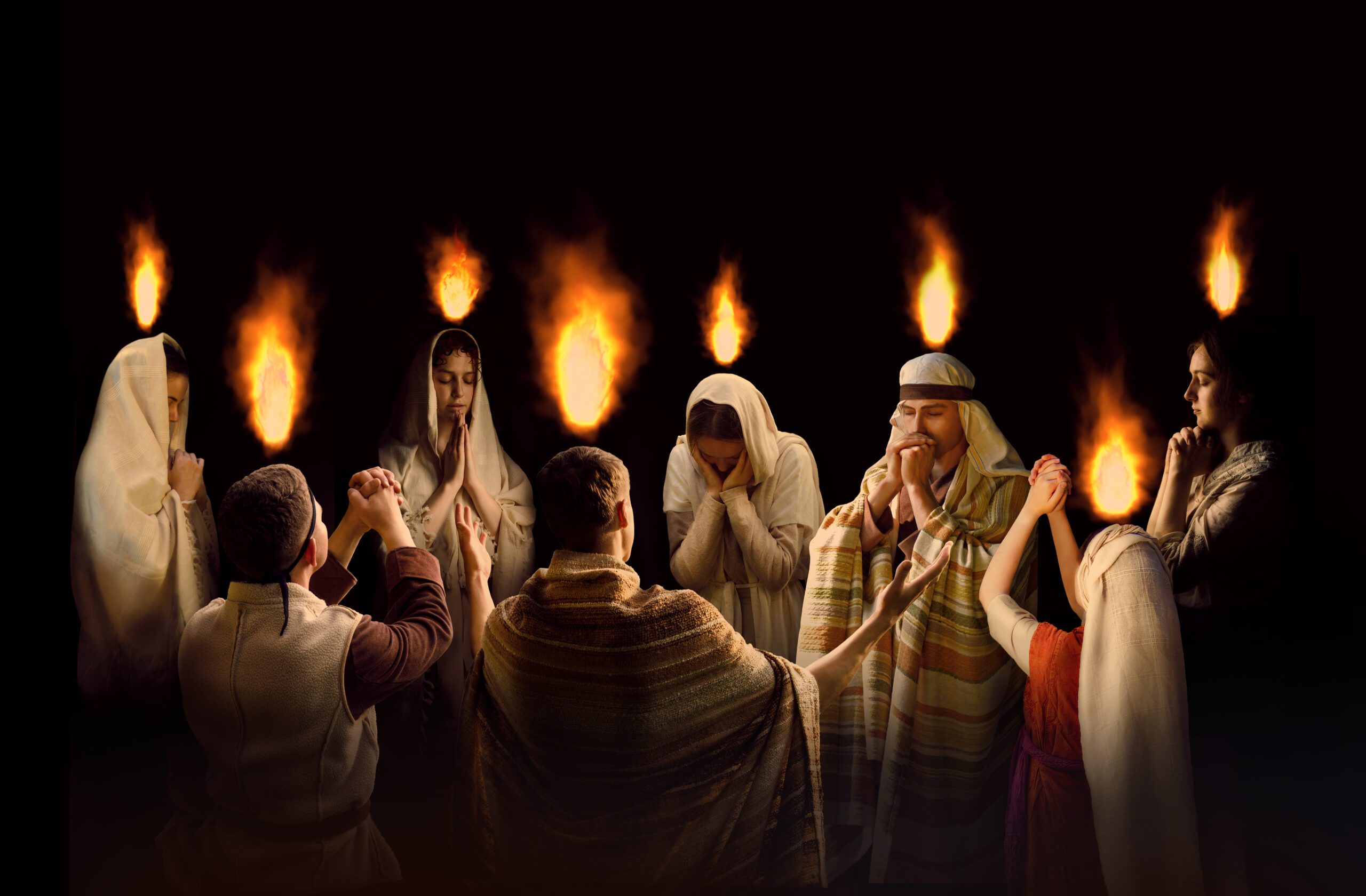
Image source: AdobeStock_499685726 @ Marina
If we could rely on our inner experiences, which we often irrationally mistake for revelations from above, then Christ would not have needed to come as a teacher. But one of the reasons He came to earth is to accomplish what no human being can. He came to give the revelation of the Holy Spirit in the believer's heart the place God needs. We only know partially; we only prophesy partially. But there was one vessel that fully revealed the Holy Spirit. He is the eternal Word of the living God, and He became human and lived among us in the flesh. It is Jesus of Nazareth. Only in Him has the Holy Spirit revealed Himself in His fullness. All we need to do is cling to Christ and live in the Spirit through Him.
Then we can also be happy that God corrects us. For He speaks to the people who live in this world and shows and reveals to them the truth embodied in Jesus Christ (cf. Psalm 85:10-14). The life we have on this earth is given to us by God so that the Holy Spirit may reveal Christ in and to us. We live so that we may learn to glorify and exalt Him. This is the meaning of our existence and our happiness! Our sole purpose and the ultimate goal of faith is the salvation of the soul. Our whole life should be shaped in such a way that the Spirit of God's grace increasingly fills us, teaches us, and brings us joy. It is very important that we know what spirit we are, which is inevitably and closely connected with being born again.
“There are differences in the gifts, but it is the same Spirit; there are differences in the ministries, but it is the same Lord; and there are differences in the workings, but it is the same God who works in all things and in all people.”
Many people who experience the powerful work of the Holy Spirit identify this with baptism in the Holy Spirit. However, this is not necessarily the case. There is absolutely no reason to diminish other works of the Spirit. I can speak about God's work in my life. When the Lord called me into ministry, He filled me with great joy, and a power greater than anything I had ever experienced came upon me. This experience was even greater than the day the Holy Spirit first came upon me. Suddenly, I saw something happening within me that had never happened before. And this was despite the fact that I had already been converted to Christ for nine years and baptized in the Holy Spirit for seven.
When Philip came to Samaria, people were converted and rejoiced, the sick were healed, and demons were cast out. But the cause of this was not yet the baptism with the Holy Spirit. Why and how did these things happen in their hearts and lives? The Lord had commissioned Philip to do this through preaching the gospel. I know of a case where a man was struggling for baptism in the Spirit and began speaking in tongues. After prayer, however, he said, "I can't feel anything special." Such cases are not uncommon. But in this case, there were praying people nearby who were able to help him in his situation. They simply told him, "The whole package will come later." And this whole package of the effects of the Holy Spirit did indeed come.
God began by healing people and freeing them from all kinds of addictions through this brother's prayer. Others received help and strength from above and various kinds of blessings through his ministry. The work of the Holy Spirit, therefore, is not necessarily connected to our emotional experiences. However, we should never rest on our laurels, let alone be disappointed by unfulfilled expectations. Rather, we should thank the Lord for what we have been given and persevere without ceasing (cf. 1 Corinthians 14:1). Such misunderstandings are common, especially among young Christians. They have diligently sought baptism in the Holy Spirit, and because they haven't initially found what they expected, they are disappointed. In such situations, we must not lose courage and faith, but must strive diligently for more blessings until they come. However, if our feelings cannot be touched by the Holy Spirit in any way, that is also not good. Feelings must not be the basis for knowing God, but we must give the Lord the freedom to enter into our feelings and overcome them. Otherwise, we will also limit the workings of God's grace.
Let us now speak about the actual baptism with the Holy Spirit. Baptism with the Holy Spirit is one of the greatest gifts bestowed upon believers through the message of the Gospel. It occurs when God endows us with His Spirit, when the Holy Spirit, as the third person of the Triune God, descends into the mysterious depths of the Christian's inner being and dwells within them. The outpouring of the Holy Spirit upon believers was promised by God as early as the time of ancient Israel: "And after this, I will pour out my Spirit on all people" (Joel 3:1). At that time, it was not associated by people with a new birth as we understand it today. There was no such thing as a new birth in the Old Testament because the "second Adam," the Lord from heaven (cf. 1 Corinthians 15:45-49), had not yet come to our earth, and Jesus Christ had not yet been glorified (cf. John 7:37-39). For this reason, the Holy Spirit had not yet descended “on all flesh,” but dwelt only in prophets, kings, and priests—that is, in people who, during their service in Israel, prepared the Old Testament people of God for the coming Messiah and exemplified the fullness of His future messianic ministry.
The understanding of rebirth only arose when Christ came to earth. For the new birth is “Christ in you, the hope of glory” (Colossians 1:27). Saul was transformed when the Holy Spirit came upon him. And later, the prophets and many others were also transformed. But this was not rebirth. Rebirth only entered people's lives when Christ came to earth and those who accepted Him, believed in Him, and surrendered themselves to Him became new creations and born-again children of God, in whom Christ lives (cf. John 1:9-13; Galatians 2:19-21; 1 Peter 1:3-5). It was not without reason that Christ said, “Many prophets and kings wished to see what you see, but they did not see it” (Luke 10:24). The image of the Son of God in humanity was something that the people of the Old Testament could not see.
In a personal conversation Jesus Christ had with His disciples before He suffered, He said, “If you love me, keep my commandments. And I will ask the Father, and he will give you another Advocate to help you and be with you forever—the Spirit of truth. The world cannot receive him, because it neither sees him nor knows him. But you know him, for he lives with you and will be in you” (John 14:15-17). A legitimate question arises here: What does it mean that “He will live with you and be in you”? In what context is it possible to speak of the Holy Spirit in this way? The apostles cast out demons and anointed the sick with oil before Pentecost, and they were healed. But the Holy Spirit was not poured out into their hearts until the tenth day after our Lord’s ascension. Where is the difference? The Holy Spirit can work in many different ways. This is not always easy to understand. For example, in a discussion with the Pharisees about the power He had to perform miracles and cast out demons, the Lord Jesus explained that He and His disciples did this through the Holy Spirit (cf. Mt 12:22-28). In fact, much time passed before the Holy Spirit "came upon all flesh." Although God's actions cannot be influenced by anyone but Himself, the Lord still desires to accomplish His work in each of His children and bring us into a state that pleases Him for our lives and His work (cf. Eph 4:7-13).
Then we will be able to understand and believe that the baptism of the Holy Spirit is the reception of the Holy Spirit into us through faith. To understand what distinguishes a person baptized with the Holy Spirit from an unbaptized person, we must compare the work of the Holy Spirit in them in the light of God's Word. Even before Pentecost, the apostles could cast out demons and heal in Jesus' name. Visions could even be experienced by someone with little faith who was not converted to Christ. However, when we read in ancient Greek, the language of the original scriptures, how Christ spoke about the work of the Holy Spirit in people before Pentecost (cf. John 20:2-23) and after Pentecost (cf. Acts 2:1-4), we see that in the first instance, he speaks of the activity of the Holy Spirit in Christ's disciples, and in the second, of His personal presence in them. The words "He abides with you" mean: guidance by the Holy Spirit (cf. Romans 8:14-16). The words “ will be in you” mean the dwelling of the Spirit in a person. In any case, being filled with the Holy Spirit has always and without exception been connected with a specific manifestation of Him. No one has ever prophesied unless the Holy Spirit has come upon them. Thus it says: “The testimony of Jesus is the Spirit of prophecy” (Revelation 19:10).
This is also mentioned in many other places in the Bible (cf. Numbers 11:25-29; Joel 3:1; Acts 2:1-21).

Image source: AdobeStock_189658955 @ oraziopuccio
When the Spirit Himself, together with our spirit, testifies that we are children of God (cf. Romans 8:16), this does not necessarily mean that we immediately receive the gift of prophecy. But this Spirit, who testifies to our spirit that we are children of God, is the Spirit of prophecy. And so, while it is not necessarily the case that someone receives the gift of prophecy at such a moment, when God baptizes someone with His Spirit, then the Spirit of prophecy rests upon them. All the examples of the descent of the Holy Spirit upon a person in the Old and New Testaments speak of this. At the same time, the Apostle Paul says in his first letter to the Corinthians that not everyone who receives a particular spiritual gift from God for service in the church is required to prophesy (cf. 1 Corinthians 12:7-11, 29). This means that the prophetic manifestation of the Spirit of God is shown in a different way, or more precisely, in tongues (cf. Acts 2:1-4; Amos 3:3-8).
The manifestation of the Spirit of Prophecy is not solely connected with prophecy itself. The unfolding of the Spirit of Prophecy is related to the depth of the indwelling and unfolding of the Word of God within us. When the Sadducees questioned Christ about the resurrection from the dead and cited the example of the seven brothers and one woman, Christ answered: “God is the God of Abraham, and the God of Isaac, and the God of Jacob. God is not the God of the dead, but of the living” (Matthew 22:32). This unexpectedly precise-sounding passage is an expression of the Spirit of Prophecy.
We see that when Christ was in the desert and tempted by the devil, he didn't simply defend himself with a series of random Bible verses. He answered the devil directly and thus thwarted him. Here we see that Christ, as a man, had truly prophetic guidance through the Holy Spirit. This often doesn't work for us. In the moment of struggle, we start grasping at any words that come to mind until the Spirit of God leads us to the right words. Sometimes this also manifests as a manifestation of the Spirit of prophecy. We often associate the appearance of the prophetic Spirit within us only with speaking in tongues. However, it does happen that a person, at the moment of baptism, doesn't speak in other languages with the Holy Spirit, but prophesies. Perhaps this doesn't happen very often, but such phenomena do occur. Of course, in such a person, the sign of speaking in tongues also appears. The anointing by the Holy Spirit is not only expressed in the form of ministry. It is always expressed as prayer.
Some say that at baptism one necessarily receives power with the Holy Spirit, referring to Christ's words: "You will receive power when the Holy Spirit comes upon you" (Acts 1:8). This is both true and untrue. The statement is true in the sense it appears in the Epistle to the Ephesians, where the Apostle Paul says that he always remembers the Ephesians in his prayers: " That the God of our Lord Jesus Christ, the glorious Father, may give you the Spirit of wisdom and revelation in the knowledge of him, and the enlightenment of your understanding, so that you may know the hope of his calling, the riches of the glory of his inheritance in the saints, and the surpassing greatness of his power that is at work toward us who believe, according to the working of his mighty power" (Ephesians 1:17-19).
The apostle says that the person who has the Holy Spirit within them possesses the immeasurable power of God's sovereign power. But he also says that this power must be known. We see this in the example of Christ. When the Holy Spirit came upon him, the power was not immediately apparent. First, the Holy Spirit led him into the desert, and from there he returned in the power of the Spirit, but only after the trial of temptation.
So what is baptism with the Holy Spirit? It is the event when the Holy Spirit comes upon us, reveals Himself within us as a prophetic spirit, and the supernatural presence of the Lord and Savior rests within us. This is the work of a power that often remains hidden from us at first. For it to reveal itself, the Word of God must test us and become perfect within us. Here, metaphorically speaking, we are back in the desert. It is about what we go through and how we go through it. It is about how we can trust the Holy Spirit when we are tested. The result of this journey is that the child of God, having passed through the difficulties and temptations God has ordained, becomes strong in God and fruitful in the Spirit. Then a child of God will minister to Christ with the gift that our Lord and Savior has prepared for each of us in His Spirit. To Him be the glory forever and ever! Amen!
Richard Zimmermann