

Podcast: Download (Duration: 24:45 — )
Fatigue is not just a phenomenon that affects older people. Often, especially in youth, one's own abilities and strength are overestimated, and one reaches a point where one is completely exhausted.
The prophet Isaiah also observes this: “Even youths grow tired and weary, and young men stumble and fall” (Isaiah 40:30). In this chapter, Isaiah describes the transience and weakness of humankind and, in contrast, highlights the enduring power of God: “The grass withers, the flower fades […]; Behold, the Lord God comes with power […]; for the greatness of his might and his strength is great” (Isaiah 40:8, 10, 26).
Isaiah concludes the chapter by showing that God gladly gives of His power and strength: “[He] will not grow weary or faint […]! He gives strength to the weary and increases the power of the weak. Even youths grow tired and faint, and young men stumble and fall; but those who hope in the Lord will renew their strength. They will soar on wings like eagles; they will run and not grow weary, they will walk and not be faint” (verse 28b ff).
How is that possible?
"That's no longer natural," one might object. And that's true: This soaring power is more than natural—it's supernatural. Growing tired is normal—indeed, human. Everything in the world has its limits, including our physical and mental strength. Not only did an Old Testament prophet recognize this, but the New Testament apostles also agree on this point: They speak not from their own wisdom, but by demonstrating the Spirit and power (cf. 1 Corinthians 2:4).
They keep treasure in earthen vessels, so that the surpassing power may be from God and not from themselves (cf. 2 Cor 4:7). They do not grow weary. Even though the outer person is wasted away, the inner person is renewed day by day (cf. 2 Cor 4:16). They know that God's power is made perfect in weakness (cf. 2 Cor 12:9) and even dare to say this:
“I can do all things through him who strengthens me” (Philippians 4:13). It seems these men were able to harness the power of God in their daily lives. What secret lies behind no longer having to wait for the weekend to “recharge” properly?
It's liberating to know you don't have to handle everything yourself.
Who knows the key to overcoming a phase of resignation, discouragement, despondency, oppression, exhaustion, or perhaps simply being overwhelmed in everyday life? Isaiah offers a clue: "But those who hope in the Lord will renew their strength" (Isaiah 40:31). This verse, written thousands of years ago, has lost none of its relevance. Recent stories prove this.
We read of revival preachers who sometimes worked around the clock without becoming physically or mentally exhausted. And this was always connected to God's power. So, in that sense, it's not a lost secret that needs to be rediscovered. It's something that has seemingly become almost inaccessible to Western Christianity. Before we embark on the search for the lost key, let's first consider some of the reasons why born-again people become tired and resigned.
Reasons for fatigue
One reason for the lack of access to God's power seems to lie in the worldview of Western culture, which also influences church life: it is overactivity. The church programs of many Western churches are packed with countless activities. As a result, many "helpful Christians get lost in it, falling into exhaustion and depression. When everything is important, nothing else matters" (Eickhoff 2009:74).
Without addressing the most essential task of a local community at this point, it is clear: The many important aspects of community life also affect the individual Christian and easily trigger "restlessness and hectic activity, toil and strain on those involved, which does not at all fit with the one who had said: 'you will find rest for your souls' (Mt 11:29)" (Eickhoff 2009:75).
The prevailing opinion is often: if everyone gives 200% in their service, something tremendous will happen. Perhaps the following thinking also shines through: God's work depends primarily on the effort, exertion, and dedication of each individual! He expresses this in the motto "nothing is impossible, you just have to want it, work hard."
It seems that many Christians, preoccupied with so many self-chosen pursuits, no longer have time for their true calling. They do a lot, but not the one thing. In this country, one finds plenty of stressed-out Christians overwhelmed by the demands placed upon them. "Instead of holy single-mindedness, we find versatility: It has become our lifestyle to turn to or expose ourselves to many things. However, this comes at the expense of any deeper shaping of life. It prevents a focused, empowered existence" (Eickhoff 1992:270).
When too many things are important, the essential gets lost. What is actually the one thing—the essential thing for every Christian? In the story of Martha and Mary, Jesus draws our attention to the importance of reducing life to what is essential. Martha had much worry and trouble, Jesus observed. “But one thing is necessary” (Luke 10:42).
Here it becomes clear: For Jesus, there is the One , which stands out from the many. “Instead of first sitting at Jesus’ feet, the busy Martha thinks she can serve without being served by him. Jesus contrasts the many with the One ” (Eickhoff 2009:76). This story makes it quite clear that Jesus does not place much value on busyness. Being very busy can also be translated as being completely occupied. Martha wasted time and effort. She let herself be rushed.
Spiritual and material service within the church can lead to excessive workloads—and even drive Christians into depression and burnout. The one thing that is lacking today more than ever, and that we need more than ever, is to sit at Jesus' feet and allow Jesus to minister to us. But more on that later. Another reason is the lack of fruit in spiritual matters. We toil, we work, we do—but we don't see the results of our labor.
It usually remains merely a vague hope that the statement "My word does not return empty" will somehow—even if not immediately visibly—become true. Comparing recent revivals, one also finds a great deal of activity and activity. The churches are bustling with activity. This is not only due to the many nominal Christians coming to conversion, but above all to the influx of people who have been convicted by God's Spirit and are in enormous need of care. But one also finds fruit, and usually in abundance.
Despite the heavy workload, recent revival stories show that overwork, fatigue, or even burnout are extremely rare. The reason for this is that churches are exceptionally blessed with success. Similar circumstances can be found in the early church. “The ministers of God always had obvious results to show. Wherever they went, they always had the fruit of their ministry in sight; they worked for it, they expected fruit, and they received it” (Smith 1999:17f).
Conversely, this means that the prevailing lack of success and results in this country is taking an extraordinary toll on the strength of Christians, because the Word of God doesn't work like a fire, a hammer, or a sword—at least not in a strong, obvious, and immediate way. "It doesn't burn, it doesn't shatter, and it doesn't penetrate" (Smith 1999:14). We don't want to deceive ourselves or sugarcoat the situation.
Much good can shine through in our services, but ultimately everything must be achieved through our own efforts.
Let's be honest: Much good may shine through in our ministries, but it all comes from our own strength. "They have the outward appearance of godliness, but they deny its power" (2 Timothy 3:5). "Their ministry is ineffective, and their testimony unfruitful and empty, and therefore they accomplish little or nothing for the Lord. Often entire congregations are quite active, working from the energy of the flesh, and therefore there is no work of the Spirit. Souls are not saved, believers are neither edified nor strengthened in their faith" (Smith 1999:35).
In summary: The inability to find the one necessity in the manifold importances, and the fruitlessness in service, cause the Christian to become weary, burn out, and sometimes even resign.
The key
And now to the initial question: How can we be taught to "serve with the strength God provides" or to "hope in the Lord"? How is this possible? How can this strength be applied in everyday life? In John 15, what characterized the early Christians and what can also be found in times of revival is described as "abiding in Him" and "bearing fruit." We have listed and described the lack of these two components as reasons for weariness in ministry and, more generally, in the actions and lives of Christians.
If, on the one hand, we lack the time—due to overwork—to sit at Jesus' feet, and on the other hand, the visible fruit in our lives is lacking, we grow weary. But if these things are present, Christians soar their wings like eagles. They run and do not grow weary. They walk and do not tire. "Whoever remains in me and I in him, he will bear much fruit; apart from me you can do nothing" (John 15:5).
In verse 4, Jesus draws attention to the essential point: “Just as a branch cannot bear fruit by itself unless it remains in the vine, neither can you unless you remain in me.” The focus of the true disciple of Jesus lies in “remaining in Him.” Not a pursuit of status and success, not a frantic rush and exhaustion in service to the point of burnout, but simply “remaining in Him,” becoming still at the Master’s feet while listening to His words.
The fruit is described here as an automatic process. Whoever abides in Him bears much fruit! "Abiding in Him" means living a life with God. Let's look at the life of Jesus. His connection to God was intact. His key to receiving daily strength from God's inexhaustible reserves was closeness to the Father. He constantly sought closeness to the Father. In fellowship with His Father, He was at home.
His life with God looked like this: His speaking was a direct, one-to-one transmission: “Because I have told you everything that I heard from my Father” (John 15:15). His ministry was likewise a reflection of His Father (cf. John 10:32). He lived in complete dependence on His Father. “Do we live from these sources, or do we draw from the stagnant puddles of our own piety?” (Eickhoff 1978:8).
He nourished his soul with the love of his Father. He drew strength from fellowship with his Father (cf. Schindler 2010:41). Closeness to the Father was not something he, as a human being, was automatically bestowed upon him. He often sought solitude (cf. Mk 1:35; 6:46; 9:7; 14:35f). His intimate relationship is expressed in the Abba nickname "Papi." His closeness to the Father was like the oxygen of his soul (Schindler:25).
Therefore, it can be stated: The yearning for God is the fundamental attitude for a life with God. “One thing is essential: We need the greatest possible closeness to Jesus. Here, sparks will jump to us from an eternal ember. The fire of Jesus’ love will ignite us, so that we burn” (Eickhoff 1978:9).
Go into silence, into solitude and into prayer to recharge your batteries.
From this we can conclude: Go into silence, into solitude, and into prayer to recharge. We can only truly love again when we have been newly gifted with His love. We can love because He loves us first (cf. 1 John 4:19). “Only from his closeness to the Father did Jesus have the authority and the joy that attracts and transforms people. What was essential for Jesus is just as essential for His disciples” (:52).
Only from a life lived in the Spirit, a life with God, a life in fellowship and relationship with God—however one expresses "abiding in Him"—can true service to God arise. Only there can knowledge of God be shared, and only there can one be a witness for God without burning out and becoming resigned. This is not to say that Christians don't experience periods of hardship.
When they enter a period of weariness, they seek to rediscover fellowship with the Father. What did Charles G. Finney —a key figure in the revival in the USA beginning in 1821—do when he realized that his inner strength was lacking? When his visits, sermons, and prayers had no spiritual effect?
“Then I set aside a day for fasting and prayer, because I feared that this power had left me. I anxiously inquired about the cause of this apparent spiritual dryness. After I had bowed down and pleaded for help, the power returned to me in all its freshness. That has been the experience of my life” (Smith 1999:34).

“We need the closest possible proximity to Jesus. Here, sparks will jump to us from an eternal ember. The fire of Jesus’ love will ignite us, so that we run” (Eickhoff 1978:9). Image source: AdobeStock © Lukas Gojda
This power wasn't a anxious hope that something, something, might eventually stick with someone and make a difference. No, he immediately recognized the power because "the words I spoke here and there to individuals became the means to their immediate conversion. My words pierced their hearts like fiery arrows and brought about a confession of sin" (Smith 1999:34). The great need of our day is not particularly outstanding skills and methods in communicating the gospel, but rather the practical example of living a life powered by God.
“The world is not waiting for a new definition of the gospel, but for a new demonstration of the power of the gospel” (Ravenhill 2000:40). “Spiritual power and effectiveness do not depend on our gifts, but primarily on our fellowship with the Lord and our prayer life. […] Without persistent prayer, we will neither receive spiritual power nor experience effectiveness” (Bühne 2011:44f).
Especially on this point, we must learn from Jesus. His closeness to the Father teaches us that we cannot accomplish our service and our tasks through our own strength. In Luke 5:16, following the description of Jesus' personal time of prayer, we find that the Lord's power was there for him to heal. After he was alone with his Father, the clarification immediately follows: The power was there! From his closeness to the Father, Jesus sought closeness to people. A successful, fruitful life is born from and nourished by prayer. "To be much for God, we must be much with God" (Ravenhill 2000:17).
In this noisy and overworked world, we need one thing above all: to sit with Mary at Jesus' feet and listen! To let Jesus wash our feet and simply allow ourselves to be blessed. And let us remember one more thing: lasting fruit comes only from abiding in Him. From ourselves, through our own efforts, we can produce nothing lasting, nothing of eternal value. A life with God means experiencing 100% dependence on God.
The focus of the true disciple of Jesus is on “remaining in Him”.
To know: I am dependent on Him with every breath and every fiber of my being. This is precisely what Jesus means when he says, "Blessed are the poor in spirit" (Matthew 5:3). This is also what Paul means when he says, "Therefore I will boast all the more gladly about my weaknesses, so that Christ’s power may rest on me" (2 Corinthians 12:9). A life with God leads to "expecting great things from God." "He is able to do immeasurably more than all we ask or imagine, according to his power that is at work within us" (Ephesians 3:20).
Abiding in Him leads to the liberating knowledge: without Him I can do nothing—and I don't have to. It is liberating to know that I don't have to shoulder everything myself. It is encouraging to know that the one who said , "I am who I am" (Exodus 3:14), also offers the "I am here" daily. Like a father who awaits his son with open arms every day, and even more: runs to meet him. When the son, tired from wandering, slowly but surely finds his way back into his father's arms.
The one who offers, “I am here and waiting for you,” also says, “I will help you. I will support you.” And won’t He also give us everything through Jesus? What a generous giver of all good gifts!
One event from the 1992 Barcelona Olympics remains particularly memorable: Potential gold medalist Derek Redmond collapsed halfway through the 400-meter sprint with a torn thigh muscle. Determined to finish at all costs, he continued limping even after all his competitors had crossed the line. The spectators watched with bated breath to see if he would be able to limp all the way to the finish.
Suddenly, a man breaks through the security barriers, runs into the arena straight towards Derek, grabs him under the arm, and hobbles the last few meters to the finish line with him. Although they arrive last, they receive the biggest ovation in the history of the 1992 Olympics. It was his father. A father would do that.
You have a father who comes running to you in the midst of your greatest failure, your pain. When the biggest disappointment or hurt has humiliated you and left you in tears, your father is there to help. Your father does that!
Ending
“A person is a fool if he undertakes things for God before God sends him, as Saul did,” writes Swindoll (2000:169). To avoid acting on our own initiative, we need clear guidance from the Father. Bakht Singh acted according to the following principle: He undertook nothing until, through a prolonged period of prayer, God’s will in the matter became clear to him. He endeavored to ascertain God’s plan in every detail of his life (cf. Koshy 2005:70).
“Whether he was planning an evangelistic campaign or going out into the streets, before every action he waited on the Lord to gain certainty about God’s specific will in the given situation” (Koshy 2005:255). This strongly reminds us of Jacob’s struggle: “I will not let you go unless you bless me!” (Genesis 32:27).
In contrast, the prevailing sentiment in Western Christianity is often: "Start what you believe is right, according to your best knowledge and conscience, and God will bless it." Perhaps this is precisely what contributes to the persistent lack of fruitfulness in spiritual matters? Furthermore, we have already mentioned that the current trend seems to be to develop people into as multifunctional individuals as possible.
The associated danger can be highlighted in a humorous portrayal of the term "simple-minded": "The word 'simple-minded' used to have a positive connotation. It referred to a person full of wisdom. Today, however, the simple-minded person is considered stupid. Imperceptibly, standards have shifted. How could this have happened?"
Our world has become increasingly complex and diverse. The number of things deemed essential for survival has grown. Anyone who wanted to navigate the world had to be versatile. Versatile people were considered intelligent. But strangely enough, the human soul doesn't find its strength in a multitude of things; quite the opposite.
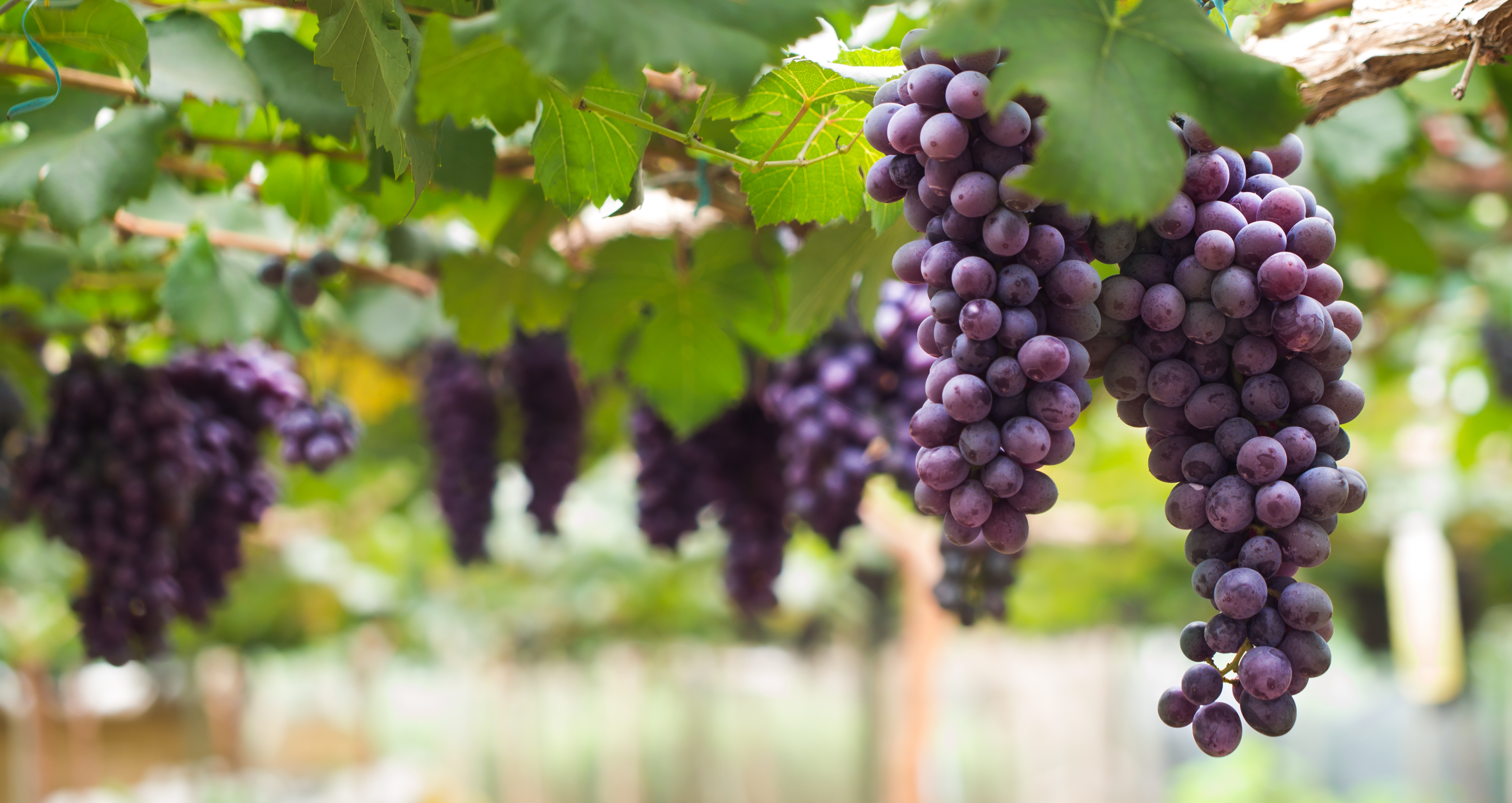
Whoever abides in Him will bear much fruit! Image source: iStock © ArisSu
The diversity of this world has robbed us of much of our strength. Our souls have been sickened by this diversity. Instead of wisdom, we possess only cleverness. We are people with sick souls. Do not people with sick souls inevitably create a sick environment? How can we regain wisdom and become healthy? There remains only one way: Let us become simple! Those who are simple protect themselves from the power of the many.
Whoever lives from this one source will see through many things that steal their time as intrusive—but ultimately insignificant. They will let them go and—gain time. It is indeed so: “Whoever has eternity also has time” (Eickhoff 1992:271). And an insight into eternity, an awareness of the reality of eternity, can only be found in closeness to the Father. There, what is important to me also becomes important to Him.
There I come to know His heart and thus also His will. There I find peace and true tranquility in this restless age, incapable of stillness.
Erich Janz,
Municipality of Braunschweig