
Podcast: Download (Duration: 23:02 — 15.8MB)
Where does human dignity come from? This text explores two different perspectives. It aims to encourage you to joyfully and humbly appreciate the God-given dignity and to use every moment of your life to strive for the glory and honor with which God has crowned you.
Have you ever been confronted with your stance on creation? I once had a conversation with a pastor from the regional church who asked me how I, as a scientifically educated person, could possibly believe in creation. I hadn't expected such a question from a pastor. But I was able to use the opportunity to bear witness to why I believe in God and His wonderful creation.
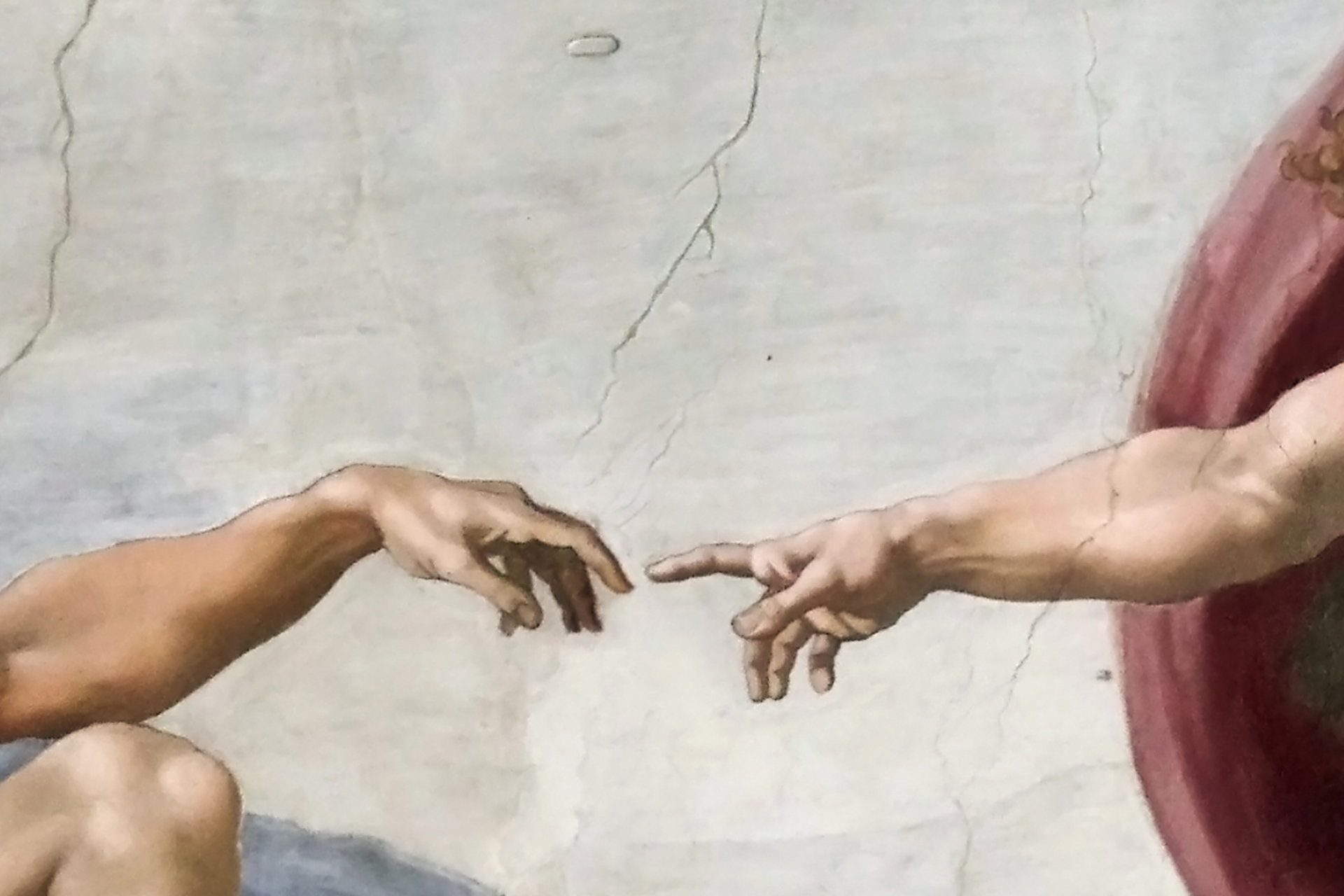
You and I are created in the image of God. What a wonderful message we find in God's Word! This is a great honor that God bestows upon humankind, but also a great responsibility.
But what does it mean in practice that we are created in the image of God?
In this text I would like to consider the dignity with which God surrounds us and at the same time show what consequences this has for us humans.
Human dignity
“Human dignity is inviolable” (Article 1, Paragraph 1 of the Basic Law). The Basic Law of the Federal Republic of Germany begins with this defining and wonderful sentence. However, it is not entirely accurate to say that the Basic Law begins with this sentence. For before it comes a preamble – a solemn declaration as an introduction. This begins with the words: “Conscious of its responsibility before God and humankind (…)”.
Many of the fathers and mothers of the German constitution were religious people. Surely, when formulating the words of the Basic Law, they considered that God created humankind, and with this awareness, they chose the aforementioned words. This raises a fascinating question: Where does human dignity come from? Does humanity bestow dignity upon itself, or is there an even higher dignity that comes from God?
Human dignity from a secular perspective
The difference between the two questions is this: If human beings ascribe dignity to themselves, then this corresponds to a humanistic worldview. The world is thus conceived from the perspective of humanity. God and the spiritual world play no role in this view. The focus is on humanity and its values. Self-determination, dignity, and responsibility are emphasized. It is a worldview in which God is not considered, but rather humanity alone is placed at the center. From this thinking arises the idea that, because humanity is at the center, it possesses intrinsic value and should therefore be treated with respect.
Self-determination is a central element. People should be able to develop freely and – as the saying goes – do as they please. Essentially, they are only responsible to themselves and, to a limited extent, to other people. Their freedom is restricted at most by reason or by state legislation.
Human dignity from a biblical perspective
Because God is the creator and Lord, we have a completely different worldview, and this has an impact on our understanding of humanity. Human beings have been bestowed with great dignity by God, for they are created in God's image.
“So God created mankind in his own image, in the image of God he created them; male and female he created them” (Genesis 1:27).
What a great deed of God! I am constantly filled with awe at God's work of creation when I consider that every single person is made in His image. This bestows upon us a great honor and glory, reminding us daily how much God loves each person and surrounds them with divine dignity.
“When I consider your heavens, the work of your fingers, the moon and the stars, which you have set in place, what is mankind that you are mindful of them, the son of man that you care for them? You made them a little lower than the angels and crowned them with glory and honor. You made them rulers over the works of your hands; you put everything under their feet” (Psalm 8:4-7).
This makes it clear that God has given us humans a high and responsible position on Earth. At the same time, this means that we must never question or infringe upon the dignity of another person. Whoever does so diminishes God's creation. It would be a sin, since every human being is created in God's image and is therefore a bearer of the glory and honor bestowed by God.
From a biblical perspective, human dignity emphasizes, on the one hand, the glory and honor with which God has crowned us, and on the other hand, humanity's dependence on God. Humanity is not at the center of world events; rather, God as Creator stands above all.
“ For in him all things were created: things in heaven and on earth, visible and invisible, whether thrones or dominions or rulers or authorities—all things have been created through him and for him. He is before all things, and in him all things hold together” (Colossians 1:16-17). Therefore, humans should not do as they please, but rather align themselves with God's will. They should cultivate the dignity God has bestowed upon them by striving for glory and honor.
What practical consequences does it have for our lives that we are created in God's image and have received our dignity from Him? The following will consider some of these practical consequences.
Man should align himself with God's will and develop the dignity that God has bestowed upon him by striving for glory and honor.
Striving for glory and honor
The fact that God created us in His image does not mean that we are without sin and perfect. We humans make mistakes and struggle with temptations. None of us has the right to judge or condemn others.
When we put ourselves in the position of a judge and pass judgment on another person, we condemn ourselves (cf. Romans 2:1-3). Therefore, God did not appoint us to be judges on this earth, but rather to pay attention to how we ourselves live. A crucial aspect of our conduct is made clear in Romans 2:6-8: “He will reward each person according to what they have done: to those who by perseverance in doing good seek glory, honor and immortality, eternal life; but to those who are selfish and disobedient to the truth and obey unrighteousness, wrath and anger.” So, on the one hand, God has crowned us with glory and honor, and on the other hand, he has called us to strive for glory and honor. How does this fit together? If we are already crowned with glory and honor, then surely we don't need to strive for it anymore.
However, as Psalm 8, quoted earlier, and the Epistle to the Romans make clear, while we are bearers of divine glory and honor, it is up to us whether this becomes visible in our lives. Striving for this, therefore, means both seeking God's glory and honor and ensuring that this becomes evident through our lives. The Hebrew word for glory is "kavod," which can be translated as weight, weight, recognition, dignity, magnificence, and honor. It describes the visible presence of God, His nature, and His majesty.
Above all, this striving means that we should endeavor to become more like Jesus Christ. He himself is the revelation of God to us; in him we see the glory of the Father: “ And the Word became flesh and dwelt among us, and we beheld his glory, the glory as of the only Son from the Father, full of grace and truth” (John 1:14). He is the radiance of his glory (cf. Hebrews 1:3), who, although somewhat humbled below the angels, was crowned with glory and honor because of his suffering (cf. Hebrews 2:8-9).
By becoming more like Jesus, He leads us to glory. He is the author of our salvation, and through Him we have access to eternal life. This includes not being ashamed of our salvation through Christ, but rather making our joy in the glory and honor we have received visible—by proclaiming the Good News to others.
The correct position in relation to God and one's neighbor
If we acknowledge that our dignity is God-given, then this also means asking ourselves what our right relationship is to God and our neighbor. On the one hand, we can hold fast with gratitude and self-confidence to the fact that we are God's creatures and are wonderfully and excellently created (cf. Ps 139:14). On the other hand, it is important not to think more highly of ourselves than is deserved: “For by the grace given me I say to everyone among you not to think more highly of yourself than you ought to think, but to be humble, because God has allotted to each one a measure of faith” (Rom 12:3).
We should therefore neither underestimate ourselves nor think too highly of ourselves. We need humility and prudence in our dealings with God and with our neighbors. Just as I may recognize that I am a wonderful creation of God, I must also recognize that my neighbor is as well.
We need a humble heart to be able to walk sincerely before God. It is crucial that we have genuine humility in our hearts.
In the book " God Does Not Love Compromise" , a compilation of several magazine articles by AW Tozer, he writes in the chapter "True and False Humility" (p. 152 ff.):
“For the Christian, humility is absolutely essential. Without it, there can be no self-knowledge, no repentance, no faith, and no salvation. God’s promises are given to the humble. (…) However, we should not forget that there is such a thing as false humility, which is hardly distinguishable from true humility. (…) True humility is healthy. The humble person accepts the truth about himself. He knows that there is nothing good in his fallen nature. He acknowledges that apart from God, he is nothing, has nothing, knows nothing, and can do nothing. But this knowledge does not discourage him, for he also knows that in Christ he has become a person. In God’s eyes, he is precious, and through Christ, who strengthens him, he can do all things. Thus, he has the freedom to do everything that is in accordance with God’s will.”
False humility is really nothing other than pride in disguise. It is clearly demonstrated in the prayer of the man who condemns himself before God by calling himself weak, sinful, and foolish, yet could never forgive his wife if she said the same to him (...).
A lack of humility, or a false sense of it, prevents us from striving for glory and honor. Therefore, it is of great importance for us to properly assess our relationship with God and to humbly assume the position to which God has called us.
Joy in the Christian lifestyle
We can rejoice that God created us in His image and that we are called to reflect Jesus Christ through our lives. Interestingly, the first Christians did not give themselves the title "Christian," but rather the people of Antioch recognized their transformation and saw that they lived like Jesus Christ. Consequently, they called Jesus' disciples "Christians" (cf. Acts 11:26).
Sometimes we might need a Paul to remind us again and again that we should rejoice in our Lord Jesus Christ. This exhortation is necessary because joy in the Lord helps us to become firm in our faith (cf. Phil 3:1).
We don't need to be ashamed of our Christian lifestyle. You might be ridiculed for your clothing style and for not wearing the fashion that many other people around you wear. Certainly, some have had to listen to a mocking remark about their "large family." Pursuing God's glory and honor also means being willing to act independently of the prevailing spirit of the age, upholding the dignity and honor God has given us, and standing by what we have come to understand about God.
Interestingly, we often hear negative comments in superficial conversations. However, when you engage in deeper conversations with people, you frequently encounter a different perspective. Many then say that while they believe in God in some way, they only seek Him in times of need; that they have broken or dysfunctional families and actually long for an intact family and genuine togetherness.
Therefore, we should have the courage to stand by our faith and our religious practices. Many people are inwardly broken; they lack hope, support, and direction in life. But we can be bearers of light—always ready to reflect something of God's glory and bring light, hope, and joy to others.
Man as the image of God – a great honor and at the same time a great responsibility!
Commitment to the vulnerable
Precisely because we are convinced that God has bestowed dignity upon humankind, it is of paramount importance that we stand up for the weak and marginalized in society. This includes, among others, the poor, people with disabilities, migrants, the elderly, large families, and unborn children: “Do not mistreat or oppress a sojourner, for you were sojourners in the land of Egypt. Do not mistreat a widow or an orphan. If you mistreat them in any way, and they cry out to me, I will surely hear their cry, and my anger will burn, and I will put you to death with the sword; your wives will be widows, and your children orphans” (Exodus 22:20-23).
God, our Lord, considers it very important that we help disadvantaged people, stand by them, and not further burden or even mock them. God hears the prayer of the afflicted, and if we do not help them, we must face the consequences. God desires that we pass on the love we have received to others and, in particular, live it out in practical ways.
Our faith is even dead if we do not put the love we have received from God into practice (cf. James 2:16-17). Proverbs 14:31 also states: “ Whoever oppresses the weak blasphemes their Maker, but whoever honors Him shows compassion to the poor.” Here we find again the reference to the dignity that God has given us by creating us in His image.
Our commitment to the weak and oppressed is also closely linked to the holiness of God. Because God is holy, we too should be holy. As His creatures, it is our duty to reflect something of His holiness. The Book of Leviticus, chapter 19, is often titled "On Dealing with God and Neighbor" in many Bibles. Right from the start, it emphasizes that we should be holy because God is holy. It then describes behaviors that are part of a holy life—for example, leaving some of one's produce for the poor or not placing a stone in the path of a blind person.
God created each of us equally. Therefore, He expects us to treat each other justly – ourselves and our neighbors.
God-given dignity in every situation of our lives
Maintaining dignity towards oneself and others is crucial for our spiritual life. Especially in extreme and challenging situations, we need a connection to God in order to reflect His glory and honor.
Looking back at history, we find numerous examples of people living in the most difficult circumstances. During the Nazi era, Jews were persecuted and murdered. Unfortunately, even so-called Christians participated in these crimes and felt no guilt whatsoever. Those who committed such acts, for example by betraying Jews, incurred grave guilt because they mocked God's creation and denied the Jews their God-given dignity.
But not everyone acted this way: There were also Christians who took God's word seriously. For example, Corrie ten Boom, who, along with her family, helped many Jews escape and hide. They even took Jewish people into their own home, fully aware of the danger they were putting themselves in. In doing so, they fulfilled the divine commandment to love their neighbor while preserving their own dignity.
Christ Himself gave us the perfect example of a life lived in dignity. Even in suffering and death, He showed what true dignity means. He said, “Father, forgive them, for they do not know what they are doing” (Luke 23:34). Even when He was mocked and tormented, He did not begin to shout at or insult His tormentors. Like a lamb, He bore the pain and disgrace He endured for our sake. Yet it was precisely because of His suffering that He was crowned with glory and honor: “But we see Jesus, who was made a little lower than the angels in regard to his suffering, crowned with glory and honor, so that by the grace of God He might taste death for everyone” (Hebrews 2:9).
The opening chorus of Johann Sebastian Bach's St. John Passion states:
Lord, our ruler, whose glory is glorious in all lands.
Show us through your Passion that you, the true Son of God,
You have been glorified at all times, even in the greatest humiliation.
Even in times of humiliation, torment, or contempt, Jesus should become visible through our lives. This is achieved when we remain meek, forgive, and are also willing to bless those who are hostile to us. Forgiveness and meekness are not expressions of powerlessness, but rather expressions of supreme power and honor. They show that, regardless of the circumstances, we faithfully serve our Lord and glorify Him through our conduct.
God-given dignity – it is a gift from our Creator. Therefore, it should always be our prayer to make visible the glory and honor with which He has crowned us. Through this, our Savior is glorified and His name is made great.
Stefan Bloch
Municipality of Bielefeld